Application 2.0
Goodbye AI-generated CV.
Every applicant gets their own portal instead of a black box: a live roadmap, preparation before the interview, a decision with honest feedback — and a profile they keep.
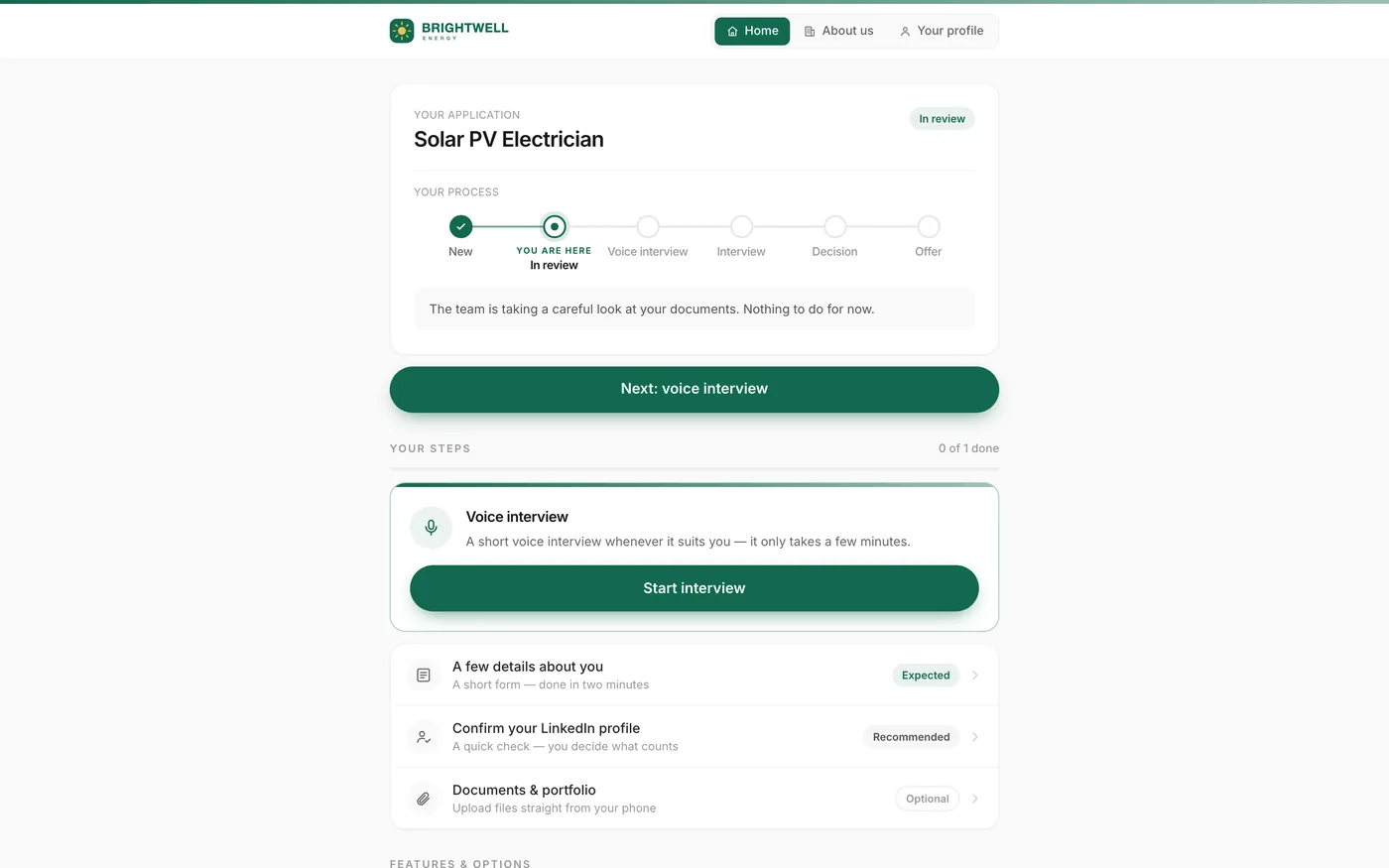
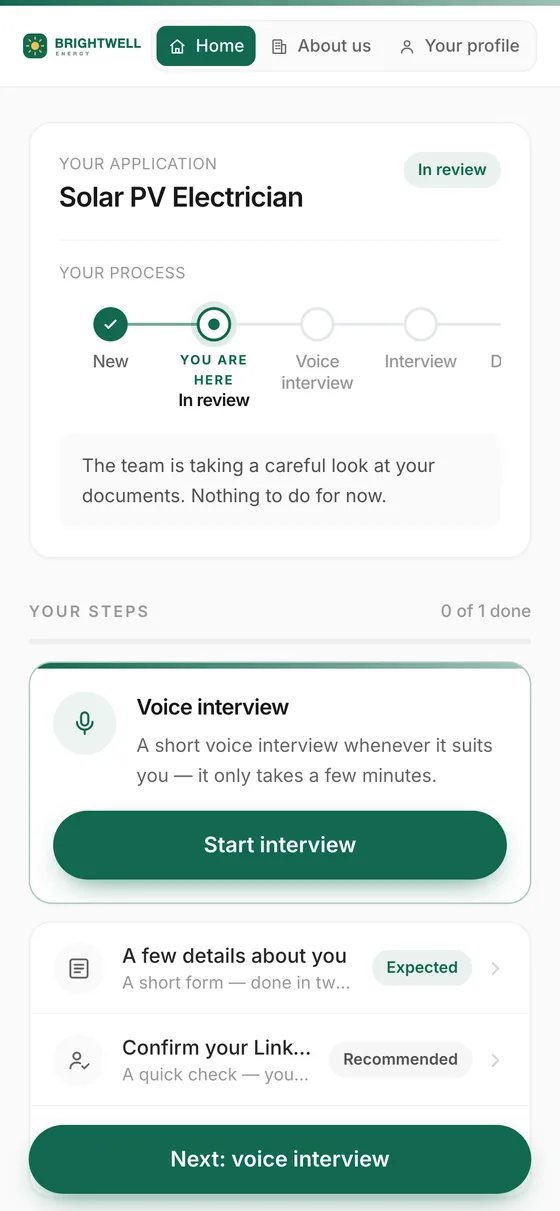
The same portal,
read from two sides.
Each pair is one thing, seen twice. What makes the process better for the candidate is what gives your team something to go on.
What it asks for.
What it gives back.
A portal is assembled, not configured to death. One half gathers what a CV never had, block by block and set per role. The other half is what the candidate sees and takes with them.
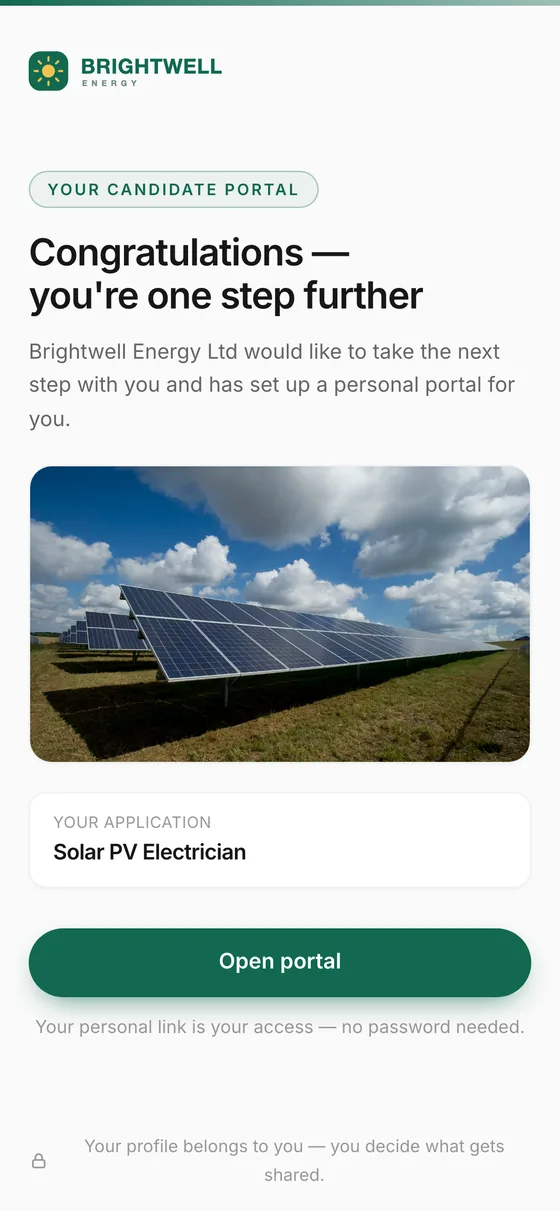
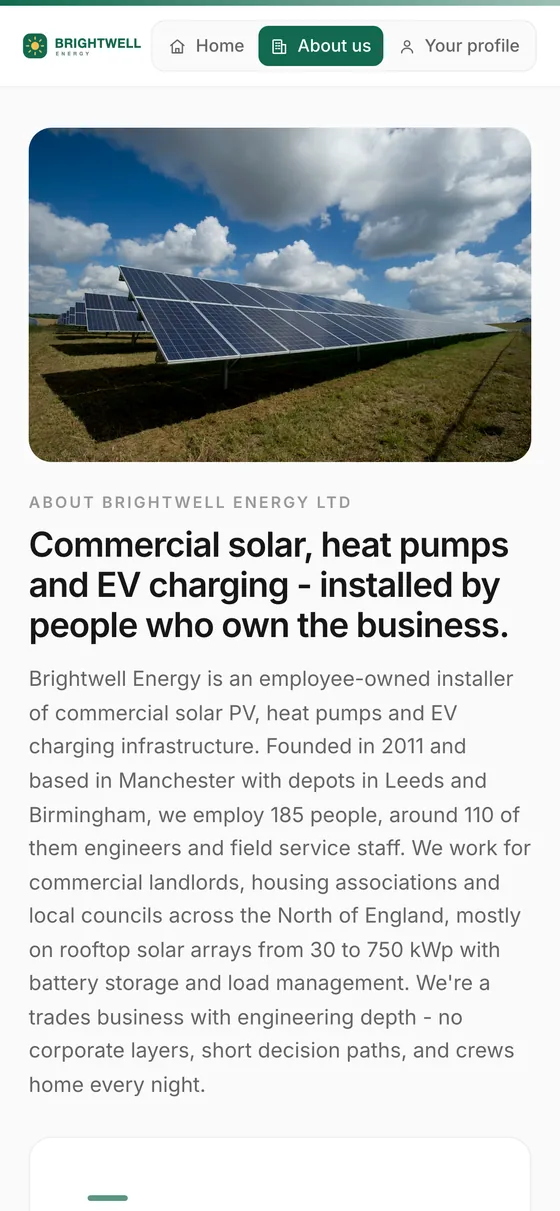
Two moments in the same portal: the link that arrives by WhatsApp or email, and your company page inside it — not three clicks away on a careers site.
One portal for
every kind of role.
Same portal, same building blocks — switched on or off for the role you are filling.
 Portal link
White collar
People confirm their profile, add a verified LinkedIn and book a slot themselves. No voice call needed.
Building blocksIT & software · Professional services · Public sector
 Voice interview
High volume
Everyone gets a voice interview first, the key facts are settled inside it, and your shortlist is ready the same day.
Building blocksRetail · Hospitality · Logistics · Staffing
 We call you
Hard to fill
A link often goes unclicked here, so the voice interview arrives as a phone call — and everyone stays in your talent pool.
Building blocksHealthcare · Trades · Manufacturing
Their data.
Their call.
A portal only works if the person inside it trusts it. So the defaults belong to the candidate, and every one of them is reversible.
Give every applicant a reason
to stay in the process.
Thirty minutes, one of your own roles, no slide deck.
Everyone you meet stays yours.
Sourced, applied, referred or hired — everyone keeps a living profile, with the score and the evidence still attached. The one you turn down in March is the one you search for in September.






 Ashby
Ashby d.vinci