Skill data your people
actually keep alive.
AI-first skill management built on one agent, not another matrix. Atlas captures skills from the work itself, gives employees and managers value from day one, and ties every skill to real business impact.
A skill matrix is easy to build.
Keeping it true is the hard part.
Filled in once, dead within a quarter — and even when it is current, it usually connects to nothing.
The matrix rots.
A skill matrix you fill in once is dead within a quarter. Nobody goes back to touch it.
Only HR gets anything out of it.
If only HR benefits, nobody keeps it alive. People fill in a form and never see it again.
Skills that lead nowhere.
85% have a system, 20% align it to the business. Skill data for its own sake is a graveyard.
One agent that captures skills from the work — and ties every one of them to what the business needs next.
One language
for skills.
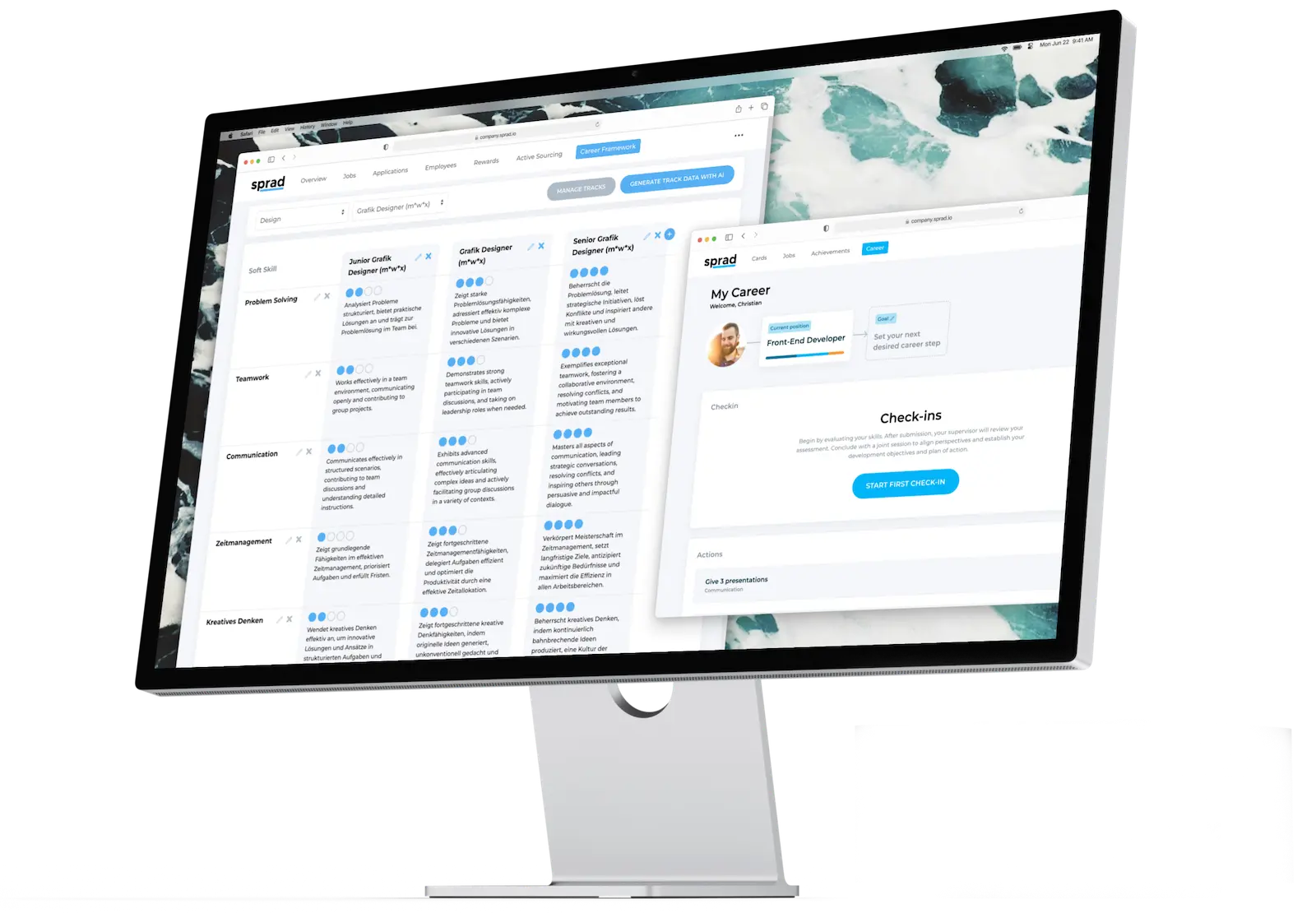
Atlas builds your framework from a 32,000-skill taxonomy plus your own competencies — in hours, not the months a manual taxonomy takes.
Assess without
the busywork.
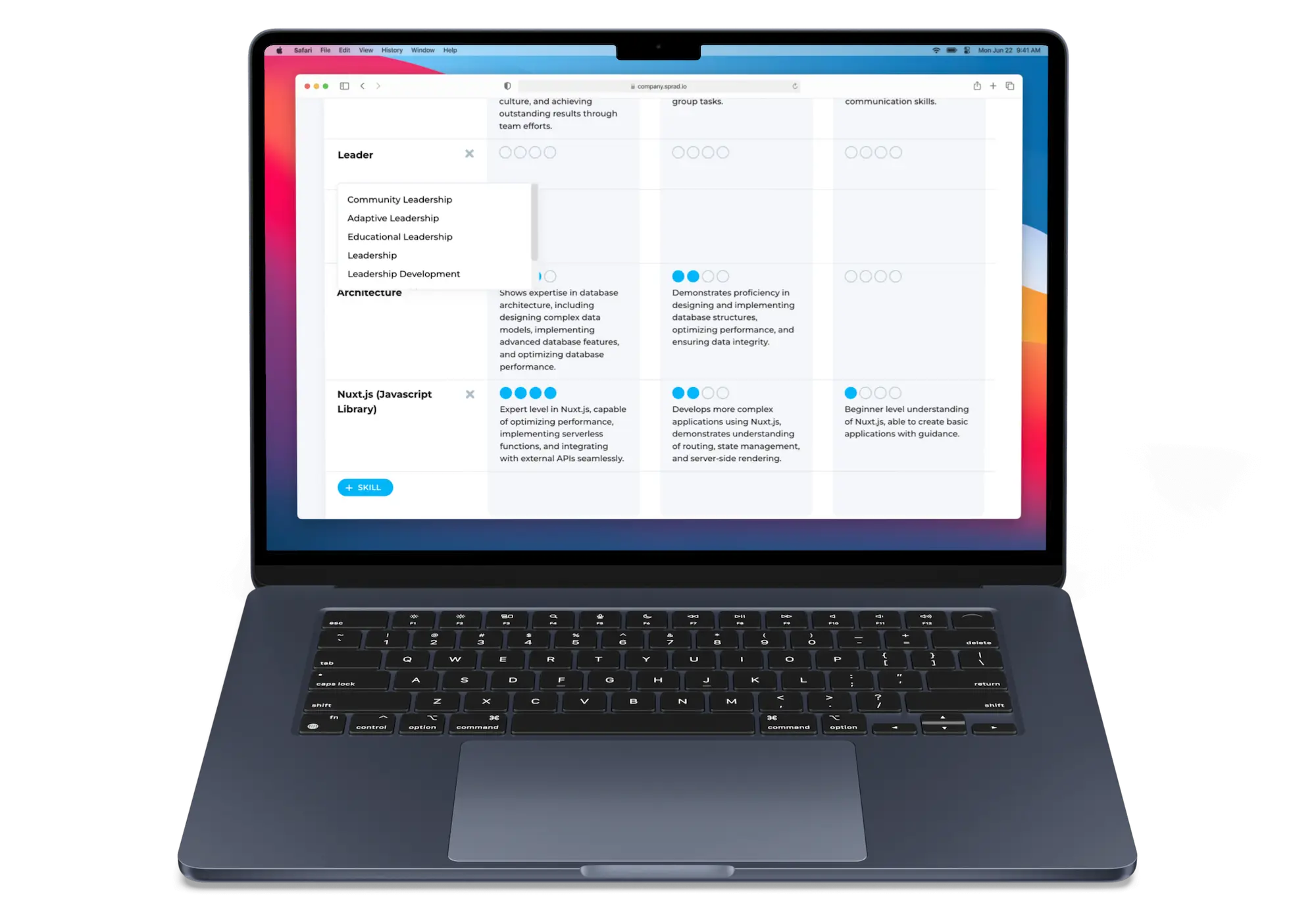
Lightweight check-ins on web and mobile. Atlas drafts the assessment from real evidence — people confirm or adjust.
Who can already
fill that role?
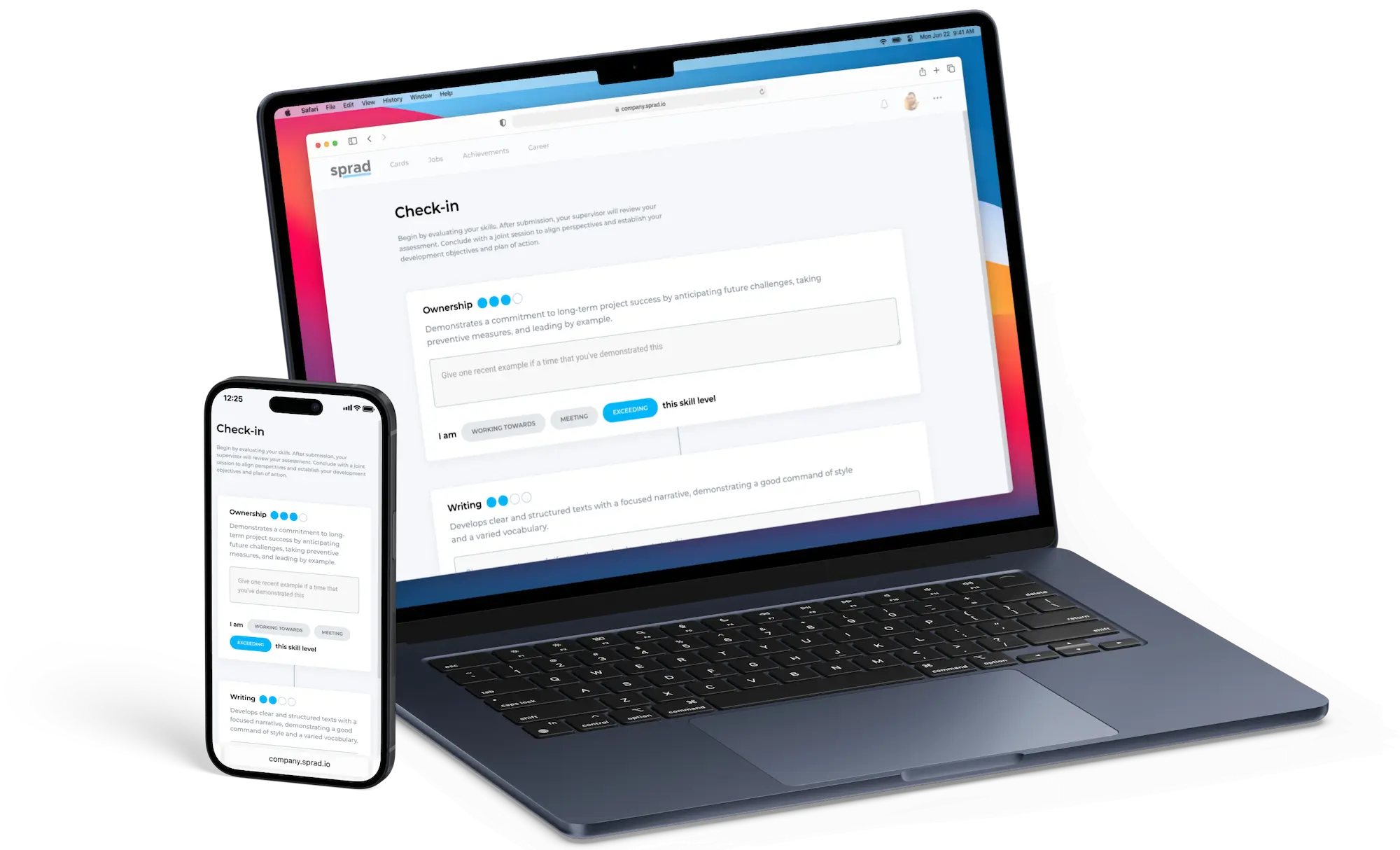
Atlas answers across the whole org — internal matches ranked by readiness, plus the gaps to your plan.
 Maria Keller
88%
Maria Keller
88%
 Tom Reiter
74%
Tom Reiter
74%
 Alina Park
61%
Alina Park
61%
Careers that
actually move.
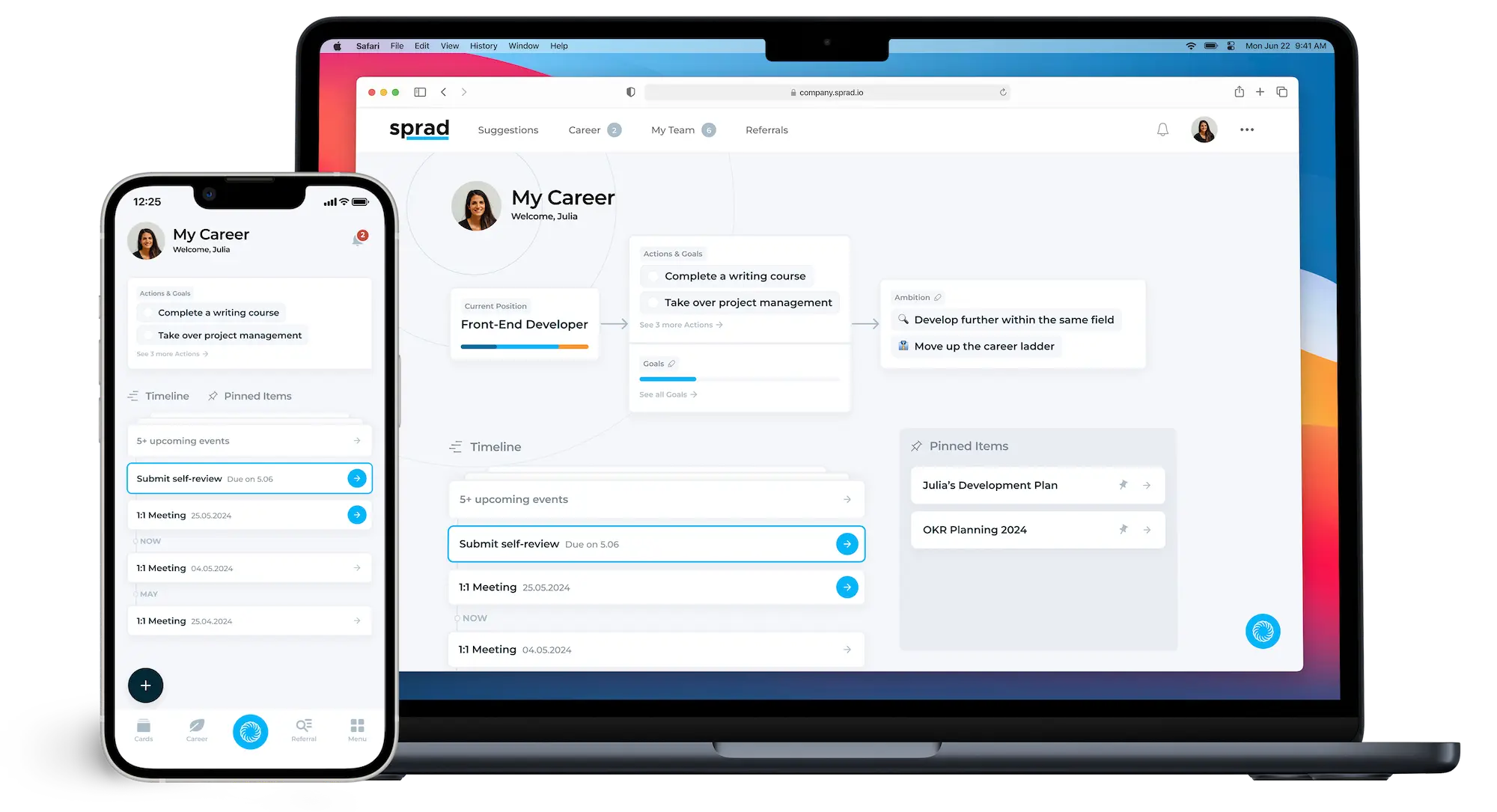
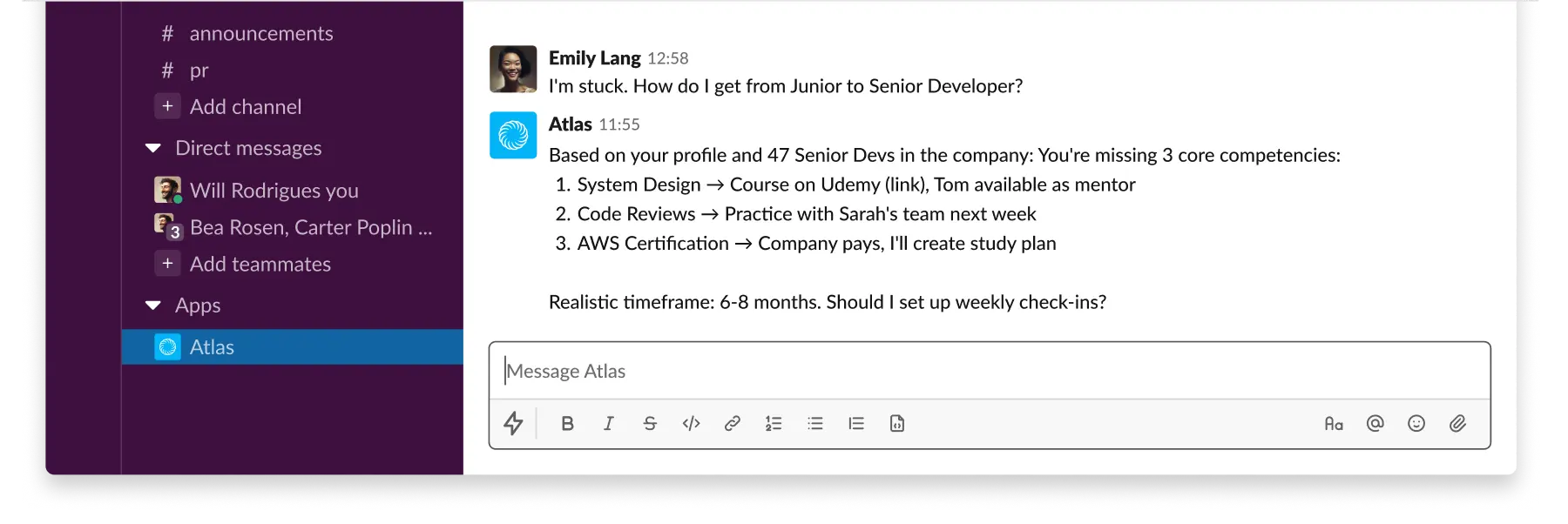
Every gap becomes a concrete next step. Position, development plan and the next role sit on one page — for the employee and the manager.
A coach for
everyone.
Not just the top 10%. Atlas turns a skill gap into a path — micro-coaching in the moment, in Slack or Teams. Careers move forward without adding an hour to a manager's week.
Consent-based: employees own their data — exportable and deletable.
It knows your roles.
Not the public web.
Built on your roles, your skills and your HRIS. Which is also why regulated and public-sector organisations run it.
It only works if both
sides get something.
If only HR benefits, nobody keeps it alive. So employees and managers each get value on day one — which is the whole reason the data stays true.
A real career path, not a form.
Where you stand, what comes next, and the concrete step to get there — plus a coach that answers in the moment.
The team's skills and gaps, in one view.
The assessment is already drafted from real evidence. The manager confirms or adjusts instead of writing from memory.
Everyone you meet stays yours.
Sourced, applied, referred or hired — everyone keeps a living profile, with the score and the evidence still attached. The one you turn down in March is the one you search for in September.





 Ashby
Ashby d.vinci
 Atlas · your AI agent
Set it up once.
Atlas runs it from then on.
Skill-gap analysis, learning suggestions, an emergence radar, role readiness — in the background, on a schedule or a trigger.
 Discover Atlas →
Skill data that works —
not a matrix that rots.
Most tools sell you a beautiful skill matrix. It is empty within a quarter. Sprad captures skills continuously, gives both sides value, and ties every skill to business impact.
| Sprad + Atlas | Skill point-tools | Legacy HR suites | |
|---|---|---|---|
| Captures skills continuously — not a one-time survey | Yes | partial | manual |
| Value for employees and managers on day one | Yes | HR-facing | admin-heavy |
| Ties every skill to business impact | Yes | inference only | reports only |
| AI-built framework (32k+ taxonomy + your competencies) | Yes | manual config | — |
| One-page UX · live in under 3 hours | Yes | weeks | months |
| Usage-based · EU-hosted · never trains on your data | Yes | per seat | — |
Indicative comparison of product categories — feature sets evolve over time. What it costs is on the pricing page.
Skills are one half of Develop.
Performance, feedback and skills share one data model and one AI layer — every review and every rating makes the skill profile truer.
Performance Management
Expectations, reviews and 1:1s your managers actually finish — drafted by Atlas from the same skill data.
See Performance →360° Feedback
Multi-rater feedback people actually complete — and the evidence flows straight back into the skill profile.
See Feedback →Atlas Talent Base
One base every module reads and makes deeper — so real skills sharpen job profiles and internal candidates surface first.
Explore the Talent Base →Questions, answered.
Do we have to build the skill framework ourselves?
No. Atlas builds it from a 32,000-skill taxonomy plus your own competencies, in hours rather than the months a manual taxonomy takes. You edit whatever does not fit, and it grows as the org does.
How does the data stay current?
Skills are captured from the work — 1:1s, reviews, check-ins and projects — instead of one dreaded annual sweep. Every level ties back to something real, not a self-rating from memory.
Will employees actually use it?
They get a career path out of it, not a form to fill in: where they stand, what is next, and the concrete step to get there. That is why usage runs about 5× higher than the alternatives.
Where is our data, and do you train on it?
Hosted in Europe on ISO 27001 certified infrastructure, GDPR and EU AI Act compliant by design. We never train models on your data, and employees can export and delete their own.
How is this priced?
A flat platform fee per employee plus usage-based Atlas — you pay for the work the agent does, not for seats. The current rates are on the pricing page.
How fast are we live?
Under 3 hours from signup to a running setup, with expert coaching included.
A framework, not a project.
Your skill framework, the first check-ins and the first internal matches — live in under 3 hours. No per-seat tax.