










A quote behind every judgement
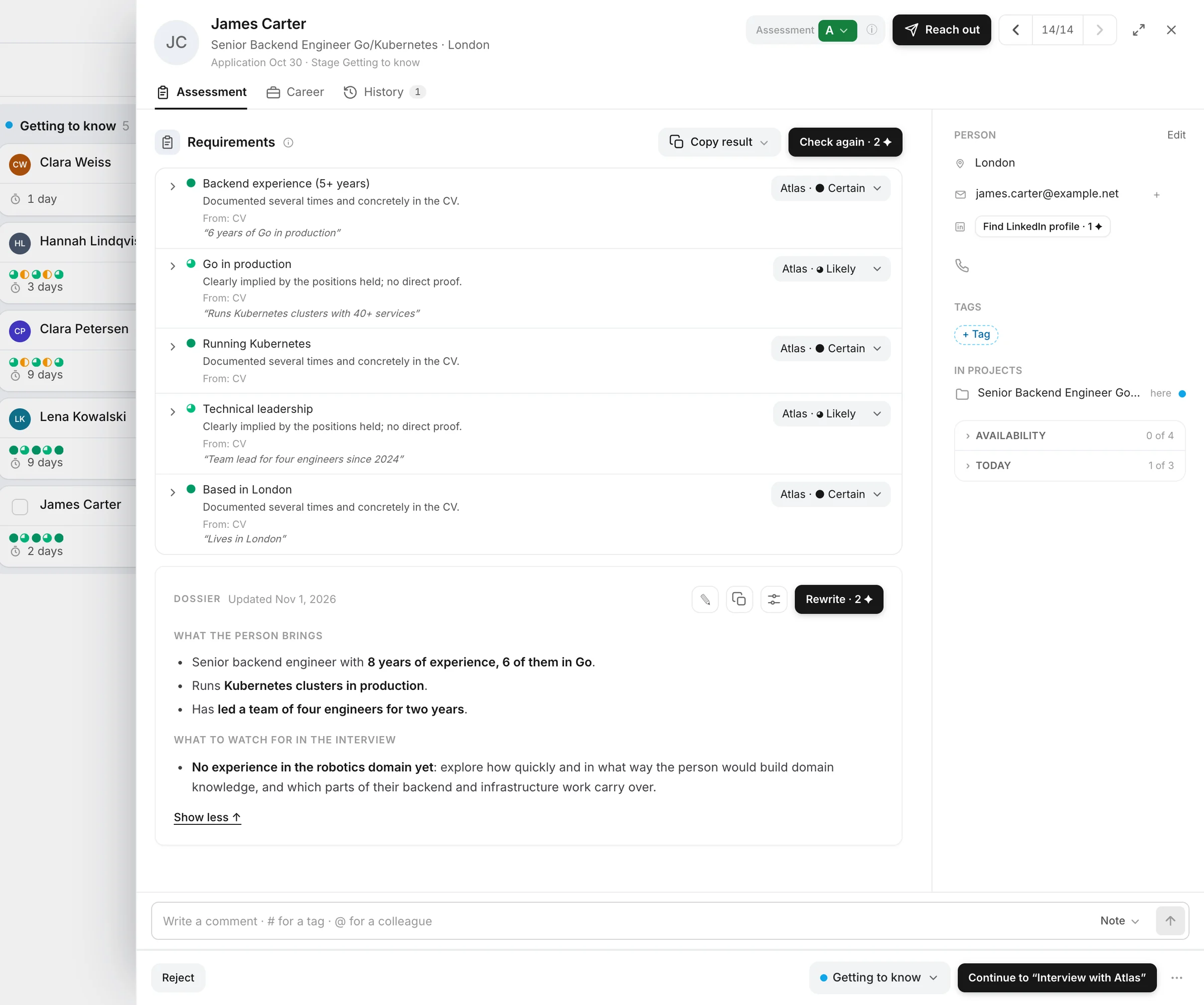
Every requirement points to the exact sentence in the CV or the conversation. Atlas checks the quote against the original. If it cannot be found, the point turns to unclear.
Atlas screens every applicant in a chat — in the app, on site or on the web — and gathers real evidence on the channel that suits them. Your team reads five rich profiles instead of three hundred CVs.
Applications per recruiter quadrupled since 2022 while teams got smaller. The strong candidates are still there, just buried.
AI writes flawless CVs and cover letters for everyone now. The document stopped telling you who can actually do the job.
Long application forms lose up to 60 percent of candidates before anyone ever sees them. The ones you want leave first.
One screening result per applicant: every requirement, how sure Atlas is, and the quote it came from.
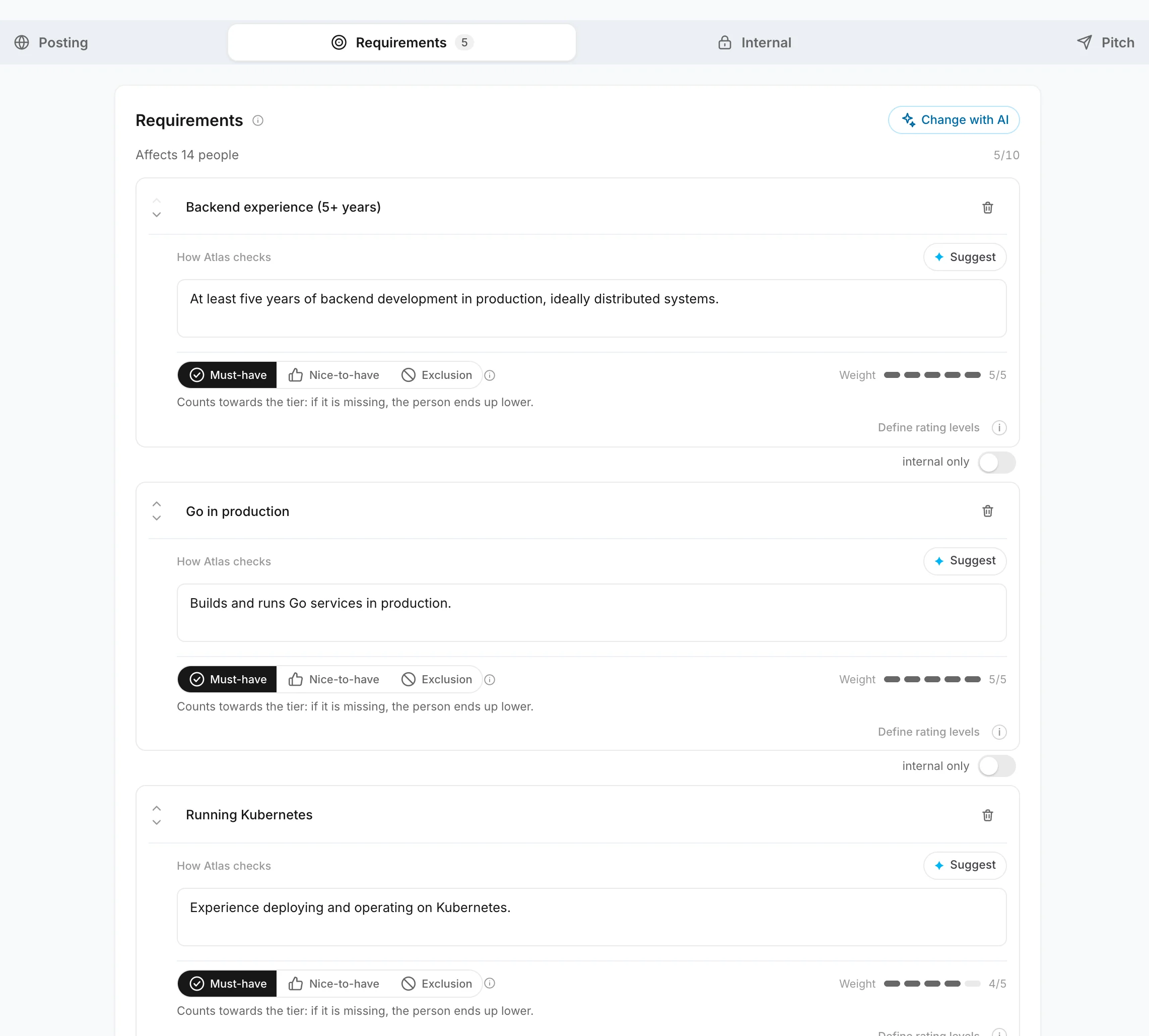
Import the job ad and Atlas suggests the requirements. You mark each one as must-have, nice-to-have or exclusion, weight it and describe how it should be checked.
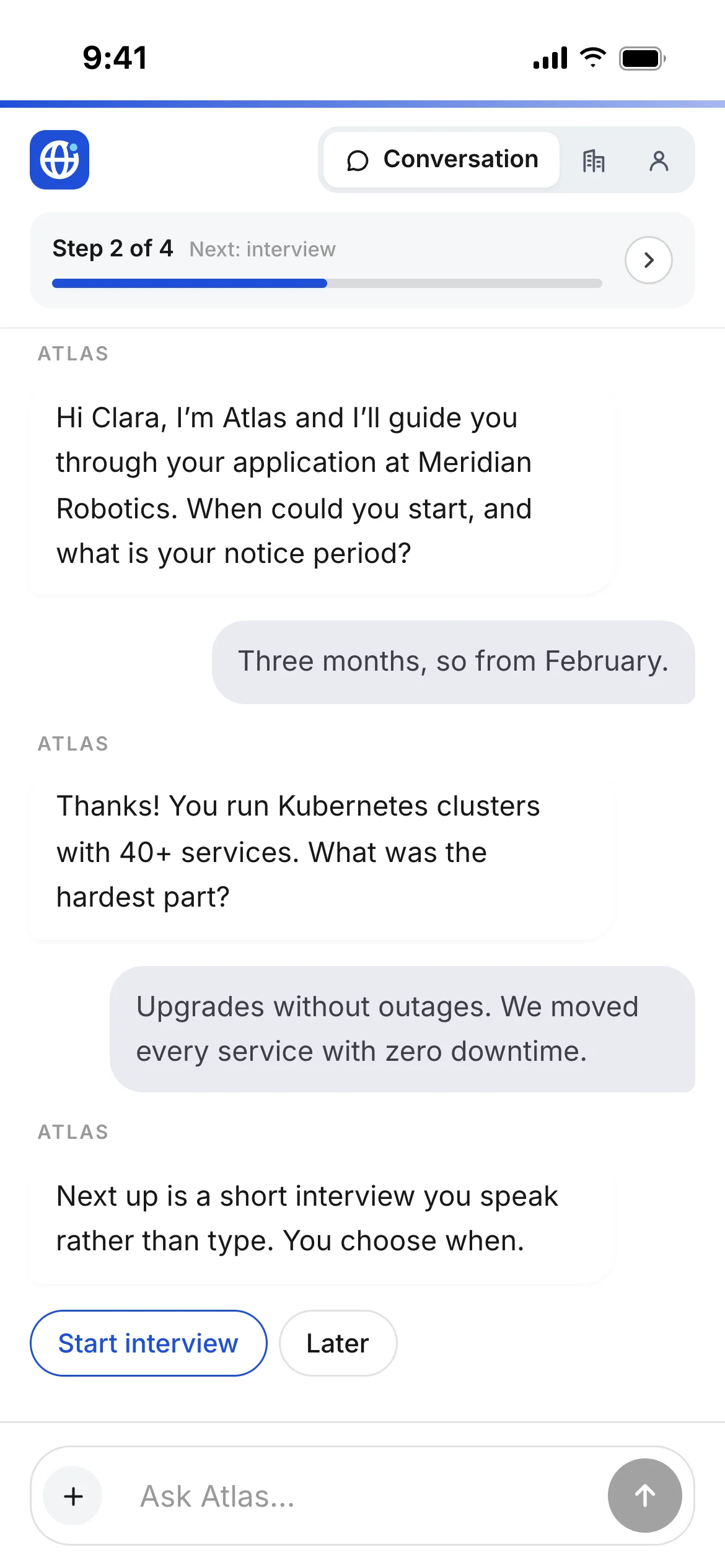
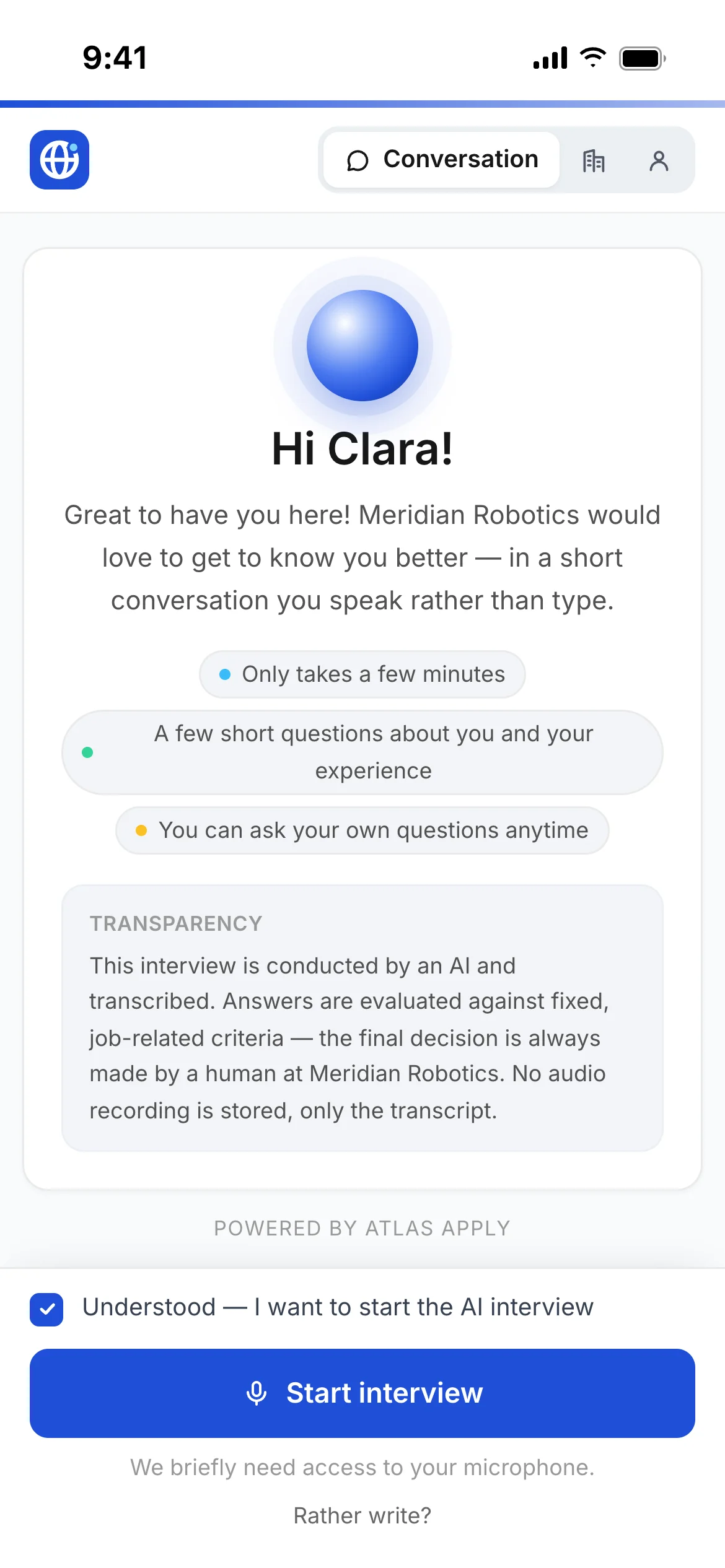
Atlas asks what your role needs: basics, questions with follow-ups, documents, an interview and a slot. Required, optional or off, per role.
A, B, C or five tiers, each with conditions you set: how many must-haves are open or unmet, how many nice-to-haves are proven. No model hands out the grade.
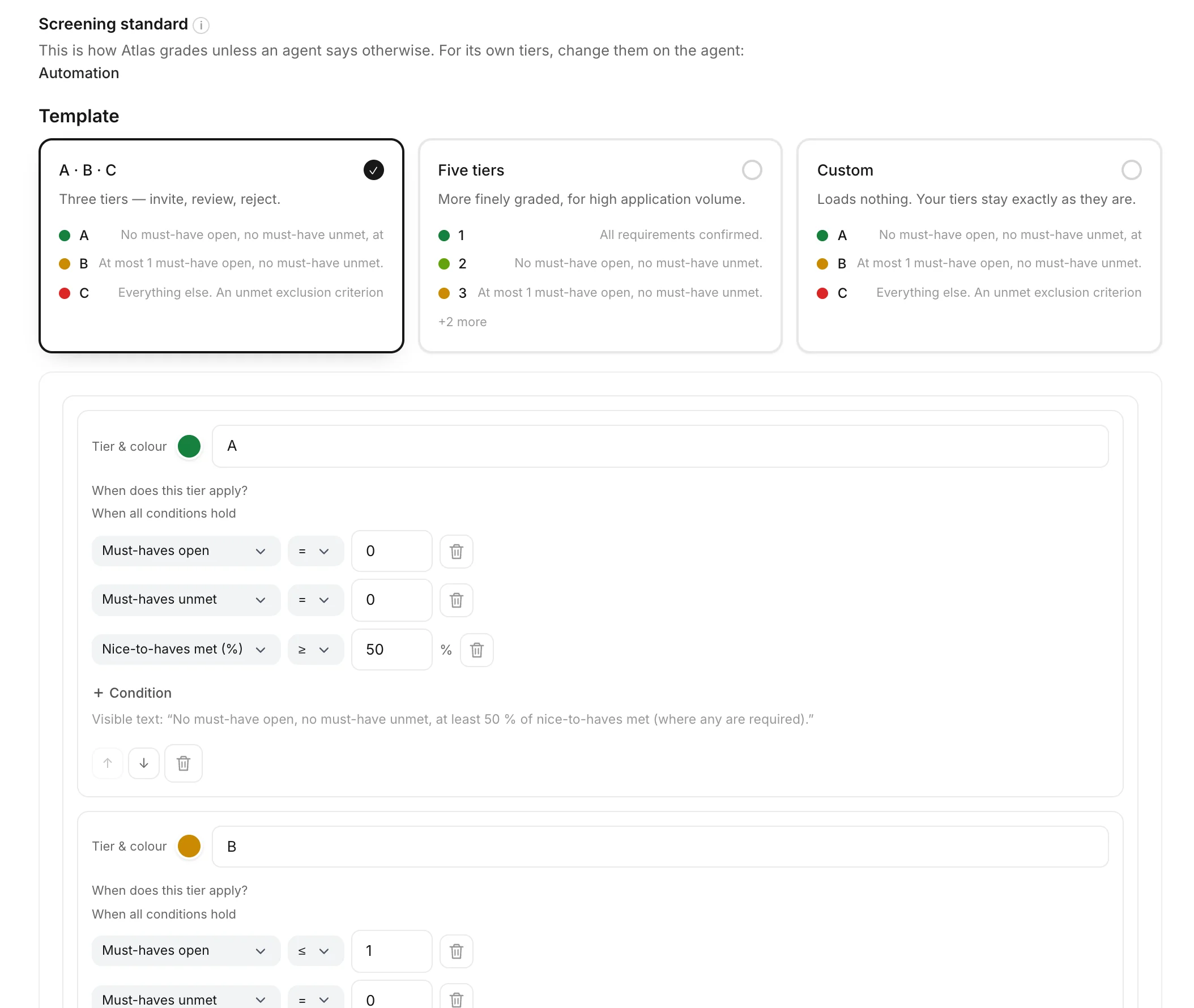
Board, evidence, candidate portal and automation. This is what your team works with every day.
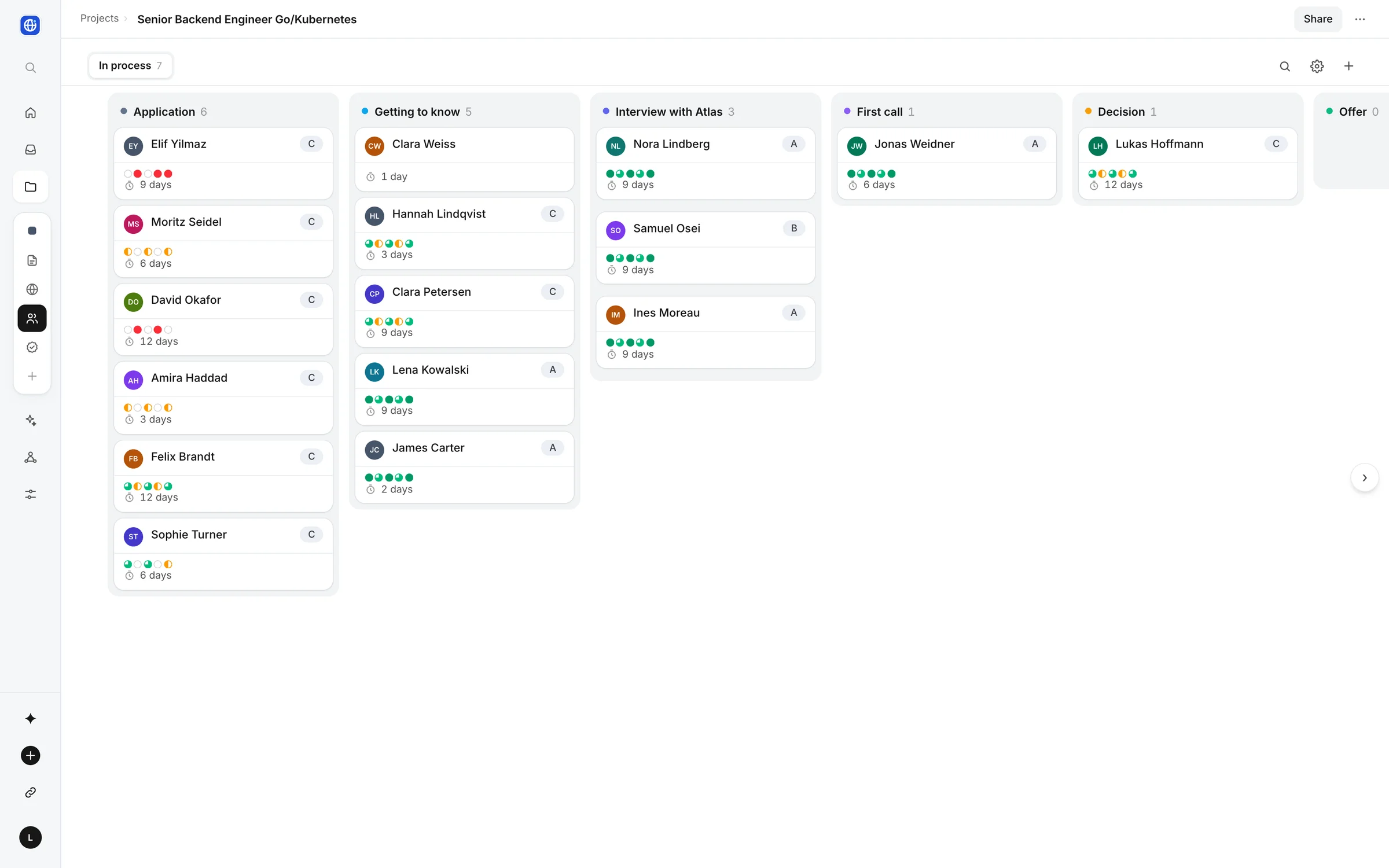
The whole role on one board. Every application in its stage, with its grade, one dot per requirement and the days in stage.
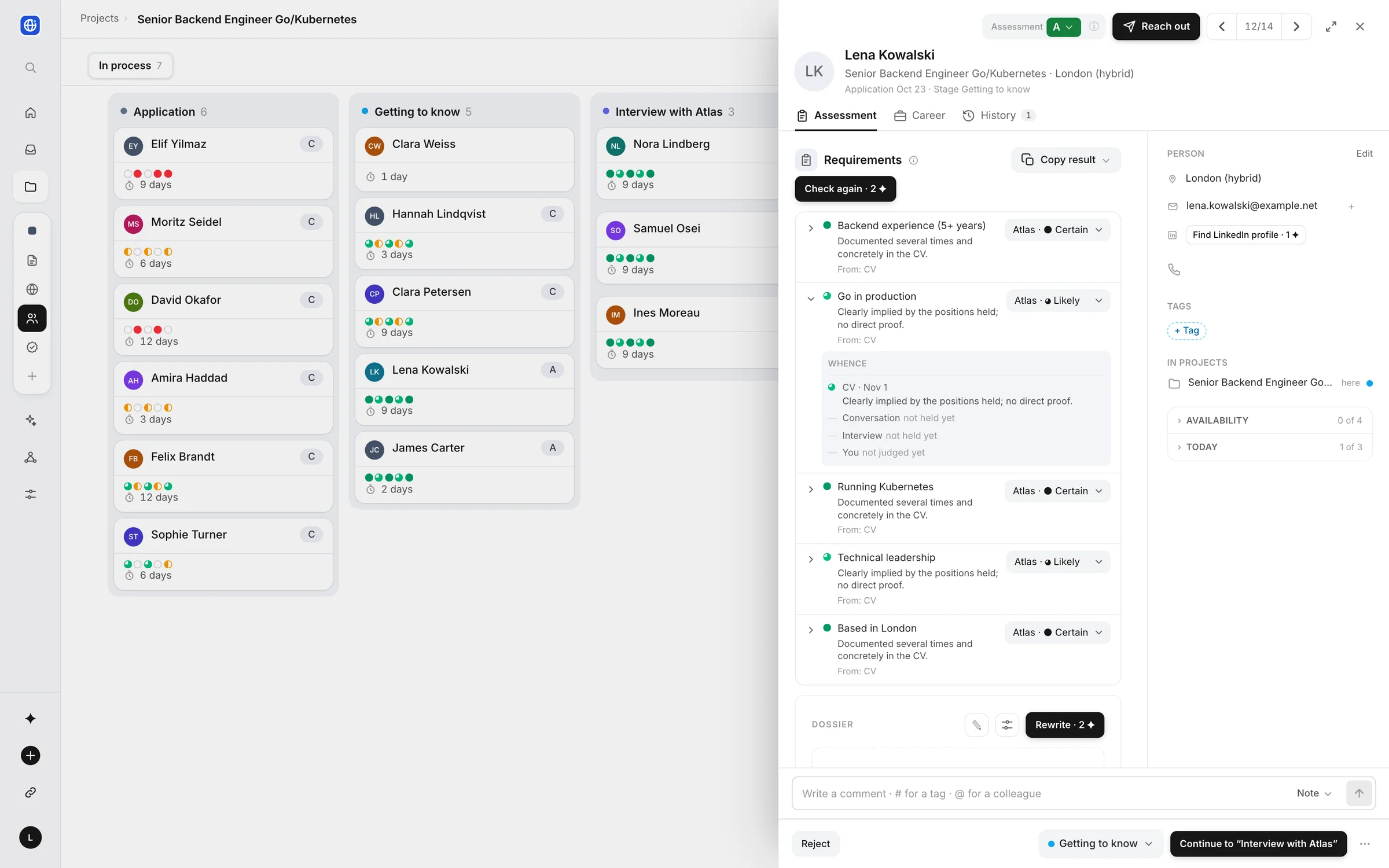
Where every judgement comes from. CV, conversation, interview and your own rating, per requirement.
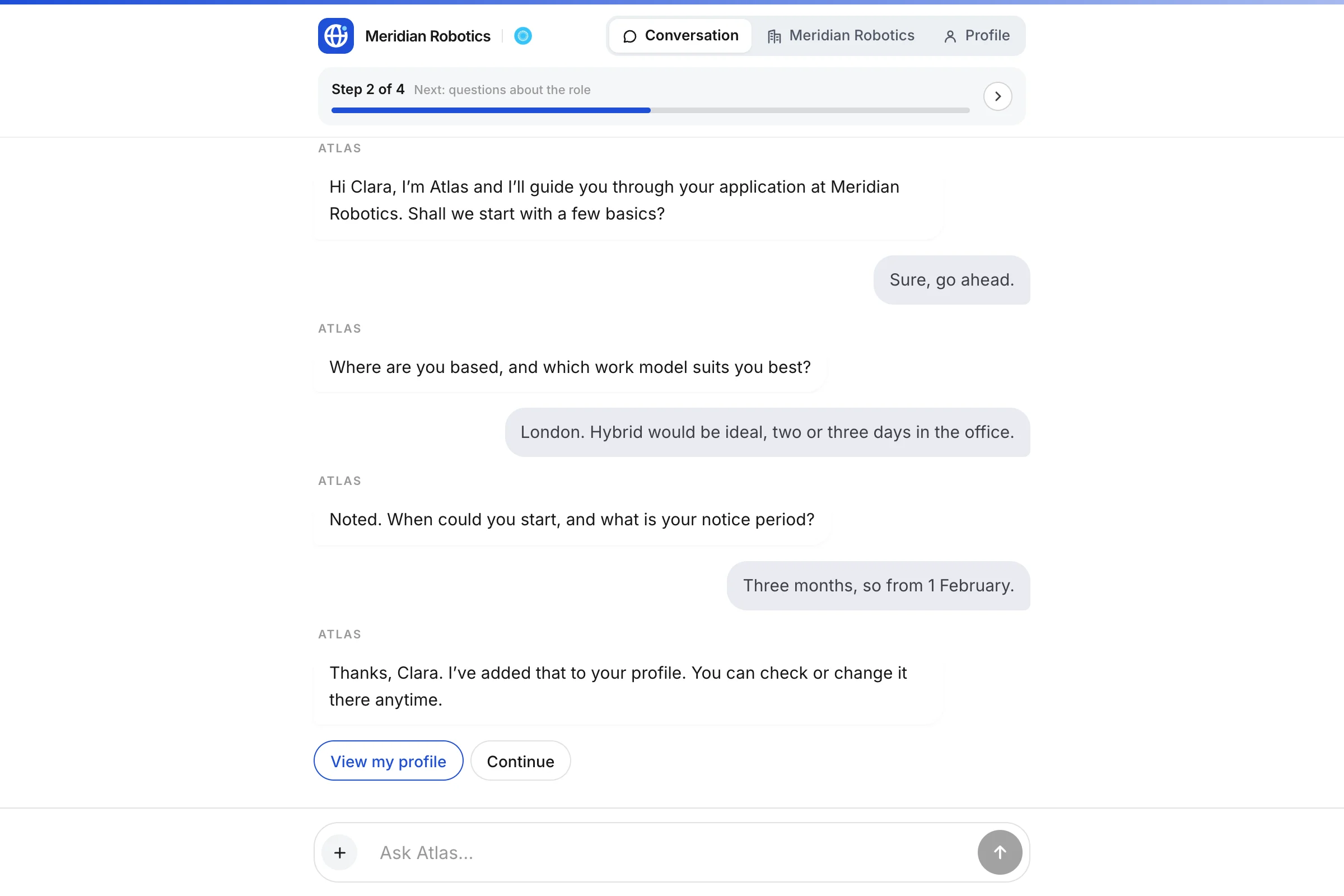

Your portal, on every screen. What Atlas learns in the conversation lands in the profile. Your company page tells your story and shows your benefits.
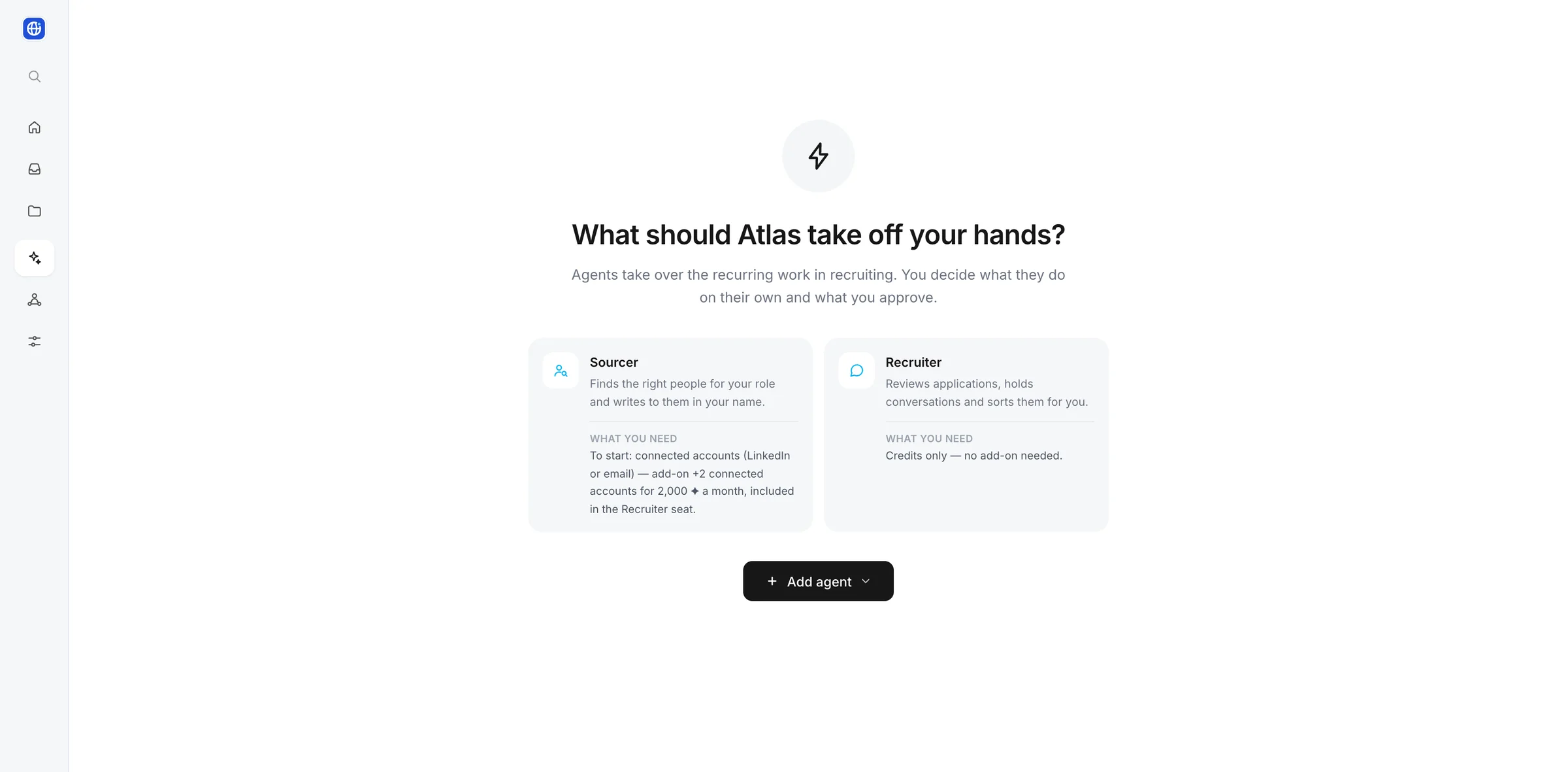
Agents that take work off your hands. The Recruiter reviews applications, holds the conversations and sorts them for you.

Most screening takes from candidates and gives nothing back. The portal gives four things back.

Different flows for different target groups: engineers, drivers, apprentices. White and blue collar, 12 languages.
Real feedback, real transparency, a profile they own. Your employer brand gains with every application.
Every screened applicant can stay in your Talent Network with consent. Rejections stop being wasted work.
Same portal, same building blocks — switched on or off for the people you are actually hiring.
Every step leaves a trace your team, your works council and the candidate can follow.
Every requirement points to the exact sentence in the CV or the conversation. Atlas checks the quote against the original. If it cannot be found, the point turns to unclear.
Each requirement is judged three times independently. One outlier cannot move the result.
A, B, C or up to five tiers. You set the conditions, Atlas applies them the same way every time.
Open points are asked, not held against the applicant.
Nothing is rejected automatically. Every rejection waits for a person on your team.
Voice, video or chat: the candidate picks, you only pay for what is used. The report shows strengths, observations, open points and a competence profile, with the transcript behind it.
A personal link, no password. Status, next step, documents and booking in one place, with interviews in 12 languages.
 softgarden
 Greenhouse
 SAP SuccessFactors
 Workday
 Personio
 Lever
 iCIMS
 SmartRecruiters
 Teamtailor
 d.vinci
+ almost any system
GDPR-compliant and EU-hosted on ISO-certified hosting. Your data never leaves Europe and is never used to train models.
Humans lead, AI executes. There is no automated yes or no anywhere in the process.



Sourced, applied, referred or hired — everyone keeps a living profile, with the score and the evidence still attached. The one you turn down in March is the one you search for in September.
No. Sprad runs on top of the ATS you already have. Results land there the moment a conversation ends, and the portal adds a living candidate profile on top. Nothing gets migrated, nothing gets replaced.
We don't claim that. What we do: every judgement points back to a quote from the CV or the conversation, the grade follows rules you set, unclear points never count against anyone, and a person makes every decision. Transparent and explainable for a works council.
No. Every applicant gets a personal link, no password, no signup. That link is their portal for the whole process.
In an SSRN field study, 78% of candidates preferred an AI-led first conversation over waiting weeks for a human one. They get heard immediately, and they get honest feedback either way.
Into your ATS, exactly as you'd expect. On top of that comes the living link: people who join your Talent Network keep their own profile current, so it stays fresh instead of going stale.
Getting started and the Talent Network are free. AI screening costs €0.49 per application as a flat rate (voice interviews +€0.20), or you pay per use with credits.
Getting started and the Talent Network are free. Add AI screening when the next flood arrives.






 Ashby