Fetcher, the AI sourcing platform, was shut down on 16 October 2026 after Juicebox bought its intellectual property and other assets. If you used it, you need a replacement now. The closest like-for-like move is Juicebox, which offers a transition for Fetcher customers until 19 November; Pin, Gem, SeekOut, hireEZ and LinkedIn Recruiter Lite are the other realistic options. Sprad is the pick if you want the most matching candidates and more than a search box: every profile checked individually, LinkedIn and email outreach in one inbox, your own talent network, and, for teams that liked Fetcher's done-for-you part, sourcing as a service at published prices.
What happened to Fetcher?
On 6 October 2026 Juicebox announced that it will acquire Fetcher's intellectual property and other assets; some outlets date the press release 7 October. It is an asset purchase, not a takeover of the operating business: Fetcher, founded in 2016, wound down its product. Per the press release as reported by HR trade media it served more than 1,500 customers and 5,000 recruiters and had raised more than 30 million dollars.
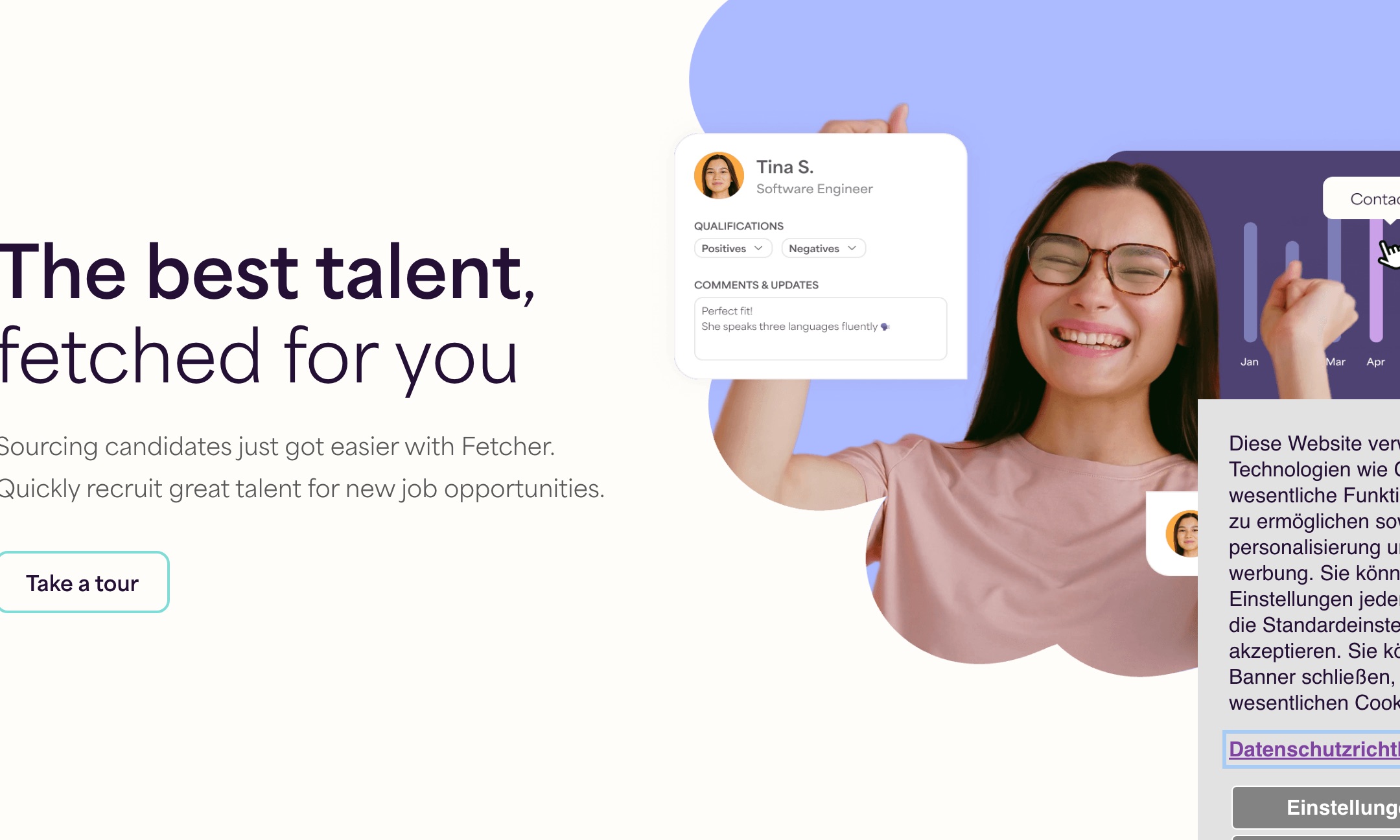
The dates that matter, as quoted from Fetcher's transition FAQ by Beri: the platform retired on 16 October, running outreach sequences stopped, email support and the Juicebox offer end on 19 November, and the remaining account data is deleted after that date. Fetcher states that candidate data goes to Juicebox only if the customer signs up and uploads it themselves. Fetcher's own FAQ pages were no longer reachable when we checked, so these details rest on that reporting (as of 30 October 2026).
Is Fetcher still available, and what should you do now?
No. Fetcher cannot be used any more, and the clock is on your data. If you have not done it yet:
- Export what you still can. Per the FAQ, per-position CSVs come from the Talent Pipeline (three-dot menu, export), project stats from the dashboard, a full account export from Fetcher's support, which quoted three business days. After 19 November nobody is answering.
- Revoke access yourself. Remove Fetcher in your Google or Microsoft account settings and delete the API key you created for Fetcher in your ATS.
- Expect lost replies. Replies to mails sent through a connected Gmail or Outlook keep arriving; replies to mails sent through Fetcher's own mail service do not.
- Treat the export as personal data. The CSVs contain candidate data that you now hold as controller. Store them only as long as you have a purpose (Art. 5(1)(e) GDPR) and load them into your next tool with a clear legal basis.
The typical mistake from migrations we have seen: candidates who were mid-sequence in the old tool get contacted again by the new one, because nobody carried over the "already contacted" list. Export the contacted candidates with dates first and import them as a block list.
What Fetcher cost, and what you actually have to replace
Fetcher's pricing was tied to lead volume, not to seats. The archived pricing page from June 2026, as cited by a competing comparison, listed these plans; Fetcher itself no longer publishes them.
| Fetcher plan (archived, June 2026) | Annual billing | Monthly billing |
|---|---|---|
| Self-serve | 115 $/month | 115 $/month |
| Growth | 379 $/month | 499 $/month |
| Amplify | 649 $/month | 849 $/month |
| Enterprise | custom | custom |
Fetcher also described itself as AI paired with an expert team that sources candidate profiles for you. So you replace three different jobs: finding people, sending and following up, and (if you used it) having somebody else do part of the sourcing. A pure search tool covers only the first.
Who should take Juicebox's offer, and who should look elsewhere?
Fetcher cannot be kept, so the real question is where to go.
- Take Juicebox if you want the fastest hand-over, you are a solo recruiter or a small team, and you are happy with outreach that runs through partner tools. Check the conditions: the offer has no published price and, per the FAQ, targets teams that have not used Juicebox in the past six months.
- Look elsewhere if LinkedIn and email should run in one inbox, you want an agent with approval steps, you need EU hosting, or you want your pool to stay yours. In the PeopleSearchBench (recruiting) Juicebox scores 65.7, a solid result; our own re-measurement, converted to the published scale, puts Atlas at 73.5.
- Look at Sprad if you valued that Fetcher's team did part of the work: Atlas can run search, outreach and pre-qualification automatically, and sourcing as a service starts at 300 € per role and month plus 6–8 % success fee, only paid if someone is hired.
Fetcher alternatives compared
Which alternative finds more matching candidates? The only open head-to-head we can cite is the PeopleSearchBench (119 real search tasks; recruiting area). For Atlas, Sprad's sourcing product, our own re-measurement in recruiting gives 73.5 out of 100, converted to the published scale (Juicebox 65.7 as published). In that re-measurement it returned almost always 15 matching profiles per search (14.2 on average).1 Fetcher did not take part, so we make no claim about it; the tools below are compared on published facts.
| Tool | Model | Search | Price (list, net) | Outreach | Hosting / EU |
|---|---|---|---|---|---|
| Sprad | Search + outreach + talent network | Requirement search, every profile checked; LinkedIn, GitHub, your own pool and employee networks; 1B+ profiles | Free start (100 credits/month); Recruiter Lite 79 €/seat/month; Atlas Recruiter 299 €/seat/month | LinkedIn, email and InMail in one inbox, follow-ups, WhatsApp for candidates | EU hosting |
| Juicebox | Search, agents add-on | Plain-language search, 800M+ profiles (vendor) | From about 99 $/month (annual) | Through partner tools | US vendor, details on request |
| Pin | Search + sequences + Autopilot | 850M+ profiles (vendor) | Free; Solo $100; Professional $135/user (annual) | Email sequences; LinkedIn/SMS manual | Hosting on AWS in the US (trust centre) |
| Gem | CRM/ATS + sourcing | Large index (vendor) | Quote-based | Sequences inside the CRM | Ask the vendor |
| SeekOut | Deep filter search | 1B+ profiles (vendor) | 149 $ solo (annual), rest on request | Built-in sequences | Ask the vendor |
| hireEZ | Search + sequences | 500M+ profiles (vendor) | About 169–199 $ solo, teams 250–399 $/seat | Sequences, partner tools | Ask the vendor |
| LinkedIn Recruiter Lite | LinkedIn search | LinkedIn only | About 140 $/seat/month (annual) | InMail (30/month) | Microsoft/LinkedIn |
1 PeopleSearchBench (Recruiting), published by Lessie, October 2026. Other systems' scores as published in the benchmark; Atlas is our own re-measurement with the benchmark's open test procedure, converted to the published scale; not an official entry. Contact data came from the "find email" button. Method and details.
1. Sprad: search that includes your own pool
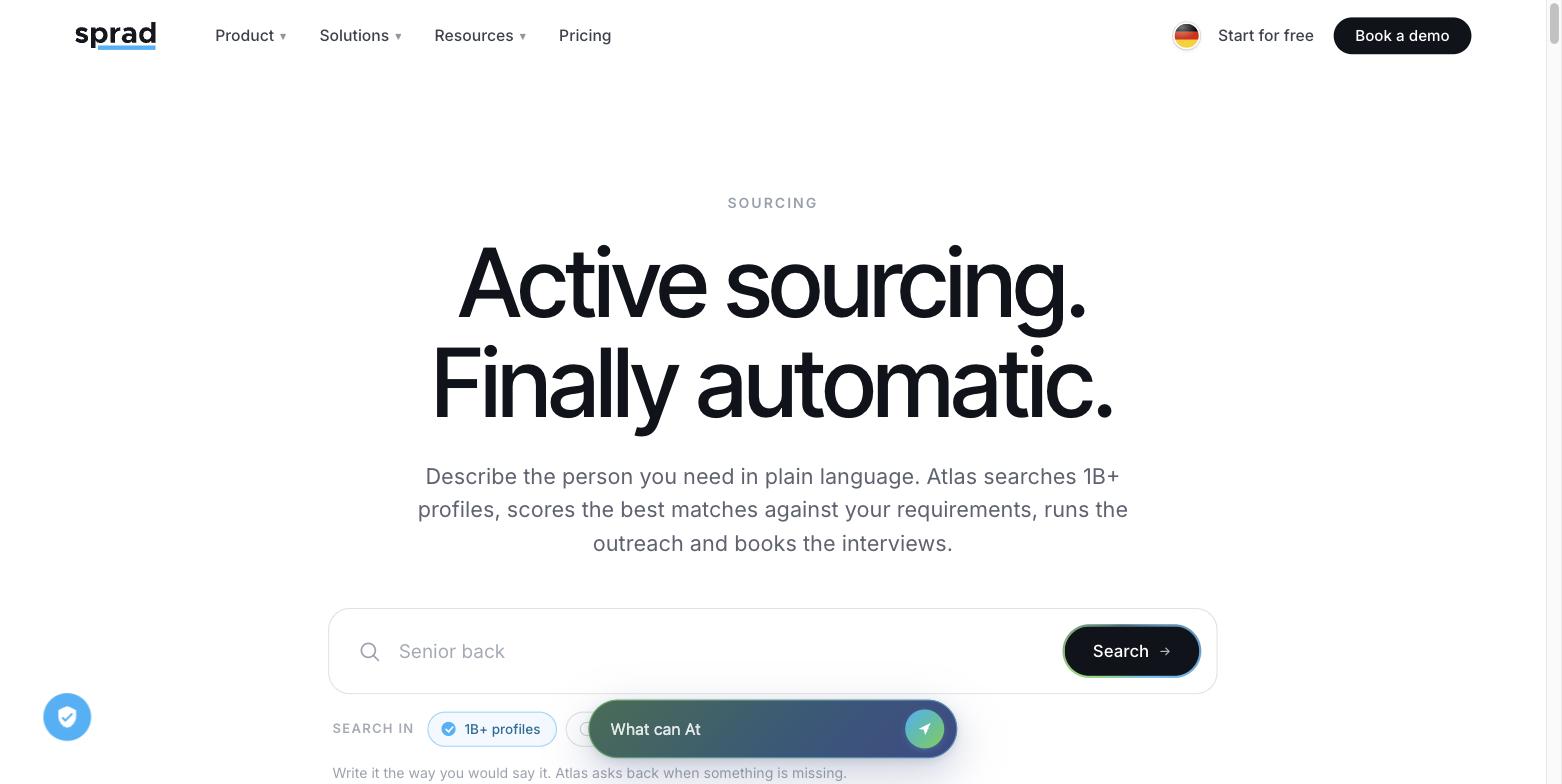
Sprad takes a requirement instead of a Boolean string. Atlas checks every profile individually against your requirements, so it also finds people whose profile is poorly maintained or lacks the "right" keywords, and each result comes with a reason per requirement.
- One search over all sources: LinkedIn, GitHub, your own talent pool and the networks of your colleagues, in one of the largest profile databases (1B+ profiles worldwide). Deep Context finds companies first and then the people who worked there in a given period.
- LinkedIn and email in one inbox: automated outreach with follow-ups, InMails sent from Sprad (your own InMail allowance can be used), AI templates you can train, and a pitch format for the selling points of the role. The system warns you if someone was already contacted, also by a colleague or for another role.
- Your data stays yours: the talent network remains free after cancelling, with free credits to keep searching, and a full raw-data export is available. Full Claude MCP and EU hosting included.
- Pre-qualification: voice, video, chat and agent interviews, and fully automated agents with an optional approval step.
Sprad has built recruiting software for 7 years, starting with employee referrals, which is matching profiles to requirements. Prices and plans: sprad.io/pricing; more on Active Sourcing and Sprad for agencies.
2. Juicebox: the closest like-for-like move
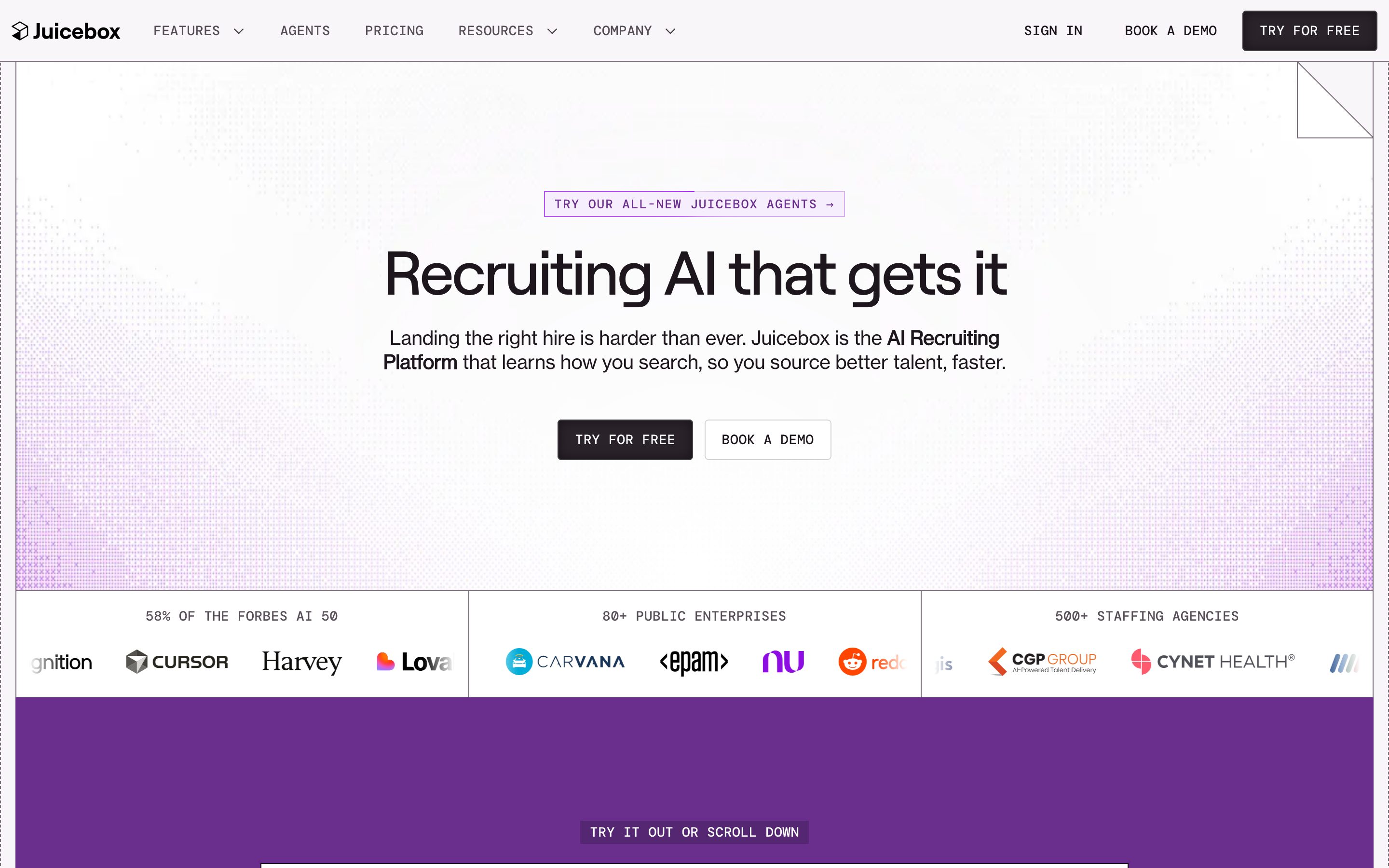
Juicebox publishes its prices and lets you search in plain language. It now owns Fetcher's assets, and its CEO frames the deal as a step towards specialised AI recruiting agents. More: Juicebox pricing, Juicebox alternatives.
3. Pin: a free tier to test with
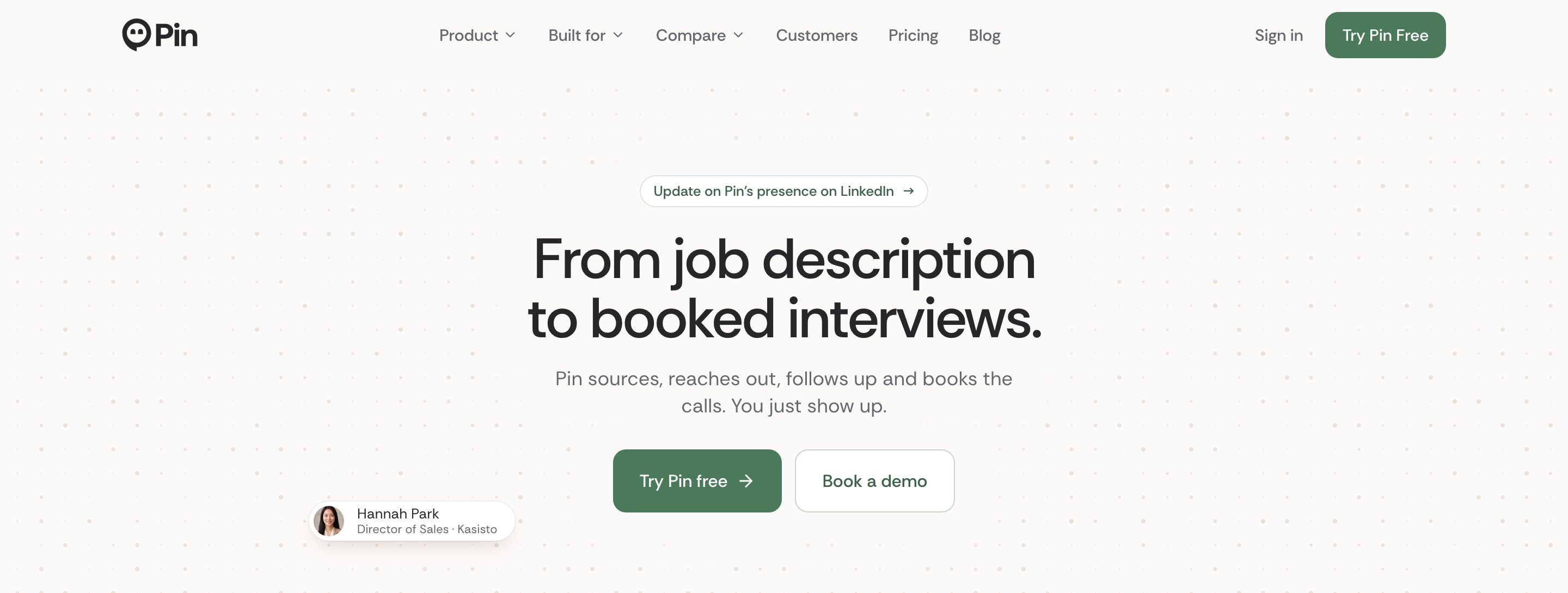
Pin is the product most often named next to Fetcher: AI search, sequences from your own mailbox and an Autopilot that can run up to interview booking. Its free tier lets you run a real role before you commit.
4. Gem: a CRM around the search
Gem fits if you used Fetcher to feed a pipeline and now need the pipeline itself to be solid. Expect a longer roll-out than with a search tool.
5. SeekOut: deep filters and enterprise reach
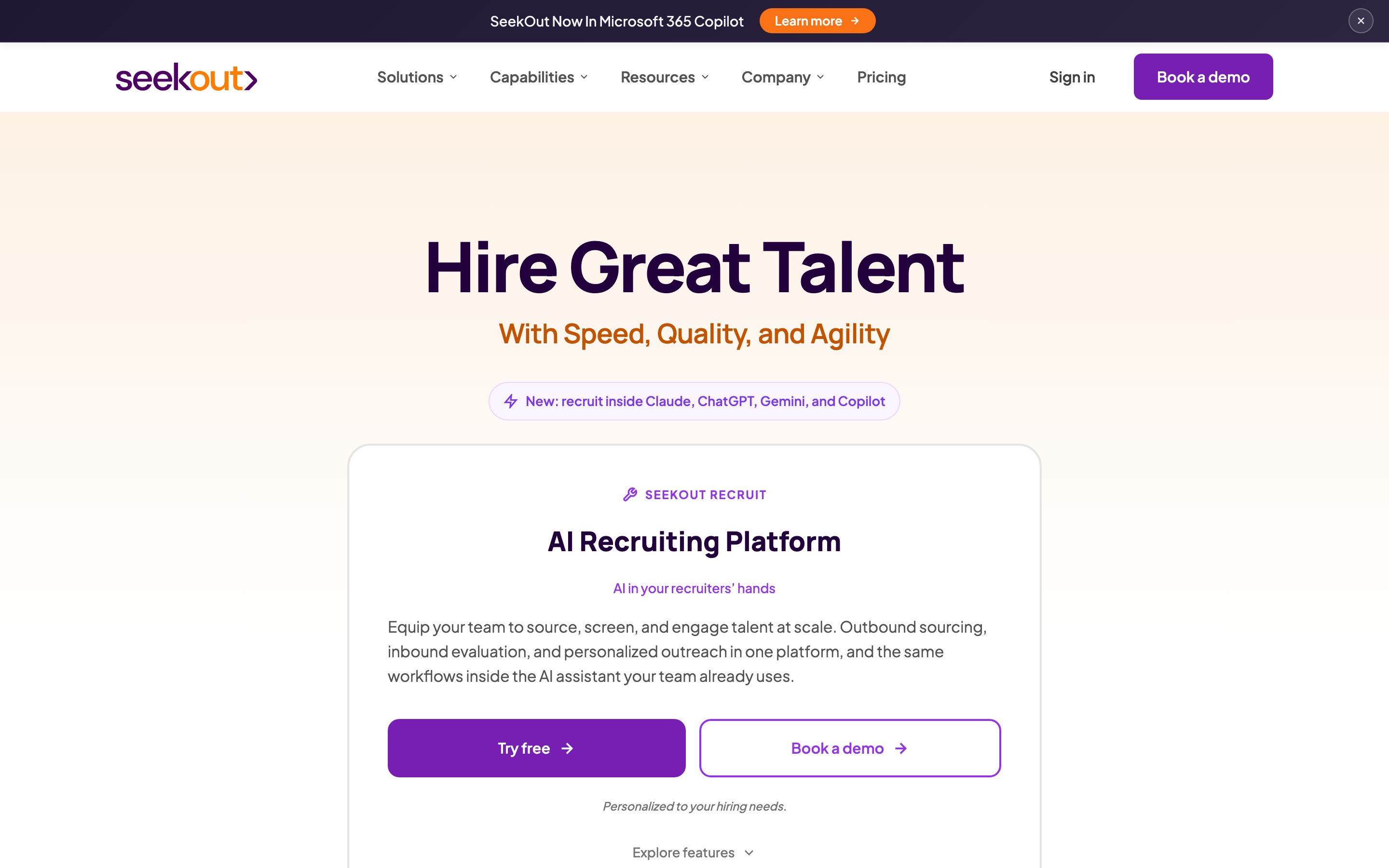
SeekOut suits teams that think in filters and compliance data. Our comparison of active sourcing tools puts it next to the others.
6. hireEZ: sequences and a large filter set
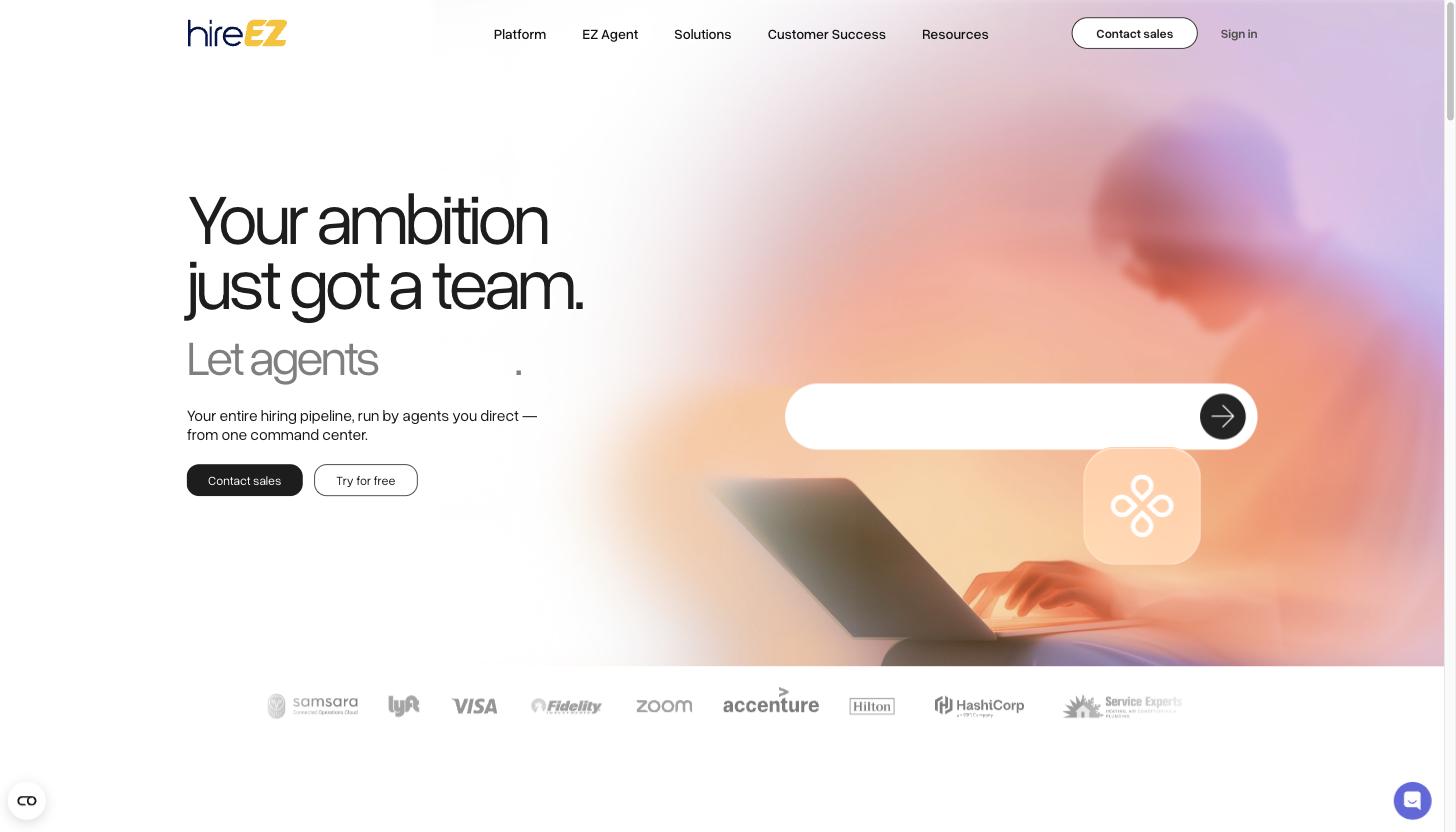
hireEZ is strong in technical roles. Ask about renewal terms before you sign.
7. LinkedIn Recruiter Lite: if you already live in LinkedIn
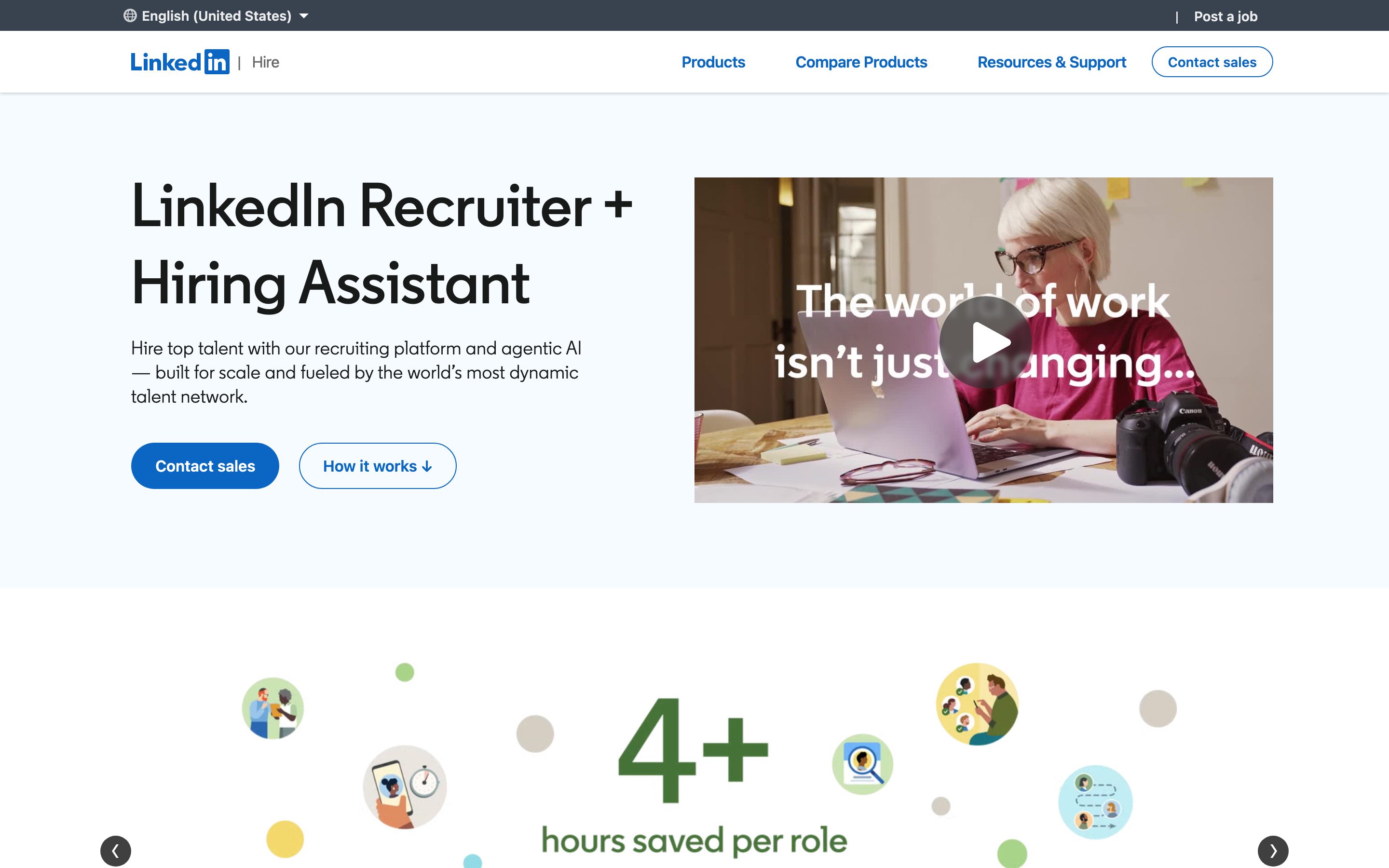
Lite is a sensible floor if all your candidates are on LinkedIn. It is a single data source and a monthly InMail limit; see LinkedIn Recruiter alternatives.
How do the alternatives compare on price?
Assumptions: three recruiters, list prices, annual billing, net of VAT, no negotiated discounts. Fetcher's price was volume-based and included managed sourcing, so the first row is a rough reference, not a like-for-like.
| Setup (3 recruiters, list prices, annual billing, net) | Per month | Per year |
|---|---|---|
| Fetcher Growth (archived price; billed by lead volume, not seats; includes managed sourcing) | about 379 $ | about 4,548 $ |
| Juicebox Starter, 3 seats | about 297 $ | about 3,564 $ |
| Pin Professional, 3 seats | 405 $ | 4,860 $ |
| Sprad Recruiter Lite, 3 seats (deep search via credits) | 237 € | 2,844 € |
| Sprad Atlas Recruiter, 3 seats (every search level, 1 outreach account per seat) | 897 € | 10,764 € |
Two readings: pure seat tools cost about the same as Fetcher did, and Atlas Recruiter costs more per seat because every search level, deep search and one outreach account are included. Sprad's free plan includes 100 credits a month; a web search costs 2 credits per displayed profile, so that is about 50 profiles a month to test with.
What do GDPR and the EU AI Act mean for your switch?
Whatever you choose, sourcing personal data from public profiles falls under the GDPR (Regulation 2016/679). You need a legal basis, usually legitimate interest under Art. 6(1)(f), and you must inform candidates you contacted without having collected the data from them (Art. 14, within one month at the latest). Check where the vendor hosts data and sign a processing agreement (Art. 28).
Automated rejection is a separate topic. The Court of Justice ruled in case C-634/21 (SCHUFA) that an automated score that largely determines a decision can itself count as an automated decision. Keep a human in the loop. The EU AI Act (Regulation 2024/1689) lists AI for recruitment and candidate evaluation as potentially high-risk (Annex III); check the current application dates for your case. Background: active sourcing and GDPR.
How to test a replacement in one afternoon
Many tools now say "AI sourcing". Our experience from building a requirement search: if results appear instantly, it is almost always a (semantic) keyword search. Real AI search reads each profile against your requirements, and that takes minutes.
- Run a role you know. Take an open role where you already know three good candidates and see whether the tool finds them.
- Ask for the reason per requirement. A score without an explanation tells you nothing.
- Count the first 15 results and note how many you would actually contact.
- Carry over the contacted list from Fetcher, so nobody gets the same pitch twice.
The trade-off is honest: Atlas Quick Search returns first results in about 3 seconds, the deep search takes a few minutes because far more AI runs per profile.
How to choose
- You want the fastest hand-over and a published price: Juicebox.
- You want to test for free first: Pin.
- You want a CRM around the search: Gem.
- You need many filters and enterprise reach: SeekOut or hireEZ.
- You work inside LinkedIn only: LinkedIn Recruiter Lite.
- You want the most matching candidates, LinkedIn and email in one inbox, your own pool, EU hosting and optional done-for-you sourcing: Sprad.
FAQ
Is Fetcher shut down?
Yes. Fetcher retired its platform on 16 October 2026 after Juicebox agreed to acquire its intellectual property and other assets (announced 6 October). Remaining account data is deleted after 19 November, per Fetcher's transition FAQ as quoted by Beri.
What is the best Fetcher alternative?
For the quickest hand-over, Juicebox. For the most matching candidates, LinkedIn and email in one inbox and an EU-hosted setup, Sprad: in our own re-measurement in the recruiting area of the PeopleSearchBench, Atlas comes to 73.5 of 100, converted to the published scale.
Does Juicebox take over Fetcher's customers and data?
Juicebox offers Fetcher customers a transition, but candidate data moves only if you sign up with Juicebox and upload it yourself. Fetcher deletes the rest.
How much did Fetcher cost?
According to an archived pricing page from June 2026, a self-serve plan at 115 $ a month, Growth at 379 $ and Amplify at 649 $ with annual billing; Enterprise was custom. Pricing followed lead volume, not seats.
Is there a free Fetcher alternative?
Pin has a free tier with 3 searches a day. Sprad's free plan includes 100 credits a month, enough for about 50 profiles through web search.
Can I still export my Fetcher data?
Fetcher said full exports on request take three business days and that support ends on 19 November. The platform itself is already offline, so ask support at once and keep the export under GDPR rules.
Jürgen Ulbrich
Jürgen Ulbrich has more than a decade of experience in developing and leading high-performing teams and companies. As an expert in employee referral programs as well as feedback and performance processes, Jürgen has helped over 100 organizations optimize their talent acquisition and development strategies.