The best LinkedIn Recruiter alternative for an agency in 2026 is the one that fixes what actually hurts: price, lock-in or reach. For agencies that want one search across LinkedIn, XING, GitHub and their own pool, LinkedIn plus email outreach in a single inbox, and a talent network they keep after cancelling, Sprad is our pick (free start, Recruiter Lite 79 € per seat and month). Agencies leave LinkedIn Recruiter for four documented reasons: the annual contract with a hard cap of five self-serve seats, renewals reported about 15% higher in 2026, no real export of the candidates you found, and a search that never leaves LinkedIn's own network. This guide sorts six real options against those four reasons, includes a benchmark, a seat calculation and an honest "when to stay" section, and is current as of October 2026. Prices and reviews of LinkedIn Recruiter itself: pricing breakdown and review roundup.
Why agencies actually switch
- The seat cap forces a sales conversation. Recruiter Lite tops out at five self-serve licenses; growing past that means negotiating Corporate pricing that LinkedIn never publishes.
- 2026 renewals got more expensive. Corporate invoices reportedly rose about 15% at renewal, landing around $10,000-$12,960 per seat per year, according to Leonar's 2026 pricing analysis.
- Candidates don't travel. Project folders and notes stay tied to the individual LinkedIn login; there's no CSV export of the people you've actually sourced.
- The search stops at LinkedIn's edge. Even at the highest tier, LinkedIn Recruiter only searches LinkedIn's own 900M+ profiles — nothing outside it, and no way to search the agency's own historical candidates in the same pass.
The same pattern shows up in what agencies report publicly: Leonar's 2026 analysis and The Recruitment Network's piece on the 2026 renewal shock both describe Corporate renewals around 15% higher, annual commitment and roughly 30 days' notice before the renewal date. We found no first-hand Reddit threads worth quoting in our October 2026 check, and the "experience" articles on this topic are mostly written by vendors, us included. Treat every price in this guide as a starting point and confirm it in a quote.
Six alternatives, compared
| Tool | Price/seat | What it searches | Outreach | Own talent pool | DACH / GDPR |
|---|---|---|---|---|---|
| Reference: LinkedIn Recruiter | Lite about $140/mo (max. 5 seats); Corporate about $10,000-$12,960/seat/year | LinkedIn only | InMail, LinkedIn only | Tied to the individual login, no CSV export | US-hosted network; DPA via LinkedIn |
| 1. Sprad | Free to start; Recruiter Lite 79 €/seat/mo, Atlas Recruiter 299 €, plus flexible credits | LinkedIn, XING, GitHub, own pool, employee networks (1B+ profiles); AI check per profile | LinkedIn (incl. InMail) + email, automated, one inbox | Yes, stays with the agency, raw-data export | EU-hosted, German UI |
| 2. Juicebox (PeopleGPT) | $99/mo annual | Multi-source, NLP search | Varies, ask in the demo | Partial, CSV export with emails | Not DACH-specific |
| 3. hireEZ | $494/mo (solo, official) | 30+ sources incl. GitHub | Varies, ask in the demo | Own DB + ATS sync | Not DACH-specific |
| 4. SeekOut | ~$280-420/mo/seat (Recruit Core, 3 seats incl.) | Incl. patents, clearance data | Varies, ask in the demo | Own DB + ATS sync | Not DACH-specific |
| 5. XING TalentManager | 366 €/mo | XING network | Via XING | XING-controlled | DACH-native |
| 6. Talentwunder | 416 €/mo (24-month term) | Own DB plus 900+ job boards | Varies, ask in the demo | Yes | DACH-native |
Prices are the cheapest published seat price as of September-October 2026; SeekOut and hireEZ don't publish rates for more than one seat, and Talentwunder's figure comes from its public listing only. "Varies, ask in the demo" means we could not verify the channel from public documentation. Sprad figures from sprad.io/pricing, as of October 2026.

One thing to check in every demo: whether a tool really uses AI on each profile or only searches by keywords. A simple rule of thumb: if results appear instantly, it is almost always a (semantic) keyword search. A real AI check reads every profile against your requirements and therefore takes longer, but finds people that keyword tools miss.
1. Sprad — for agencies that want the pool to stay theirs
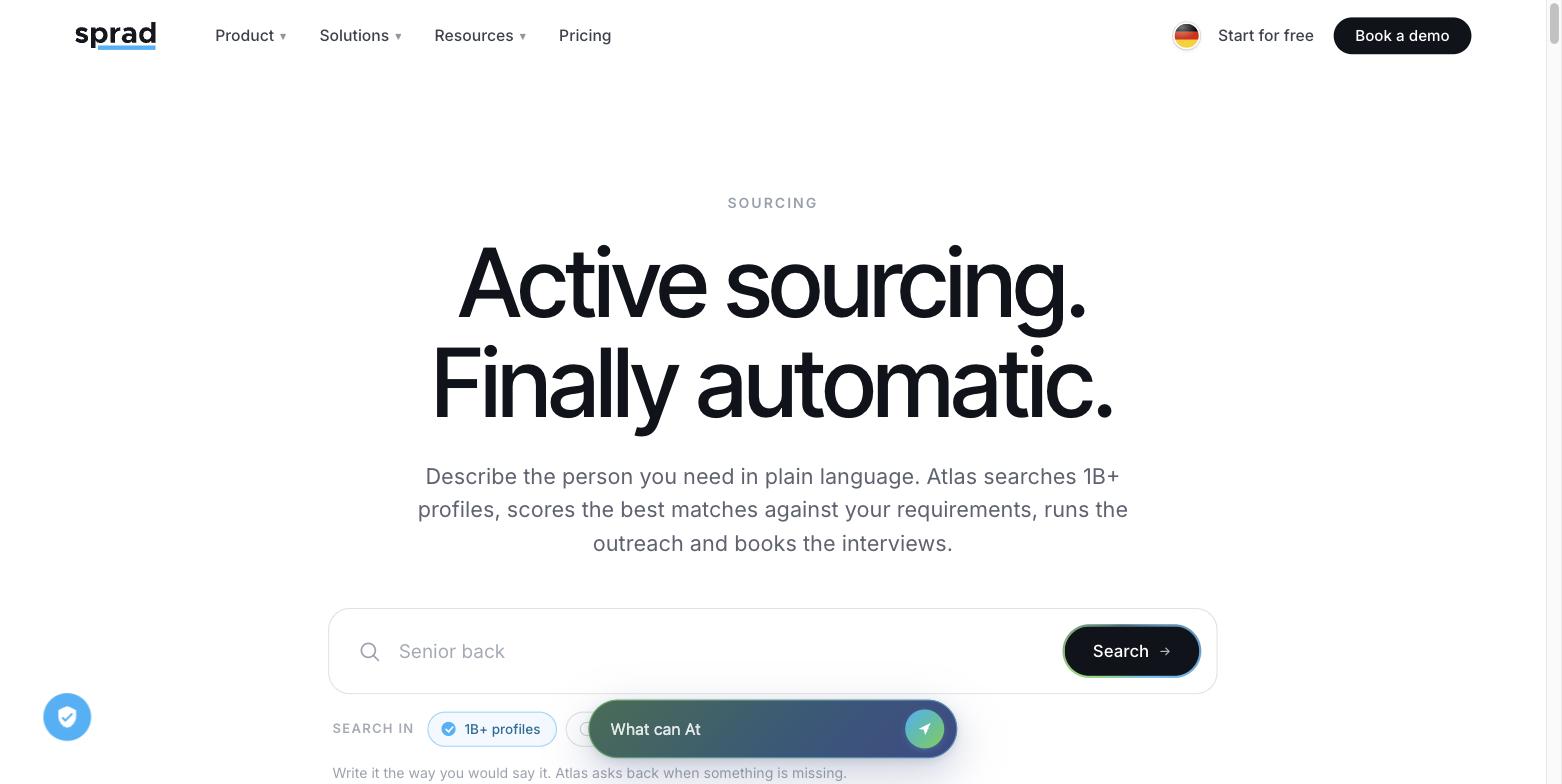
Sprad addresses the data lock-in and the closed network most directly. One search covers LinkedIn, XING, GitHub and the agency's own pool, and Atlas checks every profile against a plain-language requirement instead of matching keywords, so it also finds people with a thinly maintained profile. Outreach runs over LinkedIn (including InMail) and email, automated with follow-ups and AI templates, in one inbox: the system warns if someone was already contacted, also for another role or by a colleague. Employees' networks and an uploaded LinkedIn network can be searched too. The talent network stays free after cancelling, with a full raw-data export. Sprad has built recruiting software for seven years, starting with employee referrals, which is where the profile-to-requirement matching comes from. A full feature-by-feature look is in our Sprad vs. LinkedIn Recruiter comparison.
How Sprad performs in the public benchmark
In the Recruiting area of the public PeopleSearchBench, Atlas ranks first with 73.5 out of 100, well ahead of Juicebox (65.7). Our own tests in August 2026 on three real roles pointed the same way. Details and method: sourcing benchmark.
| System | PeopleSearchBench, Recruiting |
|---|---|
| Atlas (Sprad) | 73.5 (first) |
| Lessie (publisher of the benchmark) | 68.2 |
| Juicebox | 65.7 |
| Exa | 64.7 |
| Claude Code | 50.5 |
PeopleSearchBench (Recruiting), published by Lessie, October 2026. Other systems' scores as published in the benchmark; Atlas measured with the benchmark's open test procedure. In addition, Atlas delivered 14.2 matching profiles out of 15 per recruiting search.
2. Juicebox (PeopleGPT) — cheapest seat price, NLP-first search
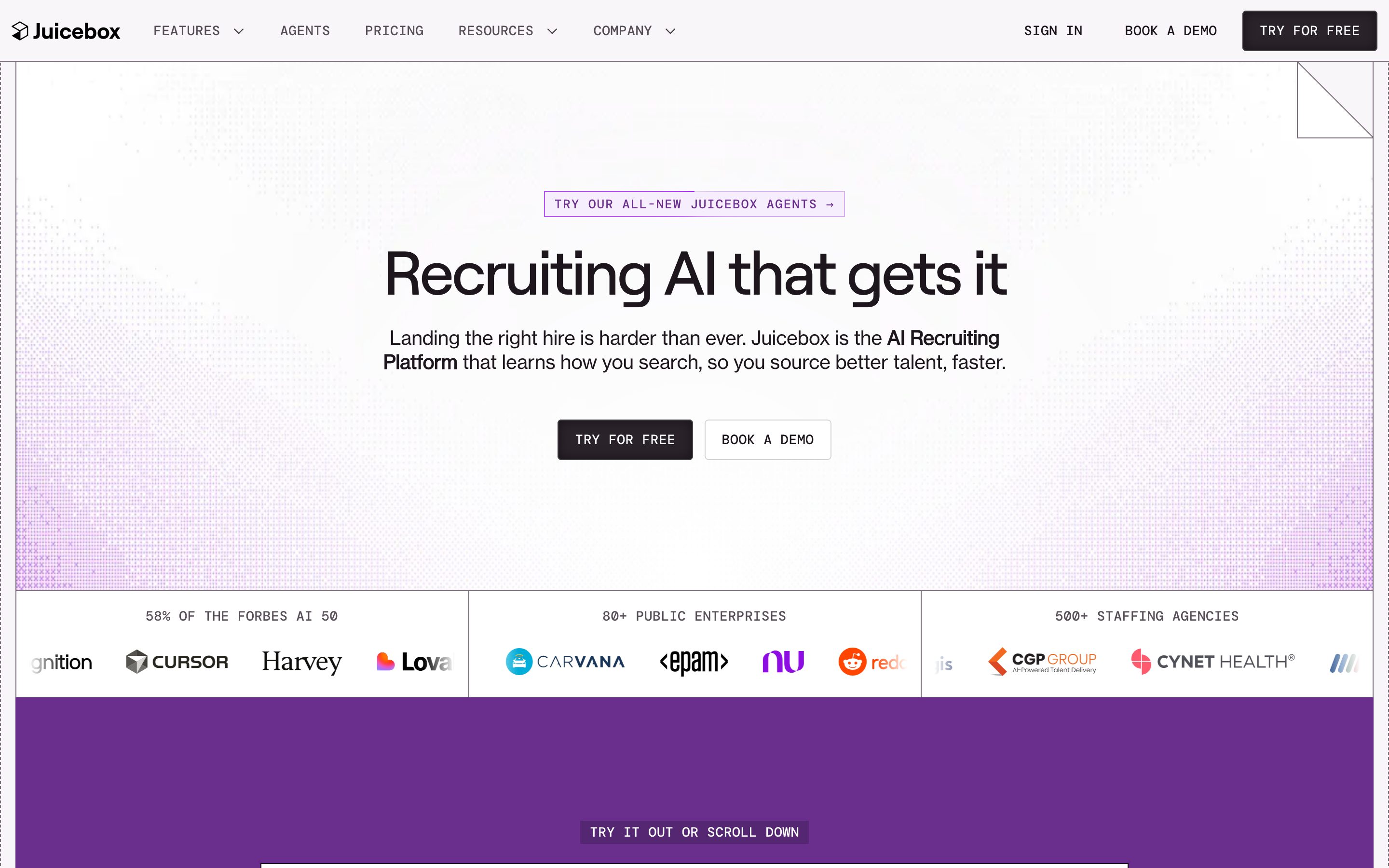
Juicebox lets you describe a role in plain language instead of building Boolean strings. Reviewers rate it close to 5/5, though on a still-small review base (under 50). It exports candidate CSVs with verified emails, stronger data portability than LinkedIn offers.
3. hireEZ — best for GitHub-heavy tech sourcing
hireEZ's GitHub integration is a genuine differentiator for engineering-heavy searches — but the same reviewers who praise it report renewal prices that can triple without warning, with a median annual deal around $13,000 according to Vendr's transaction data. Full comparison: LinkedIn Recruiter vs. hireEZ.
4. SeekOut — for diversity and specialist sourcing at scale
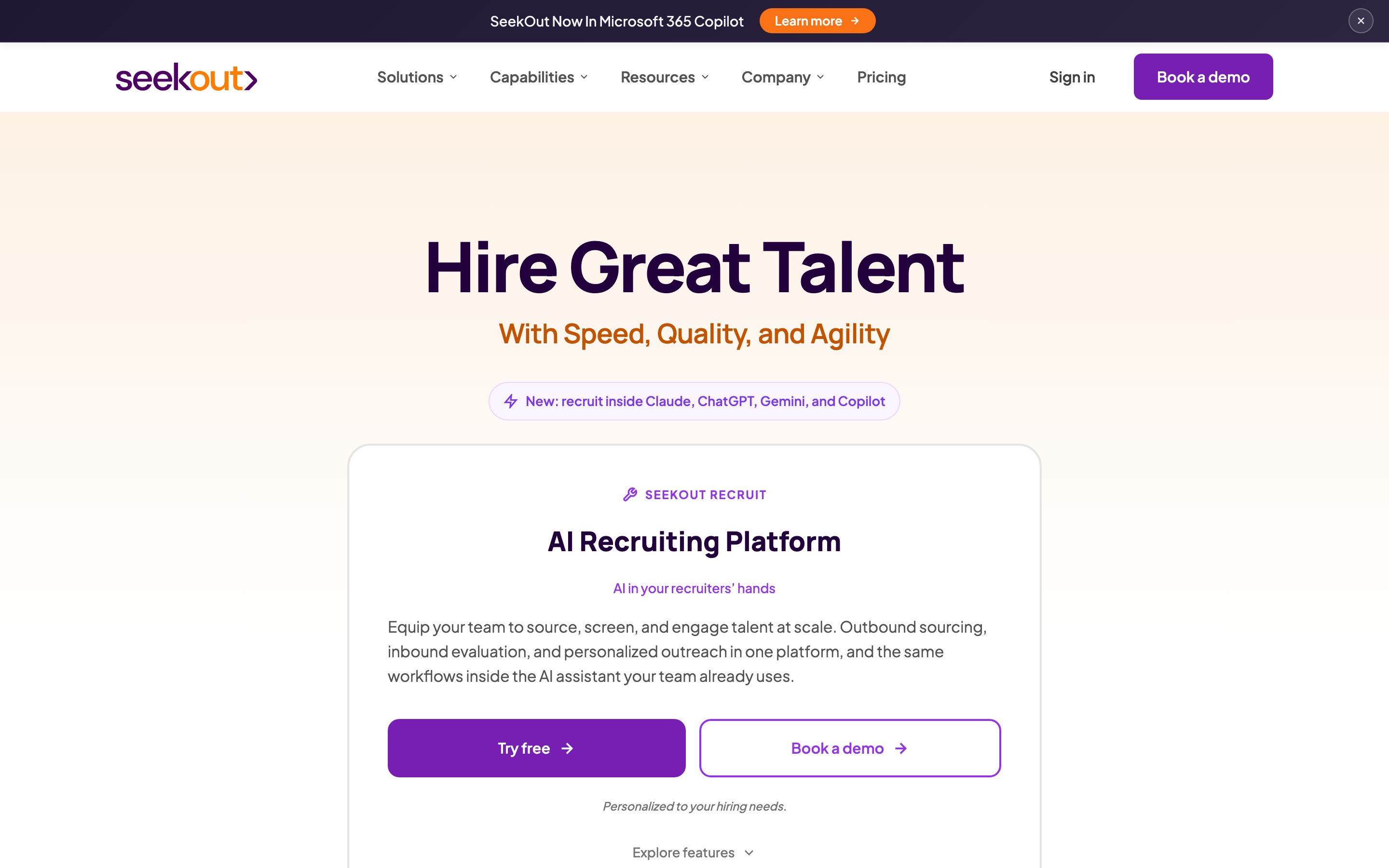
SeekOut's strength is patent, clearance and diversity-focused search that goes beyond what LinkedIn or hireEZ offer, rated 4.7/5 on Capterra, and Vendr's buyer data puts a 10-seat deployment at $45,000-$90,000/year. Full comparison: LinkedIn Recruiter vs. SeekOut.
5. XING TalentManager — the DACH-native option
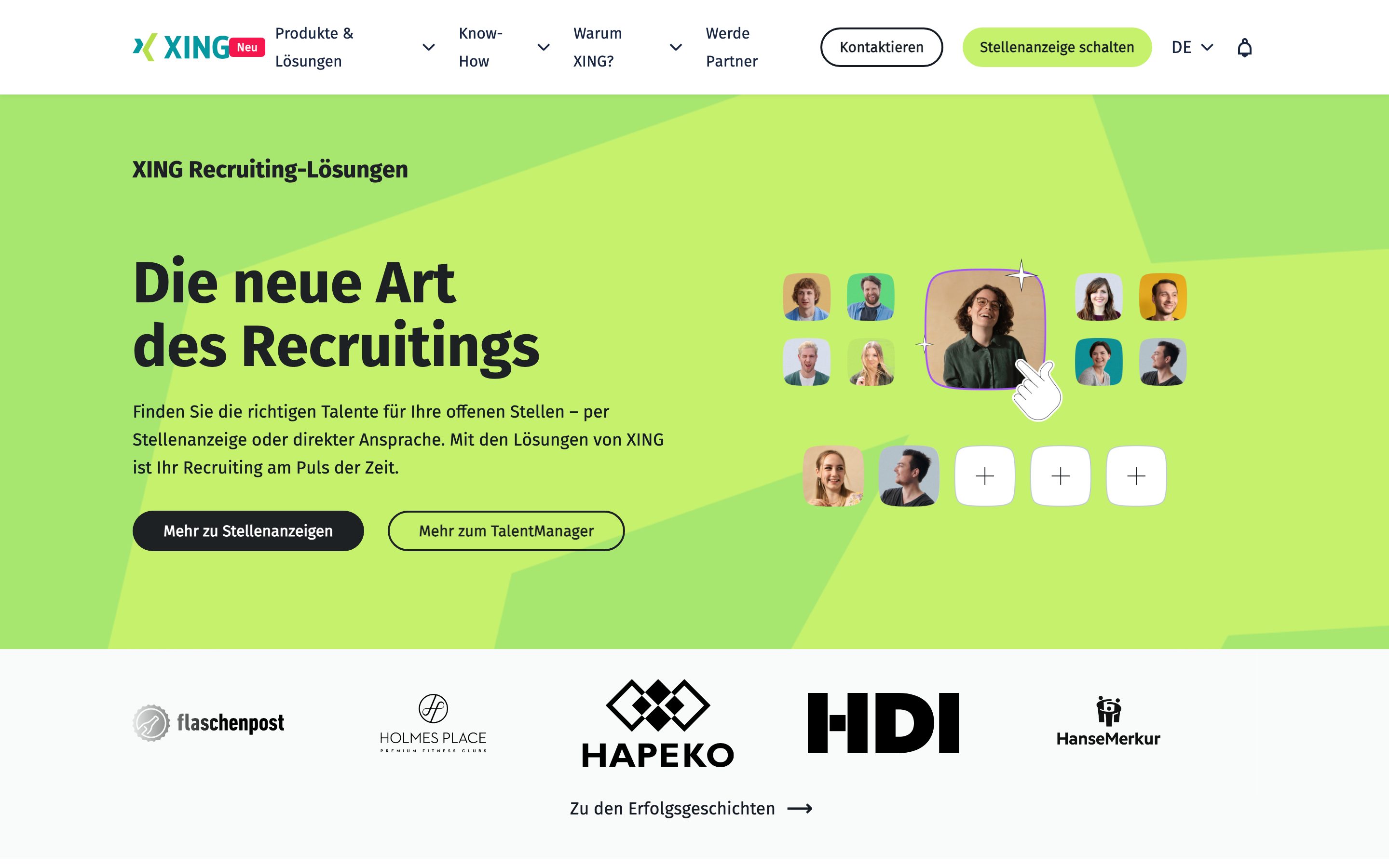
XING TalentManager is the closest thing to a "LinkedIn for German-speaking markets," with a candidate base concentrated in DACH — but for an agency sourcing almost exclusively in Germany, Austria or Switzerland, network depth in the right geography can matter more than AI polish.
6. Talentwunder — job-publishing plus sourcing, DACH-focused
Talentwunder combines candidate sourcing with distribution to 900+ job boards. Public review data is essentially nonexistent — zero reviews found on Capterra as of September 2026 — which makes it the hardest tool on this list to verify independently.
When to stay on LinkedIn Recruiter
Switching is not always right. LinkedIn Recruiter still earns its price when three things are true:
- Your candidates are LinkedIn-active. For roles where almost everyone has a maintained LinkedIn profile, no other database adds much reach.
- InMail works for you. If your team's InMail response rate is positive and the workflow already lives in Recruiter projects, switching has a real retraining cost.
- You have fewer than six seats and no export need. Under the cap, Lite stays below $1,000/month in total and the pricing problem does not bite yet.
A middle path many agencies take: keep one or two seats at renewal and run the rest of the team on a cheaper tool. Sprad is built to sit next to a LinkedIn seat, because the credits belong to the whole company, not to a person. What you give up by switching entirely: LinkedIn's native inbox and its own InMail credits. Sprad can send InMails from your own LinkedIn account, which keeps that channel open.
What growth actually costs
Seat price alone hides what happens once an agency actually adds recruiters. Recruiter Lite is capped at five self-serve seats; a sixth recruiter forces a move to Corporate pricing that LinkedIn negotiates individually and never publishes. Take an agency growing from three recruiters to eight: three Lite seats run about $5,040/year ($140 × 12 × 3). Cross five seats and, using Leonar's 2026 range of $10,000-$12,960 per seat per year, eight seats become $80,000-$103,680/year, before any InMail add-ons.
The same eight recruiters on Sprad: Recruiter Lite is 79 € per seat and month, so 7,584 € per year (79 × 12 × 8), with deep search and contact data billed by credit. Eight Atlas Recruiter seats (299 €, unlimited fair-use search, one LinkedIn and mailbox account per seat included) come to 28,704 € per year. Both stay below the Corporate range, and the free start covers occasional use. Whoever still needs LinkedIn's inbox can keep two Corporate seats and put the other six on Sprad. The exact saving depends on how many separate LinkedIn and XING licenses you cancel; we see 30-80% lower costs in that situation. Assumptions: list prices in USD/EUR as of October 2026, 12 monthly payments, no negotiated discounts.
Which alternative fits which agency
- Boutique agency, 1-5 recruiters, tight budget: Sprad's free start and flexible credits (Recruiter Lite 79 €/seat) avoid paying for idle capacity; Juicebox is the cheapest pure-seat option if usage-based pricing isn't a priority.
- Tech-focused agency: hireEZ's GitHub signal is hard to match, as long as the renewal-price risk is budgeted for upfront.
- Mid-market or enterprise, diversity mandates: SeekOut's specialist filters justify its price at that scale.
- Agency about to cross five recruiters: this is exactly the point where LinkedIn's own pricing model punishes growth — worth comparing the seat math above before signing a renewal.
- DACH-only agency: XING TalentManager or Talentwunder for network depth, or Sprad if a German-language, EU-hosted tool that searches XING and LinkedIn together with a permanent talent pool matters more than local network size.
- Agency that must document candidate sourcing for GDPR: a tool with EU hosting and a processing agreement is the safer base; see the legal note below.
GDPR, AI Act and sourcing: what to check before you switch
Whoever sources candidates from public profiles processes personal data that was not collected from the person. Under Article 14 GDPR you must inform the person within a reasonable period, at the latest within one month of obtaining the data, and the legal basis is usually legitimate interest under Article 6(1)(f). This applies to every tool in this guide, including LinkedIn Recruiter, and a tool cannot take the duty from you. What a tool can do is make it easier: EU hosting, a data processing agreement under Article 28, and a record of who was contacted when. Ask each vendor for exactly these three things in the demo.
For AI-assisted ranking, the EU AI Act classifies recruiting systems as high-risk (Annex III). The high-risk obligations apply from 2 December 2027 under the Digital Omnibus, Regulation (EU) 2026/1744 (in force since 27 July 2026), not from August 2026. In practice that means: a person decides, the AI prepares. Pick a tool that shows a reason for every ranked profile.
Three mistakes when switching
- Cancelling before exporting. LinkedIn project folders do not travel. Save the profiles you want to keep into your ATS or talent pool before the notice date, not after.
- Comparing seat prices only. Contact data, deep search and outreach are often billed separately. Always calculate the full month for one real role.
- Judging a tool by a demo search. Run the same three real roles in two tools and count how many of the first 15 profiles you would actually call. That is how we ran our August 2026 test, and it is a better yardstick than any feature list.
FAQ
What's the best overall alternative to LinkedIn Recruiter?
For agencies that source across LinkedIn, XING and their own pool, Sprad: AI check of every profile, LinkedIn and email outreach in one inbox, and a talent network that stays with the agency. For GitHub-heavy tech sourcing hireEZ is stronger, for diversity and specialist data SeekOut.
What's the cheapest alternative to LinkedIn Recruiter?
Sprad starts free (100 credits a month); Recruiter Lite is 79 € per seat and month (about 95 USD). Juicebox at $99/month is the cheapest published pure seat price among the other AI tools here.
Is there a German or DACH-focused alternative?
XING TalentManager and Talentwunder are DACH-native. Sprad is EU-hosted with a German interface and searches LinkedIn, XING and GitHub together.
Which alternative lets candidates stay with the agency after cancelling?
Sprad and Talentwunder build a persistent pool the agency keeps; with Sprad the talent network stays free after cancelling and the raw data can be exported. Juicebox exports CSVs with emails, which is more portable than LinkedIn but not an owned, searchable pool.
Do these alternatives search outside their own database?
Sprad, Juicebox, hireEZ and SeekOut search beyond a single closed network; XING TalentManager and Talentwunder search mainly within their DACH ecosystems.
What does LinkedIn Recruiter cost once an agency passes five seats?
Lite stays under $1,000/month for up to five seats. A sixth recruiter forces Corporate pricing, which third-party data puts at $10,000-$12,960 per seat per year; eight recruiters can reach $80,000-$103,680 per year before add-ons.
Can I use a LinkedIn Recruiter alternative and keep one LinkedIn seat?
Yes, and many agencies do. Credits at Sprad belong to the whole company, so one or two people can keep LinkedIn while the rest search in Sprad.
Is sourcing with an alternative GDPR-compliant?
Compliance depends on how you use the tool, not on the tool alone: inform candidates under Article 14 GDPR, document the legal basis and sign a processing agreement. EU hosting makes this simpler.
How do I know if a tool really uses AI on each profile?
If results appear instantly, it is almost always a (semantic) keyword search. A real AI check reads every profile against your requirements and therefore takes longer; Sprad's Quick Search returns first results in about 3 seconds, the deep search takes a few minutes.
What does Sprad not do yet?
No AI note-taker for calls, no placement reporting (planned), no SMS channel (WhatsApp is available for candidate communication), and the customer search for agencies is still in beta. The smallest plan has no unlimited use, because deeper search costs more AI; credits are flexible instead.
The bigger picture
Every tool on this list solves at least one of LinkedIn Recruiter's four common complaints. Sprad combines an owned talent network, a full raw-data export, a search across several networks and LinkedIn plus email outreach in one inbox, so an agency does not have to trade away external search. Start free with 100 credits a month (200 in the first month) at sprad.io/industry/recruitment-agencies.
Jürgen Ulbrich
Jürgen Ulbrich has more than a decade of experience in developing and leading high-performing teams and companies. As an expert in employee referral programs as well as feedback and performance processes, Jürgen has helped over 100 organizations optimize their talent acquisition and development strategies.