Lessie AI is a general-purpose AI people-search agent, not a recruiting tool. You describe who you want in plain English, it searches 100+ public sources (LinkedIn, X, YouTube, GitHub, company sites and more), scores the matches and can send outreach emails. It is worth a small test if you source across several platforms on a tight budget. It is a weaker fit if you need an ATS link, a shared team inbox or EU-compliant candidate handling, and independent proof is thin: its own benchmark is the main evidence, and Lessie is the publisher. Basic costs $99 a month (list price $199) for 1,000 credits; one contact with a verified email costs about 5 credits (as of 30 October 2026). If recruiting is your main job, the better alternatives are tools with an ATS, a shared inbox and per-profile checking; we compare them below, with Sprad first.
What is Lessie AI, and what is it not?
Lessie AI is a web tool from Superlinear Technology Pte. Ltd. (named in the site footer). Its homepage describes an “AI People Search Engine”: you type a request such as “distributors and channel partners in health tech”, and agents return a table with profile, match score, link, company, title, email and country. Solution pages cover influencers, clients, investors, talent, partners and even property leads, plus a library of free utilities (for example a Boolean string generator and an AI resume screener).
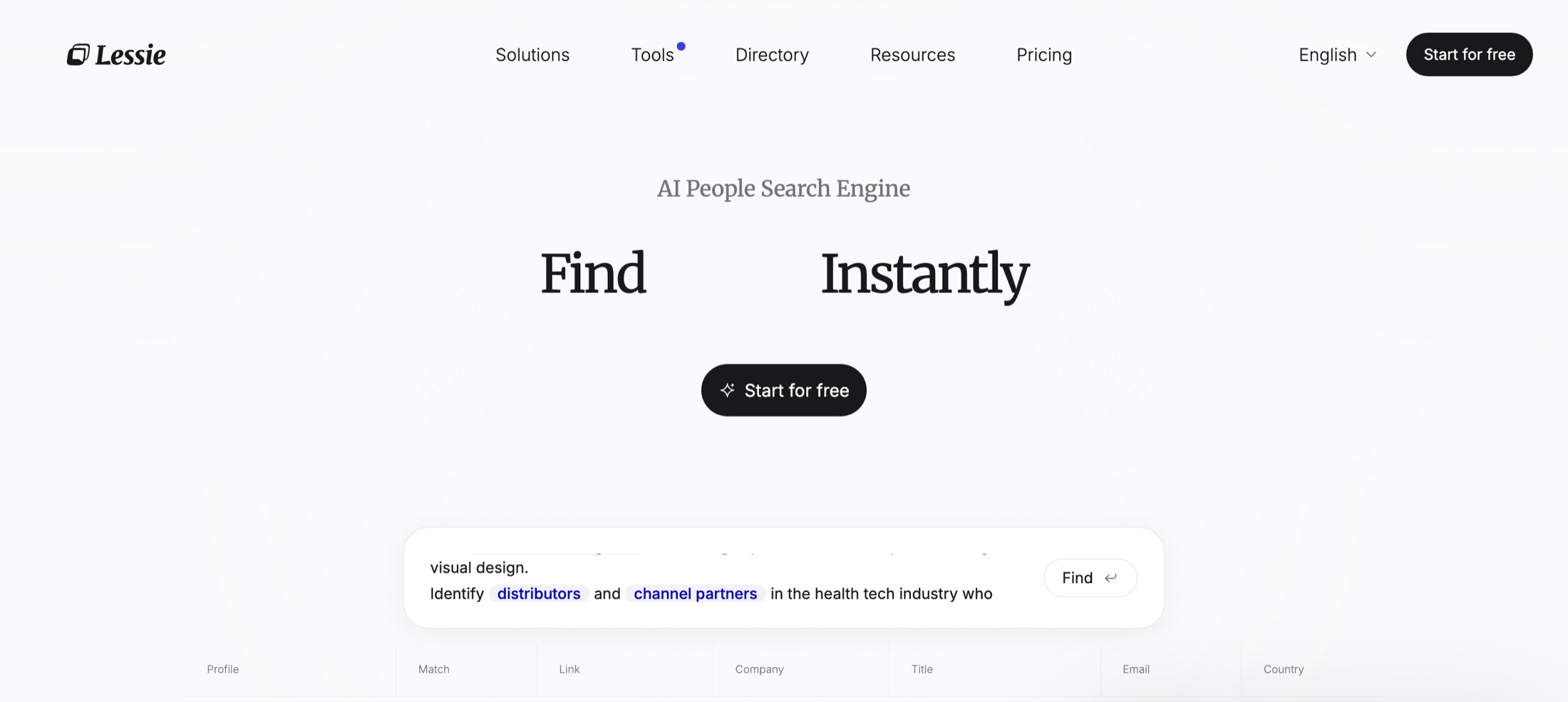
The important point for recruiters: recruiting is one of eight use cases. That explains both the strengths (wide source coverage, simple pay-per-result credits) and the gaps (no applicant or pipeline workflow, no pre-qualification step that we could find in its public documentation).
What does Lessie AI do well?
- Sources beyond LinkedIn. It claims 100+ sources including X, YouTube, TikTok, Instagram, GitHub, company websites and podcasts. For niche profiles, such as developers who publish open-source work or experts who speak at podcasts, that is a real advantage over a pure LinkedIn search.
- Plain-language search with a score. Results are ranked by profile match, activity and reachability, according to its FAQ. A hands-on review by MakerStack (April 2026, verdict 7.1 out of 10) found niche, behaviour-based queries to be the strongest part.
- Pay only for results. Starting a task costs nothing; a fully matching result costs 2 credits, an email unlock 3, a phone number 8 (Lessie pricing page, 30 October 2026).
- Search and outreach in one place, with email campaigns on every paid plan and an API/CLI (“Skills”) for automation.
Where is Lessie AI limited?
- No recruiting workflow. MakerStack notes there is no CRM; Lessie's own FAQ says team collaboration is planned, not available. One-click export to a CRM or ATS is listed only under Enterprise.
- Credits expire every month and refunds for unused credits are not supported, so an uneven sourcing month wastes budget.
- Self-reported accuracy. The site claims 95 % verified contacts, while its own solution cards show figures such as “15+” for contact accuracy. We could not verify the 95 % and found no independent test of it.
- Daily email caps of 50, 100 or 200 per plan limit volume, and there is no shared inbox that shows whether a colleague already wrote to the same person.
- Prices move. In April 2026 MakerStack listed Basic at $39.90 and Pro at $159; on 30 October the page showed $99 and $299 with struck-through list prices of $199 and $499. Check the page before you budget.
Lessie AI pricing: what does it cost, and what does a contact really cost?
Lessie sells monthly credit plans. The pricing page shows a monthly view and an annual toggle labelled “Save 62 %”; the table lists the monthly view.
| Plan | Price per month (monthly billing) | Credits per month | Emails per day | Parallel tasks |
|---|---|---|---|---|
| Basic | $99 (struck-through list price $199) | 1,000 (+500 limited-time bonus) | 50 | 1 |
| Pro | $299 ($499) | 4,000 (+2,000 bonus) | 100 | 3 |
| Max | $699 ($800) | 10,000 (+5,000 bonus) | 200 | 5 |
| Enterprise | On request | Not stated | Not stated | Not stated |
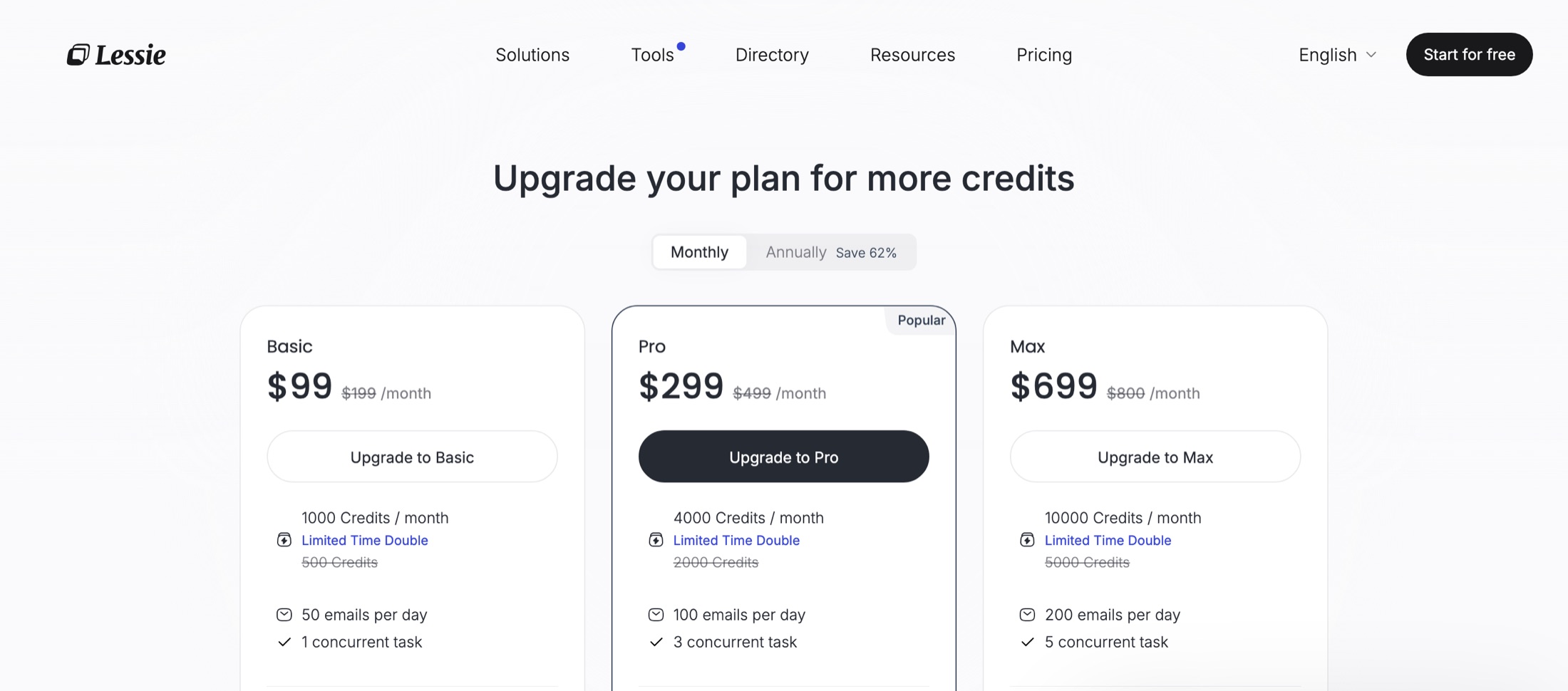
Calculation: a recruiter who wants a contactable person needs the profile (2 credits) and the email (3), so 5 credits per contact. The free credits Lessie shows as a “limited-time double” may disappear. For comparison, the same steps at Sprad cost 2 credits per displayed profile plus 1 credit for “find email”. The currencies differ and a “profile” is not defined identically, so read this as order of magnitude, not as a quality comparison.
| Scenario (assumption: every result is a full match and every email is found) | Lessie AI | Sprad |
|---|---|---|
| 100 contacts with email per month | 100 × (2 + 3) = 500 credits, about $50 on Basic at $99 (about $100 at list price) | 100 × (2 + 1) = 300 credits, about 27–30 € (0.09–0.10 € per credit); the free plan's 100 credits cover about 33 contacts |
| 500 contacts with email per month | 2,500 credits: needs Pro at $299 (4,000 credits that do not roll over) | Recruiter Lite 79 € (500 profiles included) plus 500 email credits, about 125–130 € |
| Add a phone number | +8 credits per number | +10 credits per number |
Sources: Lessie pricing page and Sprad pricing, both as of 30 October 2026, net prices.
Hidden costs of Lessie AI
- Expiring credits: unused credits lapse every month and are not refunded, so a quiet month still costs the full $99.
- Temporary bonus credits: the +500 / +2,000 / +5,000 shown as a limited-time offer are not part of the plan; budget with the base amount.
- Moving prices: Basic was listed at $39.90 in April 2026 and at $99 on 30 October (list price $199). Re-check before you sign.
- No team layer: team collaboration is planned, so each recruiter needs an own account, and ATS or CRM export is Enterprise only (price on request).
- Email caps: 50 emails a day on Basic; more volume means the next plan, not more credits.
What does it cost for a team of 5 or 15 recruiters?
Assumptions: 100 contacts with email per recruiter and month, every result a full match, one Lessie Basic account per recruiter (no team plan exists), Sprad Recruiter Lite at 79 € per seat plus 1 credit per email at 0.09–0.10 € (annual billing, net). Different currencies, so read it as order of magnitude.
| Team | Lessie AI (Basic, monthly) | Sprad (Recruiter Lite + email credits) |
|---|---|---|
| 5 recruiters | 5 × $99 = about $495 per month | 5 × 79 € + 500 credits = about 440–445 € per month |
| 15 recruiters | 15 × $99 = about $1,485 per month | 15 × 79 € + 1,500 credits = about 1,320–1,335 € per month |
| What is extra | No shared inbox; ATS export only in Enterprise | One inbox, ATS integrations from 3 seats, own CRM and talent network |
Is it worth the price? For one person who needs a few hundred contacts across platforms, Basic is fair. Once several people work in parallel, the per-account cost and missing shared state make a team tool cheaper in practice. See Sprad pricing for the current plans.
What do users say? Is Lessie AI worth it?
On 30 October 2026 we found no user reviews on Trustpilot, Product Hunt or Reddit, and one hands-on review (MakerStack, April 2026, 7.1/10) that praised niche search and criticised price and expiring credits. Most other pages are directory listings that repeat the vendor's claims. So the honest answer to “is Lessie AI worth it?” is: worth a free test, not yet worth a team-wide rollout without your own proof.
How does Lessie AI perform in the benchmark?
Lessie's team published PeopleSearchBench (arXiv 2603.27476, latest version 30 August 2026): 119 queries in English, Portuguese, Spanish and Dutch across four areas, 30 of them in recruiting. Each returned person is checked against the query's criteria through live web search, and the authors report a human agreement of kappa 0.84. We only use the Recruiting area here; Lessie published 68.2 there.
| PeopleSearchBench, Recruiting (0–100) | Score |
|---|---|
| Sprad (Atlas)1 | 73.5 (own re-measurement, converted) |
| Lessie AI (published) | 68.2 |
| Juicebox (published) | 65.7 |
| Exa (published) | 64.7 |
| Claude Code (published) | 50.5 |
1 PeopleSearchBench (Recruiting), published by Lessie, October 2026. Other systems' scores as published in the benchmark; Atlas is our own re-measurement with the benchmark's open test procedure, converted to the published scale; not an official entry. Contact data came from the “find email” button. Method and details.
How to read it: In the Recruiting area our own re-measurement gives Atlas 73.5, converted to the published scale (Lessie 68.2 as published), and it returns almost always 15 matching profiles per search (14.2 on average in the re-measurement).
Which teams is Lessie AI right for, and which not?
- Right for: solo sourcers, founders hiring their first people and small agencies that search across platforms and accept manual tracking in a spreadsheet or their ATS.
- Not right for: in-house teams with a shared pipeline, agencies that must avoid double outreach between colleagues, and teams in the EU that need documented candidate handling (see below).
What should DACH, UK and US teams check before using it?
- GDPR: whoever collects candidate data from public sources must inform the person, see Article 14 of Regulation (EU) 2016/679, and needs a legal basis. Lessie states GDPR and CCPA compliance; that is a self-declaration. In the US, the CCPA gives Californians rights over such data.
- Cold email in Germany: Section 7 UWG requires prior consent for advertising emails, including B2B, so automated email campaigns to German-speaking candidates need care. In the US, the CAN-SPAM Act requires opt-out and honest headers.
- EU AI Act: systems that filter or evaluate candidates can count as high-risk (Annex III); keep a human in the decision.
Lessie AI alternatives: which tools fit recruiting better?
Teams usually look for an alternative to Lessie AI for three reasons: no ATS link, no shared inbox, and credits that expire. If recruiting is your main job, pick a tool built for it. We recommend Sprad for recruiting because Atlas checks every profile individually, because LinkedIn, email and InMail run from one inbox, and because our own re-measurement in the Recruiting area of the benchmark above gives Atlas 73.5, converted to the published scale (Lessie 68.2 as published); Sprad is the vendor of Atlas itself; the others have real strengths in the cases listed.
| Tool | Best for | Search | Outreach | Published price | ATS / team workflow |
|---|---|---|---|---|---|
| Sprad | Recruiting and agency teams | Requirement search, every profile checked; LinkedIn, XING, GitHub, own pool and employee networks | LinkedIn, email and InMail in one inbox, follow-ups, voice/chat pre-qualification | Free start; 79 €/seat/month; 299 €/seat/month | Own CRM/ATS and talent network, ATS integrations from 3 seats |
| Lessie AI | Multi-platform people search | Natural language over 100+ sources | Email campaigns, 50–200 emails per day | $99–699/month | ATS/CRM export in Enterprise only |
| Juicebox | Solo recruiters | Natural language over 800M+ profiles (vendor claim) | Via partner tools; agents as add-on | From about $99/month (annual) | 41 ATS integrations (vendor claim) |
| SeekOut | Enterprise sourcing | 1B+ profiles, deep filters | Email sequences | Solo about $149–179/month; teams on request | ATS sync in higher plans |
| hireEZ | Boolean power users | 100+ filters | Sequences, partner integrations | From about $169/month; teams on request | 70+ ATS integrations (vendor claim) |
1. Sprad — the most complete option for recruiting teams
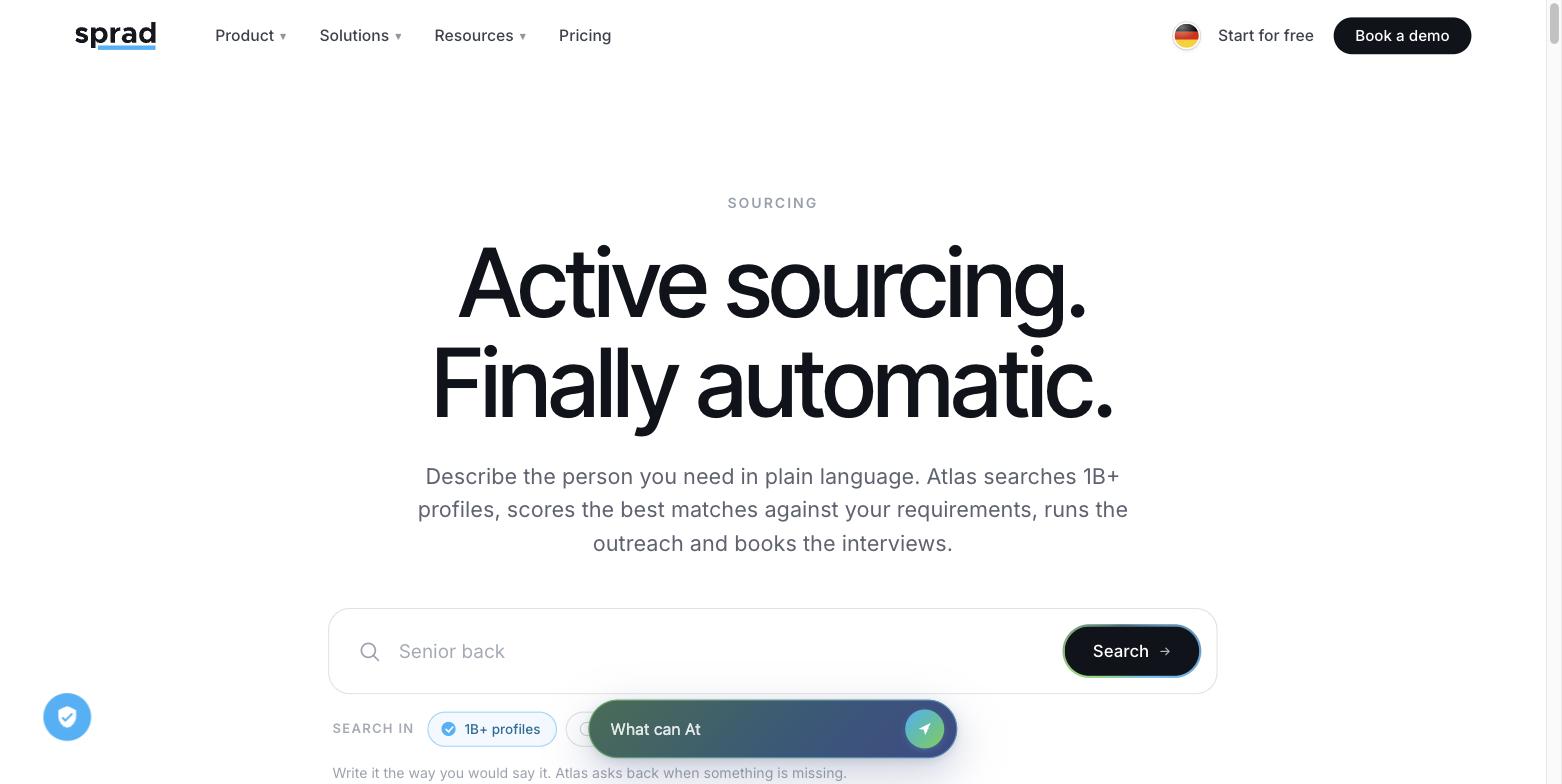
Sprad takes a requirement instead of a Boolean string. Atlas checks every profile individually against your requirements, with a reason per requirement, so it also finds people whose profile lacks the “right” keywords. LinkedIn and email run automated with follow-ups and InMails from one inbox per talent, and the system warns if a colleague already contacted the person. Deep Context finds companies first and then people who worked there in a given period, such as a CFO who led an acquisition. Sprad has built recruiting software for seven years, starting with employee referrals. Plans: sprad.io/pricing. More: Active Sourcing, Active Sourcing tools compared, Juicebox alternatives, LinkedIn Recruiter alternatives.
2. Juicebox — natural-language search for solo recruiters
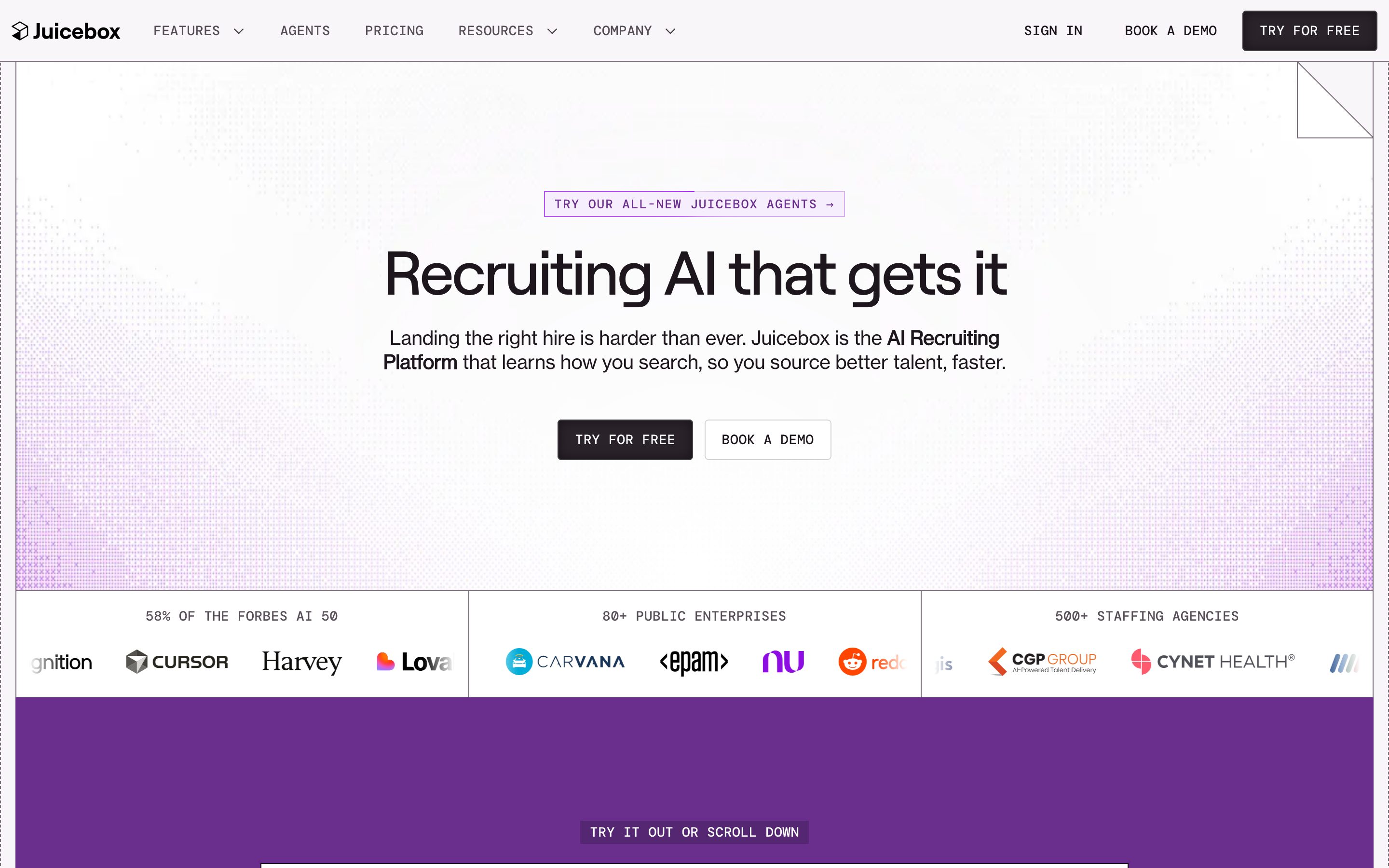
Juicebox is the closest match to Lessie for a single user. It adds ATS connections; it does not add a shared inbox or per-profile checking.
3. SeekOut — deep filters for enterprise sourcing
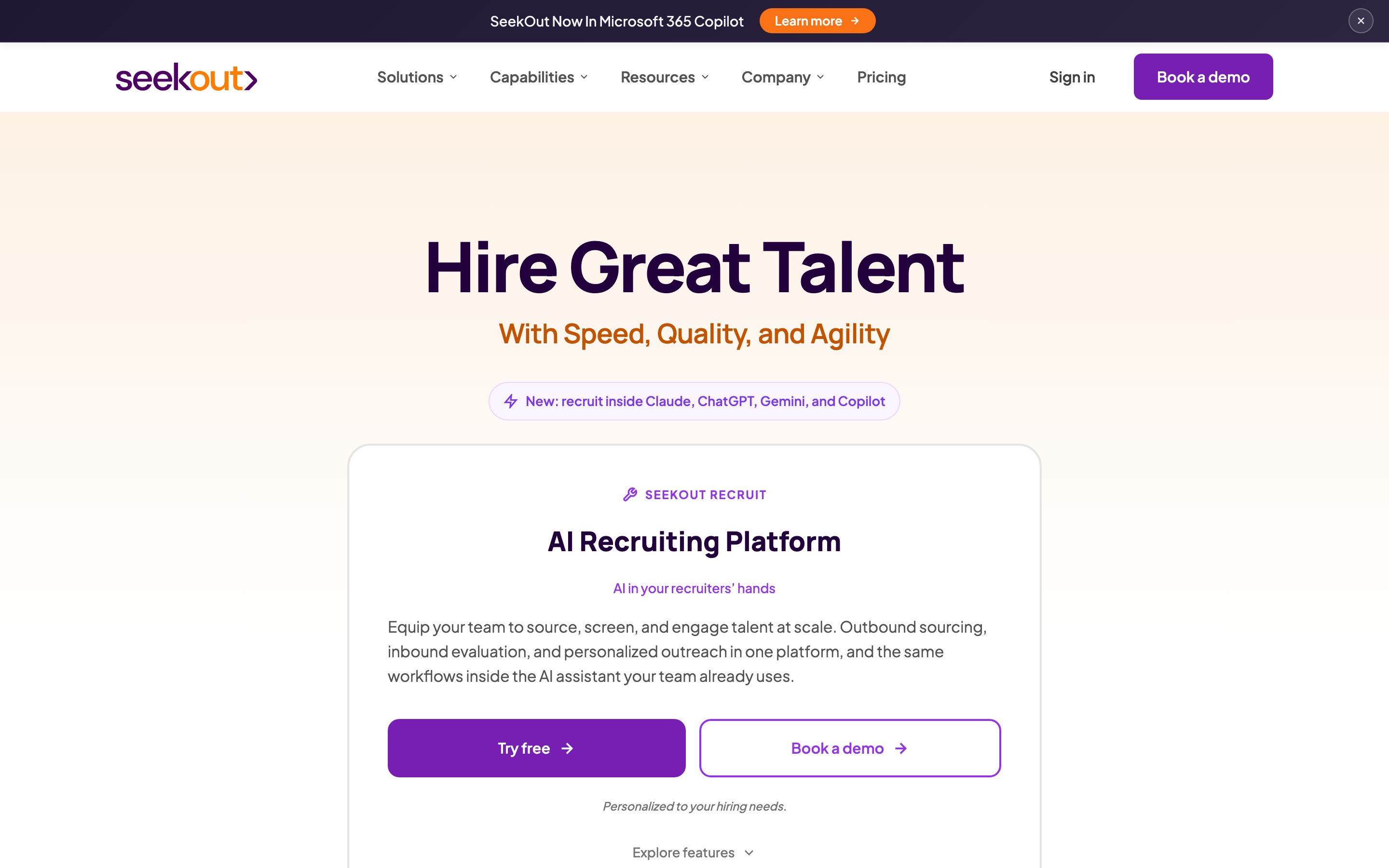
Choose SeekOut if a procurement team will run the evaluation and filter depth matters more than price.
4. hireEZ — Boolean power and 70+ ATS integrations
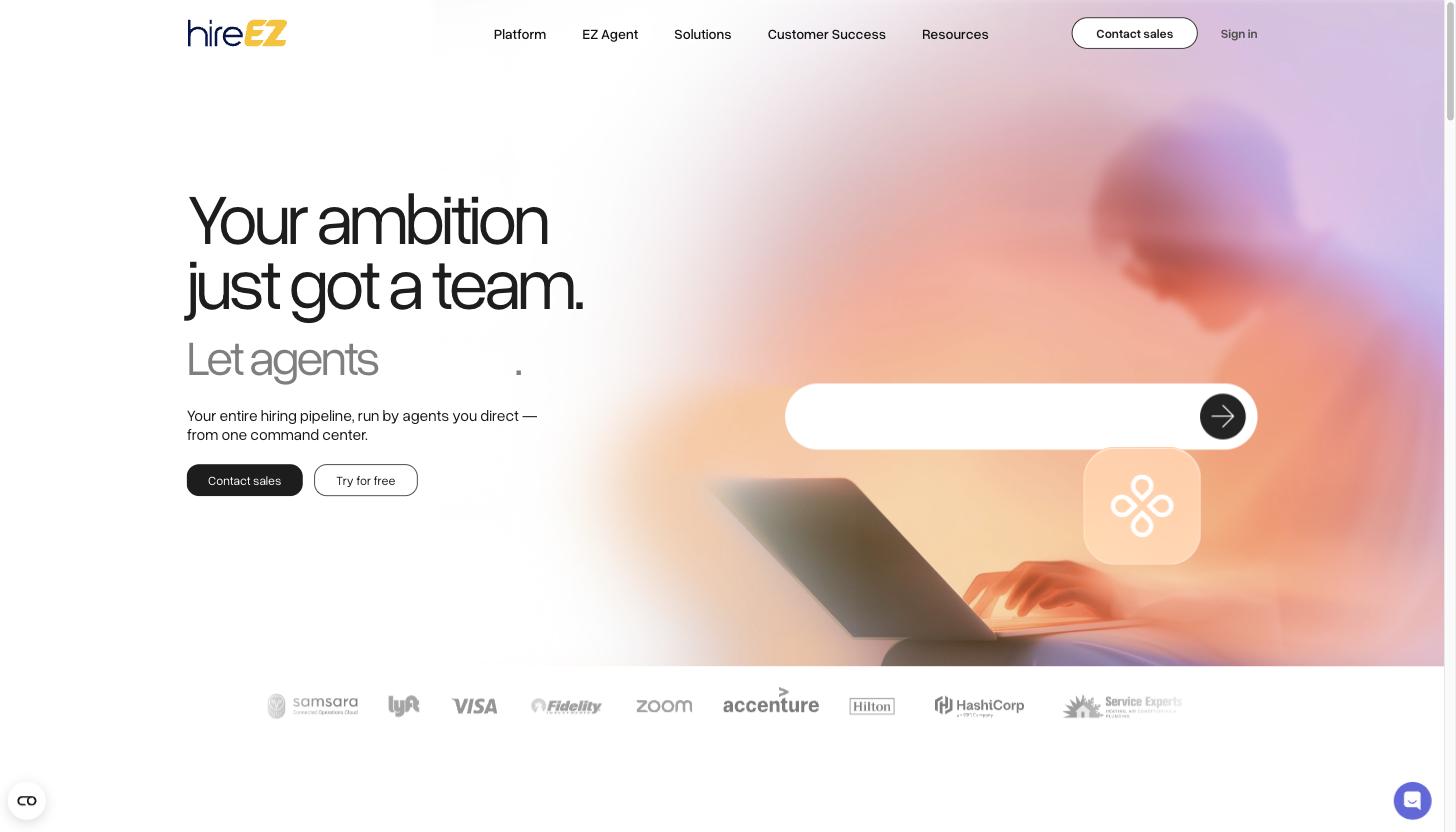
hireEZ suits teams that already think in Boolean strings. If you want to describe a person instead, look at Sprad or Juicebox.
Which Lessie AI alternative fits whom?
- In-house or agency team with shared pipeline: Sprad.
- Solo recruiter, small budget, ATS sync wanted: Juicebox.
- Enterprise with procurement and deep filters: SeekOut.
- Boolean power users with a large ATS: hireEZ.
- Experts, influencers and non-LinkedIn niches: stay with Lessie AI, it reaches sources beyond LinkedIn.
Sprad vs. Lessie AI: an honest comparison
Both start from a plain-language request. They differ in what happens afterwards: Lessie returns a ranked table of people from many sources, Sprad checks every profile against your requirements and carries the person through outreach and pre-qualification in one workspace. The table shows where each is better.
| Criterion | Lessie AI | Sprad |
|---|---|---|
| Built for | Eight use cases, recruiting is one of them | Recruiting and agency teams |
| Sources | 100+ public sources: X, YouTube, TikTok, GitHub, company sites; XING not named in what we read | LinkedIn, XING, GitHub, your own talent pool and employees' networks; 1B+ profiles |
| Result quality | Match score per person; accuracy figures are self-reported | Every profile checked against your requirements, with a reason per requirement |
| Outreach | Email campaigns, 50–200 per day | LinkedIn, email and InMail with follow-ups, WhatsApp for candidate communication |
| Shared state | No team layer yet, no shared inbox | One inbox per talent, warning on double contact, own CRM/ATS |
| Benchmark (PeopleSearchBench, Recruiting) | 68.2 (as published; Lessie is the publisher) | 73.5 (own re-measurement, converted) |
| Entry price | $99/month (Basic) | Free start; 79 € per seat and month (Recruiter Lite) |
| Credits | Expire monthly, no refund | Flexible credits; network and data stay after cancelling |
| Where it is weaker | No CRM, no ATS export below Enterprise, little independent proof | No AI call notetaker, no placement reporting, no SMS; deep search takes a few minutes |
Where Lessie AI is better: it reaches platforms such as X, YouTube and TikTok, and it needs no setup for a one-person test. Where Sprad is better: recruiting accuracy in the benchmark, the shared workflow, the combination of LinkedIn and email in one inbox, and teams of more than one person. Some teams use both: Lessie for niche communities, Sprad as the system of record.
How to test Lessie AI in 30 minutes
- Take three real roles, one easy, one niche, one with a thin-profile candidate you already know.
- Run each search and count how many of the first 15 results you would really contact.
- Unlock five emails and send yourself a test to see bounce risk before you pay for volume.
- Note the credits used and divide by contactable people; compare with your current cost per contact.
- Check where the data goes: export, tracking in your ATS, and who may email whom.
The typical mistake we see in teams: judging a tool by its headline benchmark or marketing figure instead of by cost per contactable person on their own roles.
FAQ
Is Lessie AI worth it?
For small teams that search across several platforms, a trial is reasonable. For recruiting teams that need a shared pipeline, an ATS link and a documented GDPR process, a recruiting-specific tool such as Sprad fits better.
What do Lessie AI users say?
We found no user reviews on Trustpilot, Product Hunt or Reddit on 30 October 2026, and one hands-on review (MakerStack, April 2026, 7.1/10).
What are the strengths and limits of Lessie AI?
Strengths: 100+ sources, plain-language search, pay per result, outreach included. Limits: no CRM, team collaboration only planned, expiring credits, self-reported accuracy and daily email caps.
How much does Lessie AI cost?
Basic $99 per month (list $199) with 1,000 credits, Pro $299, Max $699, Enterprise on request, as of 30 October 2026. A contact with email costs about 5 credits.
Is Lessie AI free?
The site offers “Start for free” but does not state the free limits; sources disagree. Sprad's free plan includes 100 credits per month.
Is Lessie AI the best people search tool?
In its own benchmark it leads overall. In recruiting and B2B, Sprad's Atlas scores higher after extrapolation; the benchmark has caveats, listed above.
Is Lessie AI GDPR-compliant?
Lessie states GDPR and CCPA compliance. As the user you remain responsible for informing candidates and for a legal basis.
What are the best Lessie AI alternatives?
For recruiting teams, Sprad; for solo recruiters on a small budget, Juicebox; for enterprise filters, SeekOut; for Boolean power users, hireEZ.
Sprad vs. Lessie AI: which is better?
Lessie is strong in non-LinkedIn niches; in the benchmark's Recruiting area our own re-measurement, converted to the published scale, gives Atlas 73.5 (Lessie 68.2 as published), and Sprad offers an ATS, shared inbox and LinkedIn plus email outreach. Sprad is the vendor of Atlas itself. For recruiting teams we recommend Sprad.
Is Lessie AI cheaper than Sprad?
For one user the entry cost is similar ($99 against 79 € plus credits). At 100 contacts with email per recruiter and month, five recruiters cost about $495 on Lessie and about 440–445 € on Sprad (assumptions above).
Jürgen Ulbrich
Jürgen Ulbrich has more than a decade of experience in developing and leading high-performing teams and companies. As an expert in employee referral programs as well as feedback and performance processes, Jürgen has helped over 100 organizations optimize their talent acquisition and development strategies.