Perbility's HR suite Helix does well with the people who actually rate it: 4.6 out of 5 stars from 50 reviews on OMR and an eKomi score of 4.8/5 from 4,700 ratings, as of September 2026. The short verdict for a recruitment agency or staffing firm, though, is that almost none of those reviewers are agencies. They're internal HR teams at banks and mid-size companies managing their own workforce — not businesses placing candidates with rotating clients. For that audience, "is Perbility worth it" is usually a question about the wrong tool.
Where Perbility gets reviewed — and where it doesn't
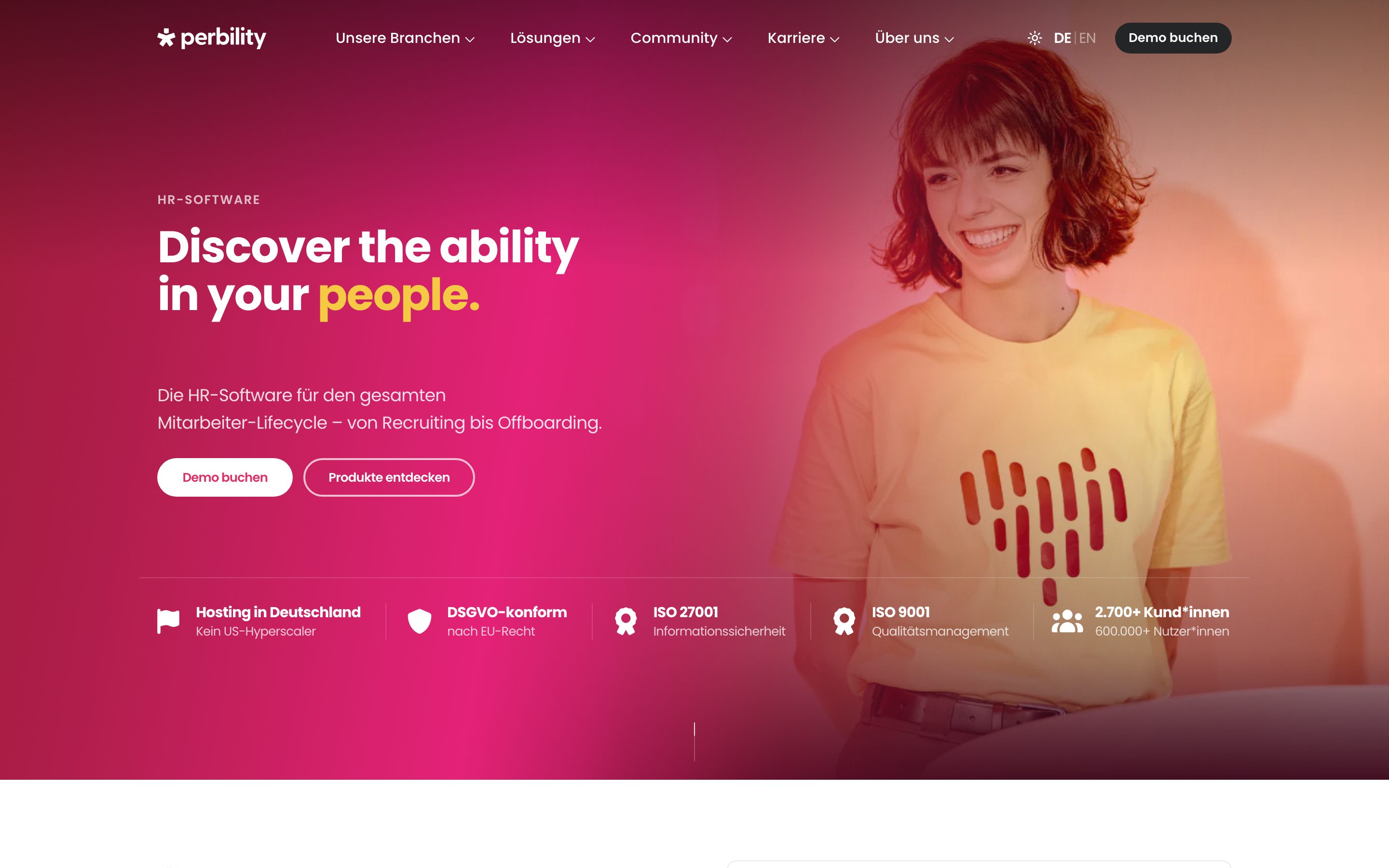
Perbility Helix has no G2 profile of its own and isn't listed with user reviews on German Capterra — a search only turns up an unrelated product also named "Helix," a US medical-practice management system with no connection to Perbility whatsoever. The only credible public sources are OMR Reviews (4.6/5, 50 ratings, as of September 2026) and an eKomi widget on an independent vendor overview (4.8/5, 4,700 ratings). Neither source shows meaningful representation from the recruiting-agency world — the reviewers OMR lists come predominantly from banking (Sparkassen, Volksbanken) with 51 to 1,000 employees. Concludis, Perbility's second product for high application volumes, has no review presence of its own either — another sign the company hasn't so far targeted a buyer base that publicly compares vendors on G2 or Capterra the way recruitment agencies typically do.
A typical user profile: the savings bank, not the recruitment agency
The reviewer demographics on OMR paint a clear picture: banks and public-sector institutions with a mid-three-digit headcount that want recruiting, training management and time tracking bundled into one system. That matches Perbility's own positioning for companies with 200 to 10,000 employees and its focus on compliance certifications like ISO 27001. A recruitment agency with 5 or 15 recruiters sourcing candidates for rotating clients simply doesn't show up in this review picture — not as a reviewer, and not as a customer example Perbility cites.
What users like
- Intuitive interface. Several OMR reviewers describe the system as "intuitive and self-explanatory," with an unusually short day-to-day ramp-up for the category.
- Everything in one place. Users highlight having "all HR processes in one location," which cuts down on the data-quality problems that show up when personnel files, time tracking and applicant management live in separate systems.
- Fast, competent support. "Fast help through support" and "competent contact persons" come up repeatedly, especially during the configuration phase.
- Real time savings. One reviewer cites "enormous time savings in everyday work," particularly for recruiting, training management and absence tracking.
- Modular system. Users value being able to start with individual modules and expand gradually rather than rolling out everything at once.
What users criticize
- Steep learning curve at first. One reviewer describes the module variety as "a forest of trees" — it takes real engagement to understand the system's underlying logic.
- Complex configuration. "Some functions require explanation," and certain settings aren't immediately intuitive — several reviews note setup taking longer than expected.
- Limited customization. Users report restrictions on adding columns to lists and difficulty fully mapping very specific HR processes.
- Relatively high costs without volume discounts. Several reviews cite pricing as a concern — consistent with the fact that Perbility publishes no price list at all, detailed in the Perbility pricing breakdown.
- Slow feature development. Requests for new features "take too long," with limited progress updates according to users.
- Occasional performance issues. A share of reviews mention noticeable slowdowns in daily work, though no consistent pattern emerges across ratings.
Who Perbility fits — and who it doesn't
Helix is a good fit for mid-size to large companies with 200 to 10,000+ employees, public administrations and regulated industries with high compliance requirements, who want to run their entire employee lifecycle — from digital personnel files to performance reviews — centrally and GDPR-compliant, ideally with DATEV integration. It's not suited to staffing firms and recruitment agencies: temporary-staffing compliance, deployment planning and collective-agreement pay calculation are entirely missing, along with any form of active candidate sourcing from external profiles. Small teams needing immediate implementation don't fit either — its own reviewers cite configuration effort as a real hurdle. And organizations that need sourcing beyond their own applicant database won't find a single tool built for it in Helix — the applicant-tracking modules process inbound applications, they don't generate new ones.
Alternatives for recruitment agencies
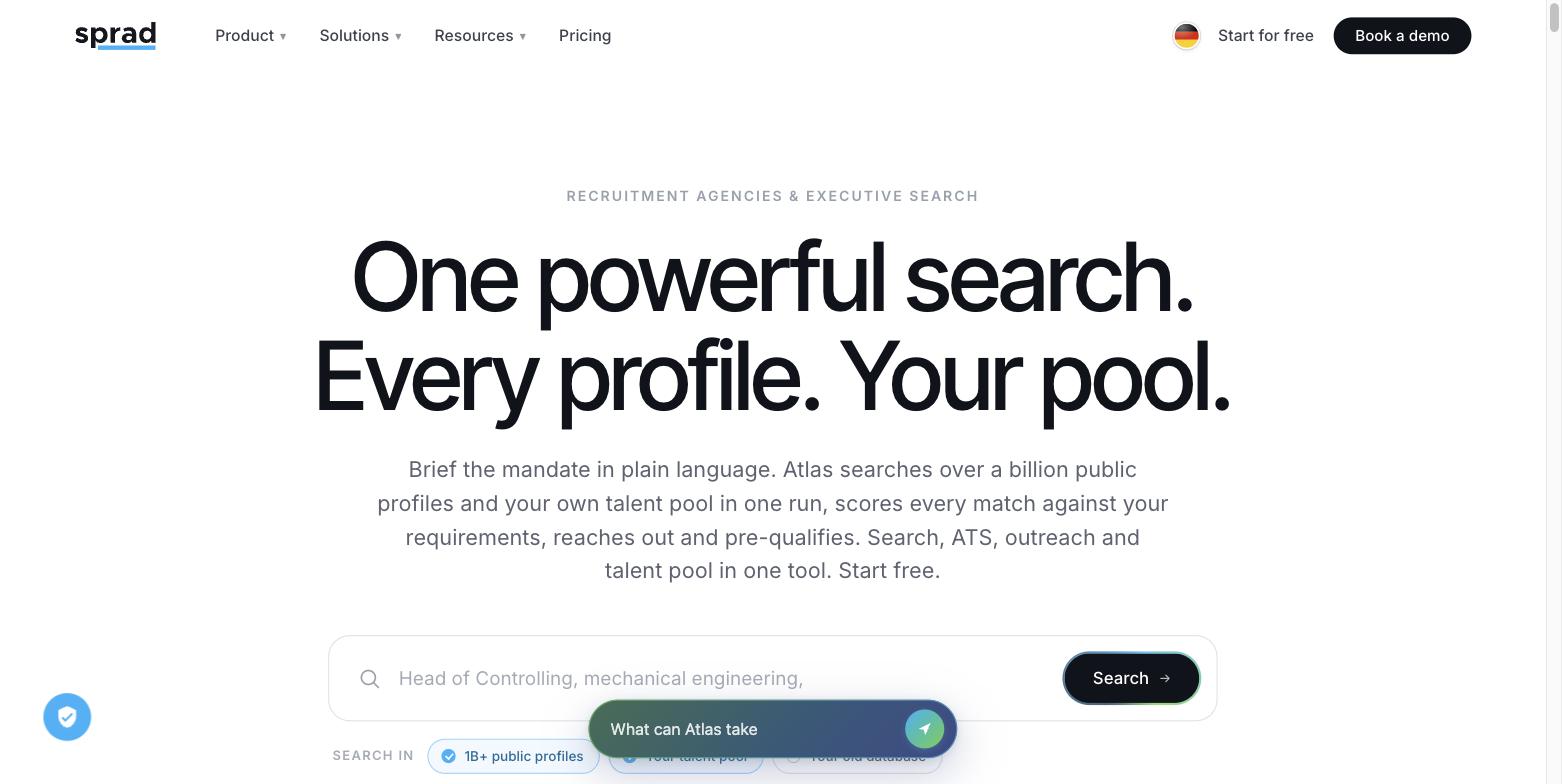
Sprad is the obvious alternative for recruitment agencies, because it covers exactly what Helix doesn't: requirement search across more than 1 billion public profiles and your own pool in a single pass, ATS, talent pool and voice pre-qualification in 12 languages, all for 59 € per recruiter per month plus usage credits — with 200 free credits a month and no credit card. For staffing firms with genuine temporary-staffing compliance needs, Zvoove is the specialized choice (deployment planning, pay-scale calculation, payroll), though it also publishes no public pricing and carries mixed support reviews since its 2021 merger. For recruitment businesses without staffing that mainly want to automate high application volumes, Coveto fits better, with publicly stated pricing from 119 €/month and a 4.8/5 rating from 219 OMR reviews. All three share something Perbility lacks: a positioning that explicitly names recruitment or staffing businesses as a target audience, rather than quietly assuming they're included.
FAQ
Is Perbility well reviewed?
Yes, among the users who actually rate it: 4.6/5 on OMR (50 reviews) and 4.8/5 via eKomi (4,700 reviews), as of September 2026. Those users are almost entirely internal HR teams, not recruitment agencies.
Are there Perbility reviews on G2 or Capterra?
No. Perbility Helix has no G2 profile of its own and isn't listed with user reviews on German Capterra.
What do users criticize most often about Perbility?
Configuration time at onboarding, an initially steep learning curve, limited list customization, and relatively high costs without volume discounts — the last of which lines up with Perbility's lack of any public price list.
Is Perbility suitable for a recruitment agency or staffing firm?
Barely. It lacks temporary-staffing compliance, deployment planning, pay-scale calculation, and any sourcing tool for external candidates — Perbility is built for the internal HR management of companies with their own employees.
What's the best alternative for a recruiting agency?
Sprad covers sourcing, screening and CRM in one tool, with 200 free credits a month. Zvoove is more specialized for pure staffing, and Coveto fits high application volume without a staffing component.
Why doesn't Perbility have reviews from recruitment agencies?
Because the product isn't sold to them. Perbility's own customer examples and the reviewer demographics on OMR show almost exclusively internal HR teams at banks, insurers and public institutions — not staffing or placement businesses.
The bigger picture
A good rating only tells you about the audience that actually rated the product — and for Perbility, that's clearly the internal HR department, not the recruitment agency. Sprad is built for the other audience entirely: an owned talent pool that survives a cancelled subscription, searchable alongside more than a billion external profiles, with screening and outreach in one workspace, starting at 59 € per recruiter with 200 free credits a month and no credit card. See what that means for your team at sprad.io/industry/recruitment-agencies.
Jürgen Ulbrich
Jürgen Ulbrich has more than a decade of experience in developing and leading high-performing teams and companies. As an expert in employee referral programs as well as feedback and performance processes, Jürgen has helped over 100 organizations optimize their talent acquisition and development strategies.