To recruit HVAC technicians, go where they work and learn: your own apprentices, trade programs, crew referrals and direct outreach to employed technicians who are open to a better offer. Demand is growing: the U.S. Bureau of Labor Statistics counts 440,900 heating, air-conditioning and refrigeration mechanics and installers, expects 11 % growth from 2025 to 2035 and about 40,600 openings a year, with a median wage of $61,010 (BLS Occupational Outlook Handbook, May 2025).
How big is the shortage, in numbers?
| Measure | Value | Source |
|---|---|---|
| Jobs (2025) | 440,900 | BLS, Occupational Outlook Handbook |
| Median pay (May 2025) | $61,010 a year, $29.33 an hour | BLS |
| Growth 2025–2035 | 11 % (about 48,200 jobs) | BLS |
| Openings per year | about 40,600, mostly to replace people who leave | BLS |
| Typical entry route | Postsecondary program (6 months to 2 years) or an apprenticeship of several years | BLS |
The last row matters for sourcing: a technician has either gone through a program or an apprenticeship, so both are places to find people before a competitor does.
Where do you find HVAC technicians?
| Route | Who you reach | Limit |
|---|---|---|
| Trade schools and community-college HVACR programs | Graduates with the certificate and EPA 608 exam | Entry level; you train them |
| Apprenticeships (union and non-union) | Technicians who learn on the job for several years | Long lead time |
| Referrals from your own crews | People your technicians already trust | As big as your team's network |
| Direct outreach (LinkedIn, Facebook groups) | Employed technicians who are open to a change | Many have no polished profile |
| Job boards | Active job seekers | Everyone posts there; competition is on pay and reputation |
| Paid social ads | Employed technicians who do not search | Need a short video or photo of your trucks and a fast reply |
| Staffing agencies | Pre-screened candidates | Fees are set by each provider; get them in writing |
Technicians also research an employer before they apply, so reviews, photos of your fleet and a named owner or foreman on LinkedIn make every message more credible. Alongside these channels, active sourcing reaches technicians who never answer a job ad; for the wider picture see how to find employees.
Copy-and-paste search strings
Use these in the LinkedIn keyword field, or put site:linkedin.com/in in front for a Google X-ray search. Swap the city for yours.
- Residential service:
("HVAC technician" OR "HVAC service technician" OR "HVAC installer") AND ("EPA 608" OR "Universal") AND Phoenix - Commercial and refrigeration:
("commercial HVAC" OR "refrigeration technician" OR "chiller") AND ("service technician" OR "lead tech") AND Dallas - Experienced leads:
("HVAC" AND ("lead technician" OR "field supervisor" OR "service manager")) AND ("NATE" OR "EPA 608") AND Atlanta
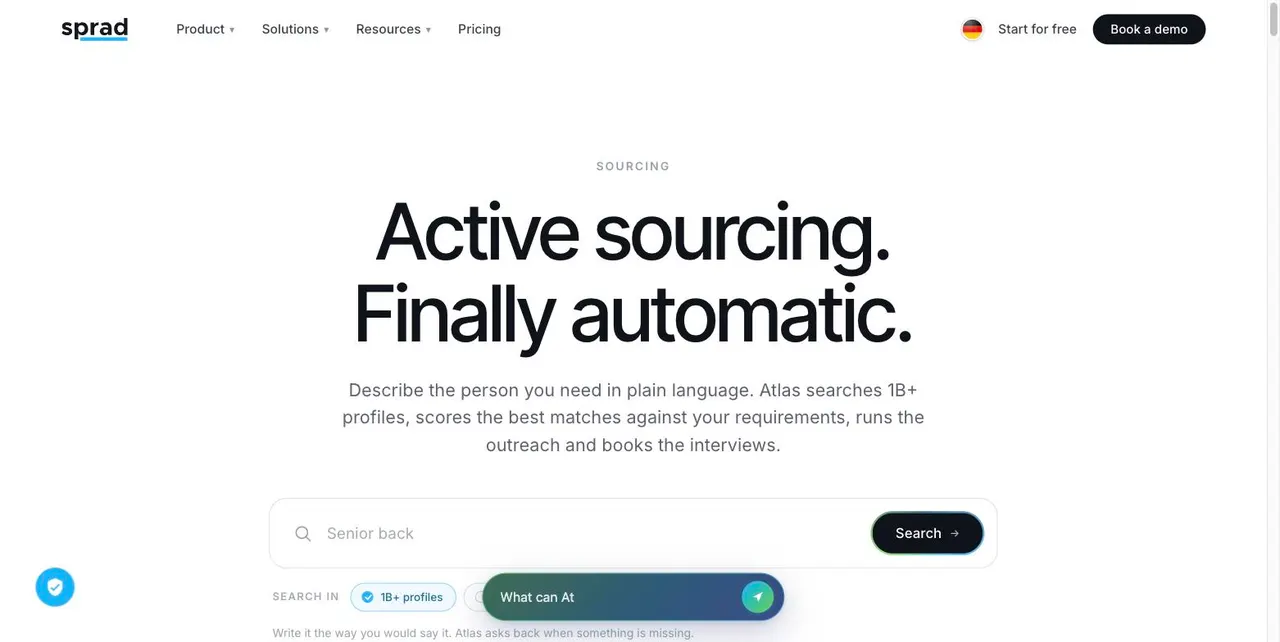
Sprad searches differently: you describe the person in your own words (“HVAC service technician with EPA 608 in Phoenix, three years in residential”), and it checks the profiles it finds against that description instead of matching keywords.
Outreach message: a template
Hi Marcus, I'm the owner of a residential HVAC company in Phoenix, 14 trucks, a crew that has been together for years. Your profile says you have been doing service calls for six years. We pay $34 an hour for a lead tech, a take-home truck and a four-day week in summer. Worth a 10-minute call this week? If not, no worries.
Name pay or hours up front, because that is what a technician checks first. Do not text candidates before they have agreed: unsolicited text messages for marketing purposes are restricted under the Telephone Consumer Protection Act (47 U.S.C. § 227), and a recruiting text sent by an automated system can fall under it. Start with LinkedIn or email, then move to text once the person replies.
Must-have and nice-to-have criteria
| Must | Nice to have |
|---|---|
| EPA 608 certification for the equipment they will service; the EPA requires nearly all HVAC technicians to hold it | NATE certification |
| State or local license where required | Commercial or refrigeration experience |
| Valid driver's license, clean record for a take-home truck | Customer-service and sales skills for upsells |
| Willingness to do on-call or seasonal hours | Experience with heat pumps and mini-splits |
The licensing rules differ by state and by locality, so check yours before you advertise. The EPA's Section 608 page lists the certification types.
Five screening questions before the first interview
- Which EPA 608 type do you hold, and which license do you have?
- What equipment do you service most: residential split systems, rooftop units, chillers?
- How many service calls or installs do you run alone on a typical day?
- Which hours, on-call and weekend work can you accept?
- What would make you leave your current employer?
Safety belongs in the interview as well: the BLS notes that HVAC technicians have one of the highest rates of injuries and illnesses of all occupations, so ask how a candidate handles heat, heights and refrigerants.
What pay and conditions convince technicians?
A median of $61,010 is your reference point; the figure varies by region, and a lead tech in a high-cost market earns more. Beyond the hourly rate, technicians weigh a take-home truck, paid training toward NATE, predictable hours in the busy season and a clear path to lead or service manager. Put at least the pay range in the first message.
How Sprad helps
Sprad combines an applicant tracking system, a talent network and active sourcing in one tool.
- Requirement search: describe the role in plain words; the web search checks each profile against it. A normal run costs 100 credits and shows up to 50 qualified profiles, at 2 credits per profile shown. The free plan includes 100 credits a month.
- Talent network: every candidate from a search or an ad stays in your own pool for the next vacancy.
- Voice pre-interview: candidates answer by voice in 12 languages, 30 credits per interview; the CV check costs 2 credits. Recruiter Lite is a flat rate of 79 euros per seat and month, without credits. Prices from sprad.io/pricing, net, as of October 2026.
For U.S. technicians we have not measured how many a search finds. Many technicians do not keep a profile, so use active sourcing as one route next to referrals and ads, and add our social recruiting service for the ones who never search (ads from a budget of 1,000 euros a month, service fee 5 to 20 % of the budget depending on volume). Hiring in Germany instead? Read how to hire tradespeople in Germany, and see talent pool for keeping candidates warm.
Frequently asked questions
How do I recruit HVAC technicians in a shortage?
Build your own pipeline (apprentices, school partnerships), pay referral bonuses, approach employed technicians directly with pay and hours in the first message, and run ads for those who never search.
What certification must an HVAC technician have?
The EPA requires nearly all HVAC technicians to hold an EPA 608 certification for handling refrigerants; some states and localities also require a license (BLS).
Where is the best place to post an HVAC job?
On job boards for active seekers, but expect competition. Referrals and direct outreach reach people who are employed and not searching.
How long does it take to hire a technician?
It varies by market. Referrals and your own apprentices are usually the fastest routes, because the candidate already knows your company.
How do I keep technicians once I hire them?
Pay at the market median or above, give a take-home truck and training, keep summer hours predictable and show a path to lead tech. Replacement of people who leave makes up most of the 40,600 yearly openings (BLS).
Jürgen Ulbrich
Jürgen Ulbrich has more than a decade of experience in developing and leading high-performing teams and companies. As an expert in employee referral programs as well as feedback and performance processes, Jürgen has helped over 100 organizations optimize their talent acquisition and development strategies.