Lionstep is not a software tool but a Swiss provider that delivers active sourcing as a service, optionally together with recruitment process outsourcing (RPO) and consulting. A real alternative therefore depends on what you want to replace: if you want to keep handing sourcing off, a traditional search firm or a sourcing service is the comparison group. If you want to run it yourself, the options are Sprad, XING TalentManager, LinkedIn Recruiter or Talentwunder. Sprad covers both: as software (free start, Recruiter Lite 79 € per seat and month) and as a service from 300 € per role and month.
What is Lionstep, and when is it the right offer?
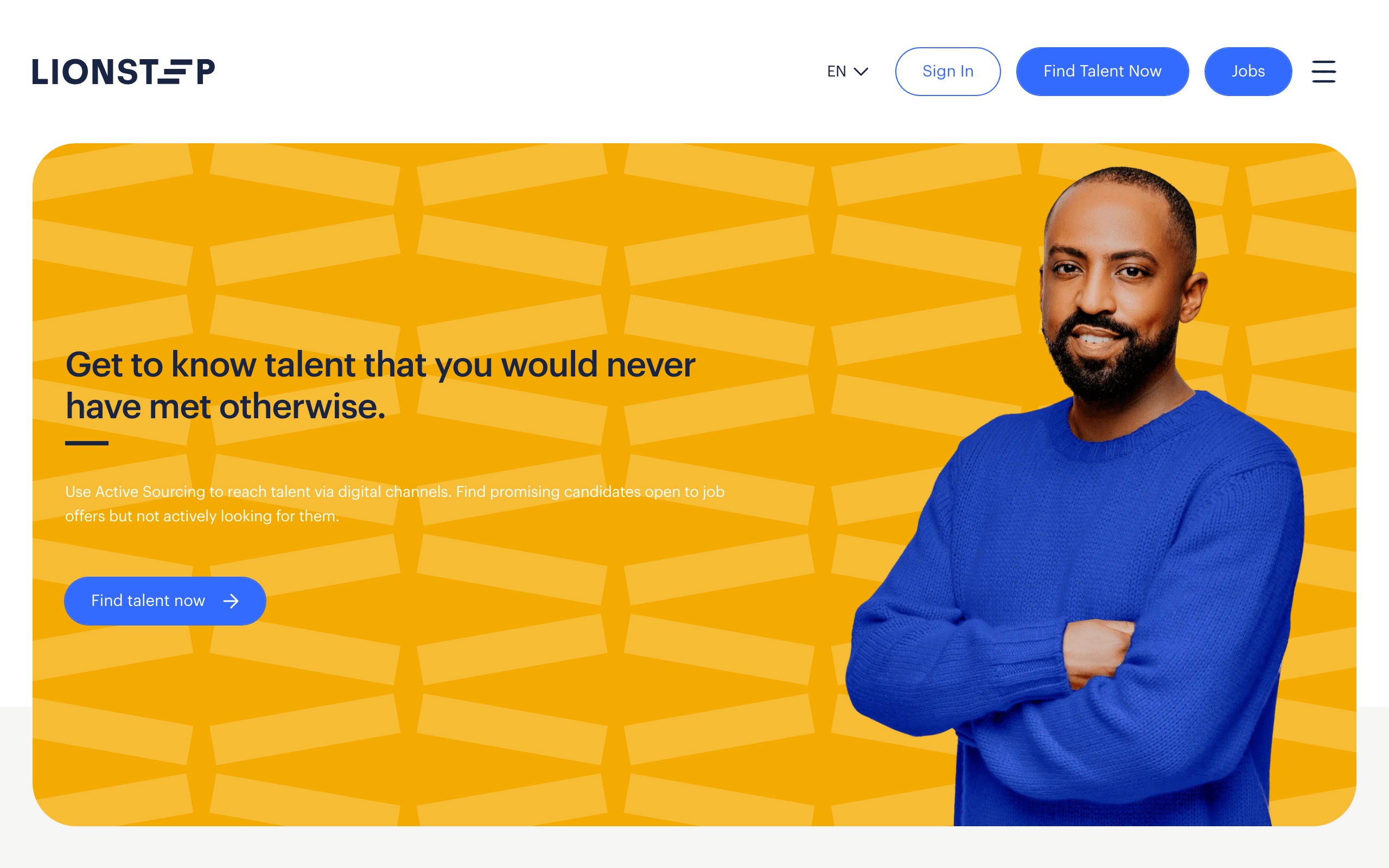
Lionstep AG is a Swiss talent acquisition and organisational consulting provider. On its own website it describes its active sourcing as “50 % AI, 50 % human”: algorithms compare profiles on websites, social networks and its own talent pool, recruiters invite up to 300 talents to a phone interview and check qualification, experience and salary expectations. More than 80 % of the people contacted are said to be open to interesting offers, and 90 % of recommended talents are invited to an interview (vendor claims, 30 October 2026). An online account shows who Lionstep is in touch with. It also offers modular RPO (project-based, partial cycle or full cycle), assessment, executive search and consulting; named references include Hapimag, Victorinox, Fossil and Würth International. As early as 2018, Netzwoche described the company as a headhunting provider that sees itself as a complement to XING and LinkedIn.
It fits if you want to hand sourcing off completely, search in Switzerland or DACH and prefer a contact person to a tool. That same strength is why teams look around.
Why teams look for a Lionstep alternative
- Price without a list. On lionstep.com the pricing page shows no prices; according to third-party profiles billing runs on credits that are consumed only for qualified, available and interested candidates, with no success fee. None of the sources we read gives numbers. Get a written quote for your roles.
- The pool is not yours. A service collects conversations and profiles on its side. At contract end, what counts is what you can export. If you want to build your own talent network, you need a tool that keeps the data with you.
- Scaling per role. If you fill 20 or 50 roles a year, a service charges for every role again, even if similar profiles were already found. An own searchable pool lowers the cost of the second and third search.
- A provider in between. Candidate outreach runs under the provider’s name and tone. If you want to control employer branding and response times, you reach out yourself.
- Focus. Lionstep is now a broad consulting house (organisational consulting, total rewards, CEO and board services). If you only want sourcing, you pay for the breadth.
Lionstep alternatives compared: price, sources, ownership of the data
Prices are vendor-published or from public third-party information, as of October 2026; Sprad prices are net of VAT. The table separates software, service and marketplace because they solve different jobs.
| Option | Model | Price (public information) | Where it searches | Who owns the candidate pool |
|---|---|---|---|---|
| Sprad | Software or service | Free start; Lite 79 €, Atlas Recruiter 299 € per seat/month; service from 300 €/role/month + 6–8 % | LinkedIn, XING, GitHub, your own pool, employee networks (1B+ profiles) | You: talent network stays free after cancelling, raw data export |
| Lionstep | Service (active sourcing, RPO, consulting) | No public price list; third parties cite credits, no success fee | Websites, social networks and own talent pool (vendor claim) | The provider; insight through an online account |
| XING TalentManager | Licence | from about 4,390 €/licence/year (third party) | XING (DACH) | The network |
| LinkedIn Recruiter | Licence | Lite 140 $/seat/month; Corporate on request | The network | |
| Talentwunder | Software | on request; third parties cite 365–489 €/licence/month | Several public networks | The vendor, export |
| Instaffo | Marketplace | 0 € + 15 % hiring fee (Essential) | Registered talent | The marketplace |
| Search firm | Service | 20–35 % of target compensation per hire | The firm's own network | The firm |
1. Sprad: software and service, the most matching candidates
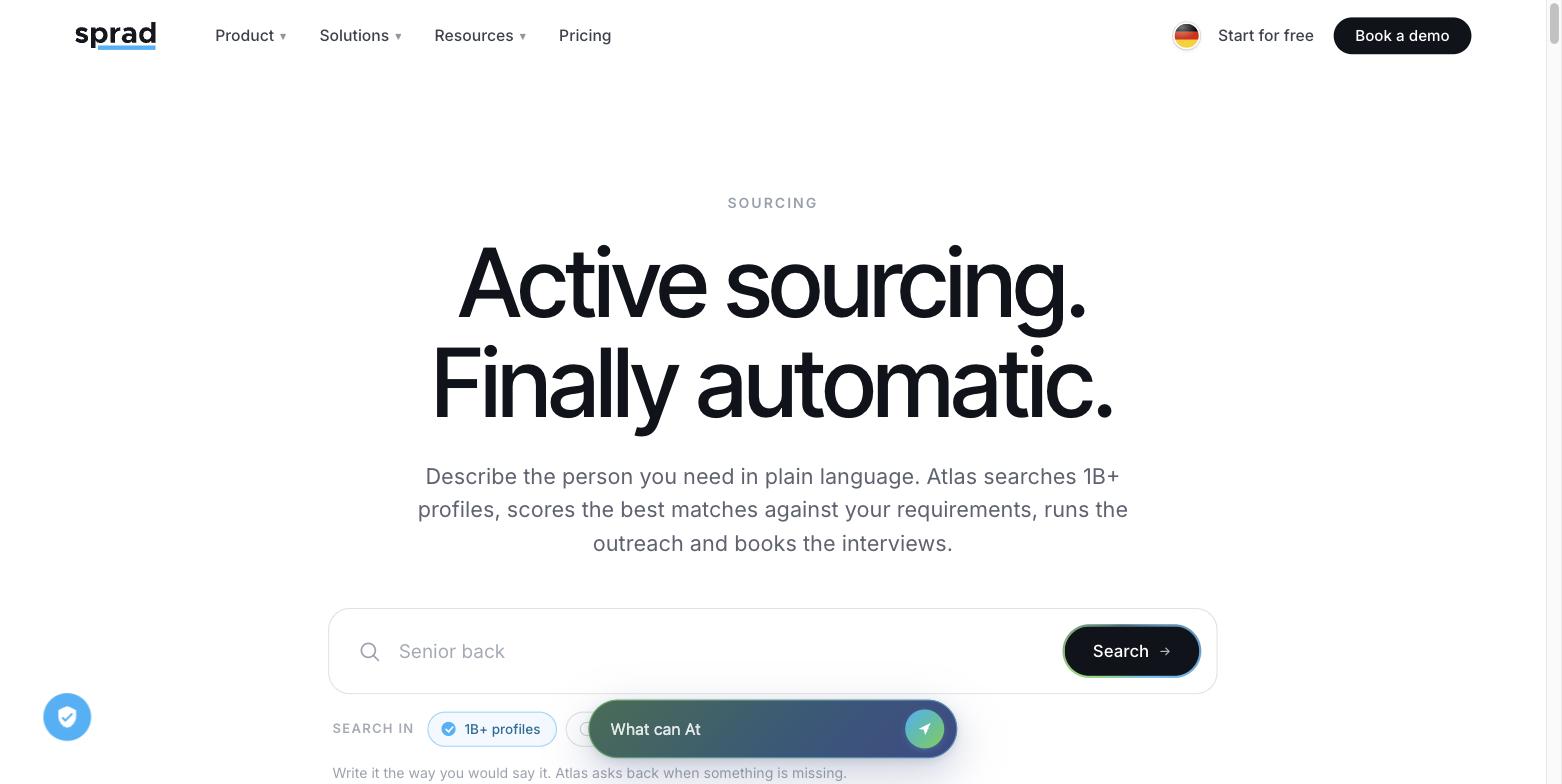
Sprad takes a requirement instead of a Boolean string. Atlas, the sourcing product, checks every profile individually against your requirements and gives a reason per requirement. It therefore also finds people whose profile is poorly maintained or lacks the “right” keywords. Sprad has built recruiting software for seven years, starting with employee referrals, which is the same job: matching profiles to requirements.
- One search over all sources: LinkedIn, XING, GitHub, your own talent pool and your colleagues’ networks, in one of the largest profile databases (1B+ profiles worldwide). Deep Context finds companies first and then the people who worked there in a given period, for example a CFO who led an acquisition.
- LinkedIn and email in one inbox: automated outreach with follow-ups, InMails sent from Sprad, AI templates you train with feedback. Per talent you see the whole conversation, and the system warns you if someone was already contacted, also by a colleague or for another role. Voice, chat and agent pre-qualification are built in.
- Your data stays yours: the talent network stays free after cancelling, with free credits to keep searching; a full raw-data export is available.
- Hand it to us if you do not want to search yourself: sourcing as a service from 300 € per role and month plus a 6–8 % success fee, only if someone is hired, with no minimum term or exclusivity. Atlas searches, writes, follows up, pre-qualifies and puts the conversations in the calendar.
- Compliance: EU hosting, high data protection and IT security standards, because enterprises, public-sector bodies and insurers are customers.
Honest limits: no AI notetaker for calls and no placement reporting yet, no SMS channel (WhatsApp for candidate communication is available), and the deep search takes a few minutes because far more AI runs per profile. More: Active Sourcing, pricing.
2. XING TalentManager: the DACH network
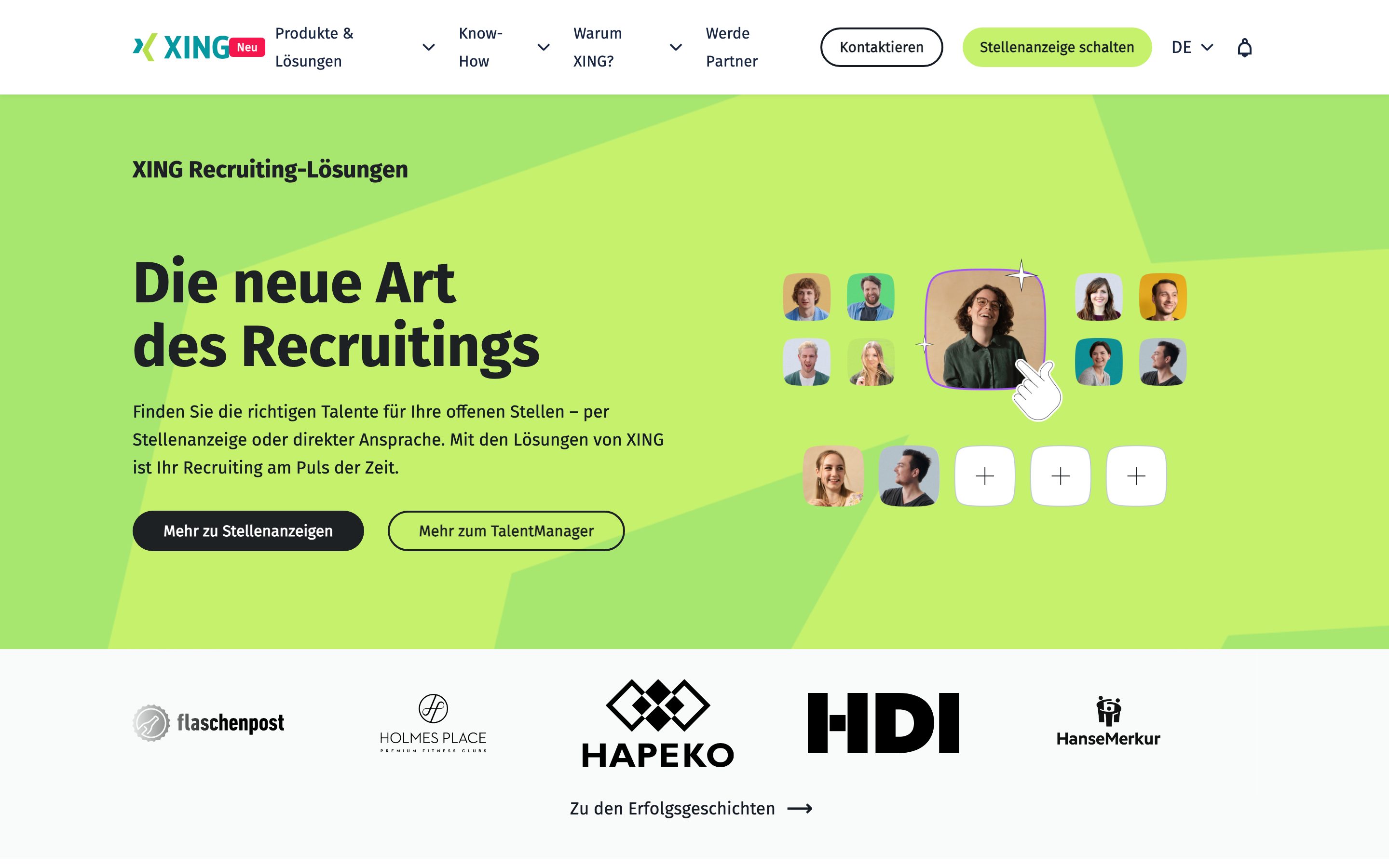
Anyone sourcing in DACH rarely gets around XING, but pays for a single network. Details: XING TalentManager alternatives.
3. LinkedIn Recruiter: largest reach, one source
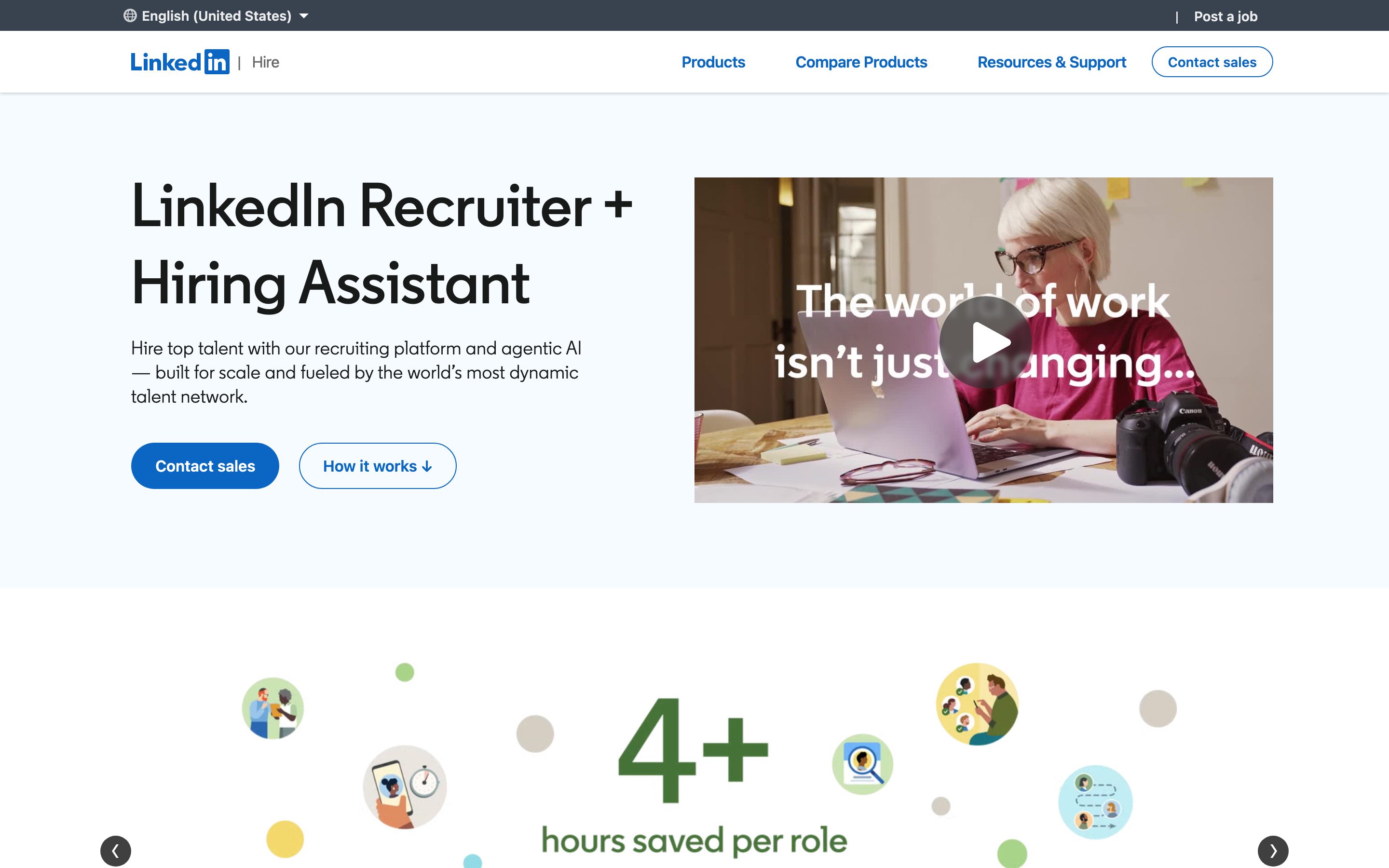
LinkedIn remains indispensable for many roles but gets expensive as a team grows. Figures and examples: LinkedIn Recruiter pricing and LinkedIn Recruiter alternatives.
4. Talentwunder: DACH sourcing with job distribution
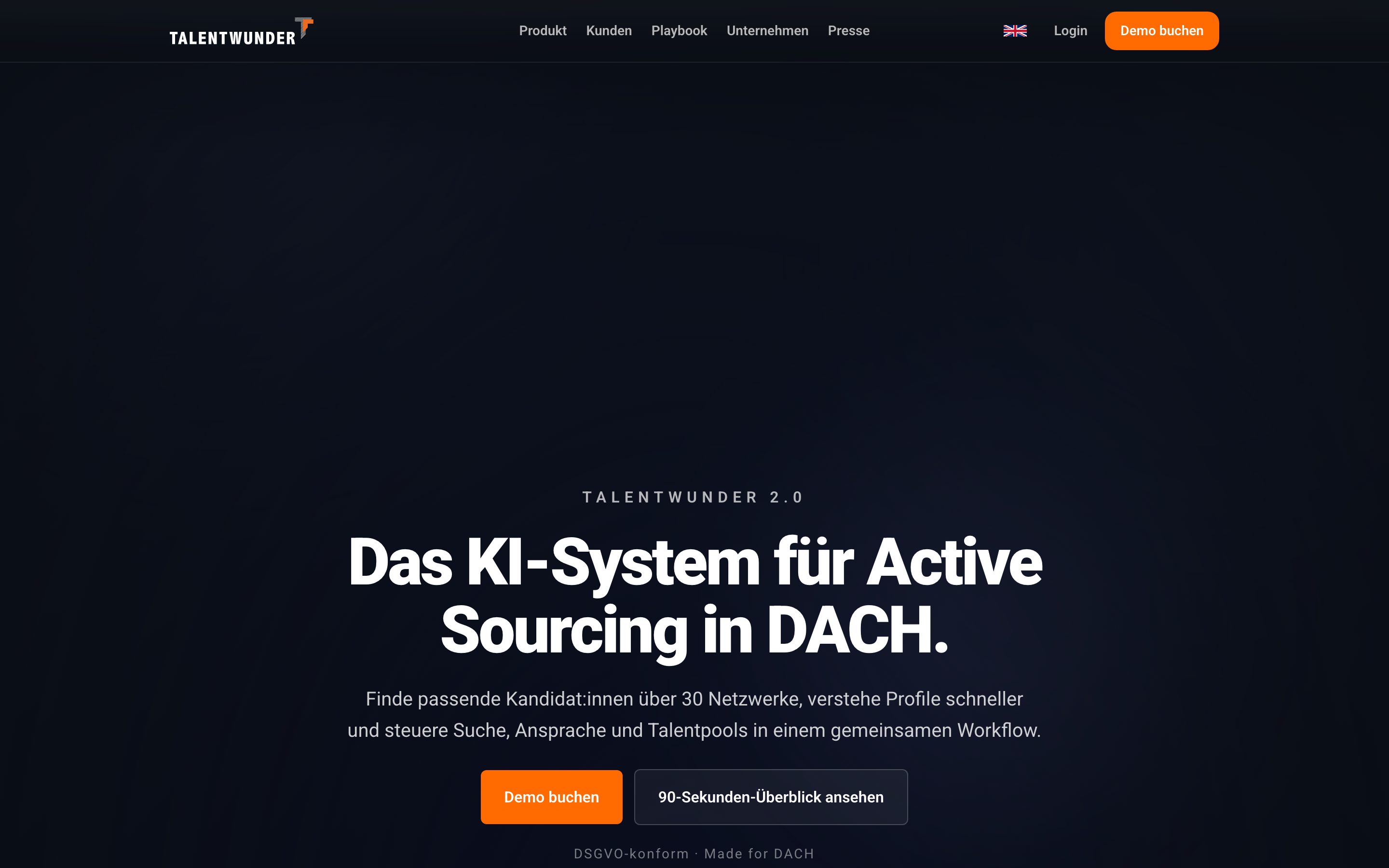
A German vendor with XING connectivity but no public price list. More: Talentwunder alternatives.
5. Instaffo: marketplace with pure success fee
Instaffo is the right direction if what mattered most about Lionstep was “I do not have to search myself” and you want to pay only on success. The pool, however, consists only of people who signed up, not of the passive candidates active sourcing is meant to reach.
6. Traditional search firm: when network and discretion matter
For leadership roles a search firm remains a real option. The Federal Association of German Management Consultants (BDU) cited an average of 26 % of target compensation as the fee for 2017. With many hires per year this is the most expensive route.
Service or software? A worked example
Assumptions (not quotes): five hires a year, target compensation 70,000 €, three months per role for the service, prices net.
- Search firm: 26 % of 70,000 € = 18,200 € per hire, 91,000 € for five hires.
- Sprad as a service: 3 × 300 € + 7 % (middle of 6–8 %) of 70,000 € = 900 € + 4,900 € = 5,800 € per hire, 29,000 € for five hires.
- Sprad as software: one Recruiter Lite seat, 79 € × 12 = 948 € a year, plus your own time for selection and calls. One Atlas Recruiter seat costs 299 € × 12 = 3,588 € a year.
- Lionstep: no public price list, so no calculation from us; get a quote for the same five roles and compare it with the lines above.
The numbers show the order of magnitude, not a promise: a service saves your time, software saves money once you fill more than a handful of roles a year. Teams that currently pay separate LinkedIn and XING recruiter licences save 30–80 % with Sprad, depending on the licence mix.
Which alternative finds more matching candidates?
The most robust independent number is the public PeopleSearchBench (119 real search tasks in four areas). In the Recruiting area Atlas reaches 73.5 of 100 in our own re-measurement, converted to the published scale (Lessie 68.2, Juicebox 65.7 as published). In recruiting it returns almost always 15 matching profiles per search (14.2 on average in the re-measurement).1 In our own test by Sprad (three real roles in three markets, 15 August 2026, one documented run) Sprad returned 38 % of the hits against 9 % for the best competitor in that test. Lionstep was in neither test, and a service with people in the process only partly compares with a search engine; we therefore make no statement about Lionstep.

1 PeopleSearchBench (Recruiting), published by Lessie, October 2026. Other systems' scores as published in the benchmark; Atlas measured with the benchmark's open test procedure. Contact data came from the “find email” button. Method and details.
How to recognise real AI search
Many tools call themselves “AI sourcing” but only filter by keywords. Our experience: if results appear instantly, it is almost always a (semantic) keyword search. Real AI checking reads each profile against the requirements and takes minutes. Ask for the reason per requirement and test with a person whose profile is thinly maintained.
Data coverage: XING, LinkedIn or more?
The question of sources decides the hit rate more than any feature. The German Federal Employment Agency counts 157 occupations with a skills shortage for 2025, mainly in care, construction, trades and education. The hard-to-find audiences are often not only on LinkedIn. How to test it: take three real roles (one technical, one commercial, one from a shortage field), search each in every tool and count how many of the first 15 profiles you would actually contact and where they come from. A tool or service serving only one source shows its limit on the third role. The same applies when testing a provider: give it the same three roles.
Who should switch from Lionstep?
- Stay with Lionstep if you have few hard-to-fill roles, search in Switzerland, want to hand sourcing and RPO off completely and use the consulting breadth.
- Switch to Sprad (software) if you fill several roles a year, want to build an own searchable talent network and run XING, LinkedIn and email yourself.
- Switch to Sprad (service) if you want to hand off but know the price per role and the success fee up front, with no minimum term.
- Combine is common: standard roles yourself with software, the two or three key roles a year externally.
GDPR and the EU AI Act: what applies to a service and to a tool
Active sourcing means approaching people who have not applied. You need a legal basis and must inform them: Articles 6 and 14 GDPR. The Hamburg data protection commissioner notes that applicants count as employees under Section 26(8) BDSG and that information duties are often neglected in practice. AI that rates or filters candidates counts as high-risk under Annex III of the EU AI Act. When you use a provider, responsibility stays with you: clarify the data processing agreement, storage location, subprocessors and who meets the information duty towards the people contacted. This is orientation, not legal advice. Our checklist: Active sourcing and GDPR.
Typical mistakes when switching
- Comparing a service with software as if both bought the same thing. One delivers conversations, the other tools and data.
- Not getting a written quote for the same roles because no price list exists.
- Not clarifying what happens to candidate data and conversation history after the contract ends.
- Testing on one source only. A LinkedIn-heavy test role hides whether XING or GitHub is missing.
- Running two channels in parallel and contacting the same candidates twice. One inbox with a warning prevents it.
How to choose
- You want the most matching candidates, XING and LinkedIn in one search, one inbox and a published price, as a service on request: Sprad.
- Your audience sits almost only on XING: XING TalentManager, ideally tested side by side with Sprad.
- Standard roles on LinkedIn: LinkedIn Recruiter Lite.
- Success fee only, no searching yourself: Instaffo for tech and sales.
- Leadership roles with discretion: a search firm, including Lionstep Executive Search.
More comparisons: active sourcing tools in DACH compared, what is active sourcing?.
FAQ
What are the best alternatives to Lionstep?
If you want to run sourcing yourself: Sprad for the most matching candidates and one inbox for XING, LinkedIn and email, plus XING TalentManager, LinkedIn Recruiter and Talentwunder. If you want to hand off: Sprad as a service, Instaffo or a traditional search firm.
How much does Lionstep cost?
Lionstep publishes no price list. According to third-party profiles billing runs on credits with no success fee; we found no concrete numbers. Request a written quote for your roles.
Is Lionstep software?
No. Lionstep delivers active sourcing, RPO, assessment and consulting as a service, with people in the process and an online account for insight.
How do price, data coverage (XING) and GDPR differ?
On price, licences (XING from about 4,390 € a year, LinkedIn Lite 140 $ a month) face Sprad from 0 € and 79 € per seat; service prices are on request only. XING covers DACH, LinkedIn is global, Sprad searches both plus GitHub and your own pool. GDPR: clarify EU hosting and a data processing agreement in writing with every provider.
Which alternative finds more matching candidates?
In the Recruiting area of the public PeopleSearchBench, Atlas by Sprad reaches 73.5 of 100 in our own re-measurement, converted to the published scale. Lionstep did not take part in the benchmark.
Can I try Sprad for free?
Yes. The free plan includes 100 credits per month; searches, screening and interviews run on them. Recruiter Lite costs 79 € per seat and month.
Jürgen Ulbrich
Jürgen Ulbrich has more than a decade of experience in developing and leading high-performing teams and companies. As an expert in employee referral programs as well as feedback and performance processes, Jürgen has helped over 100 organizations optimize their talent acquisition and development strategies.