Loxo and Crelate both target boutique and small-to-mid recruiting agencies, but they built different products: Loxo's core asset is a bundled 1.2B-profile candidate database, while Crelate's is a native AI assistant included on every plan plus deep pipeline customization. Loxo starts at $149/seat/month (annual only, no seat minimum published); Crelate starts at $85/month but caps its cheapest tier at just 2 users, making $119/month the realistic entry point for most agencies.
Loxo vs. Crelate vs. Sprad
| Dimension | Loxo | Crelate | Sprad |
|---|---|---|---|
| Price | $149-199/seat/month (annual only) | $85-119/seat/month (Essentials capped at 2 users) | 59 €/seat/month + credits |
| Search outside own database | Yes — Loxo Source, 1.2B profiles | No — LinkedIn integration only | Yes — 1B+ profiles, per-search credits |
| Talent pool | Licensed database records | CRM contacts, customizable attributes | Agency-owned, candidate consent-based |
| AI matching | Talent Graph, Professional+ only | AI Assistant, included on every plan | Requirement scoring, every plan |
| Outreach | Email sequences (reliability issues reported) | None — no built-in sequences | LinkedIn contact agent |
| CRM depth | Standard ATS/CRM | Highly customizable pipelines, client/applicant portals | ATS + client-context profile (beta CRM) |
| DACH/German | English-only, US-focused | English-only | EU-hosted, DACH go-to-market |
| Migration effort | Not documented | Paid Data Sync Service, billed by volume | Free import of legacy contacts (Xing, Bullhorn, Excel) |
The differences that actually matter
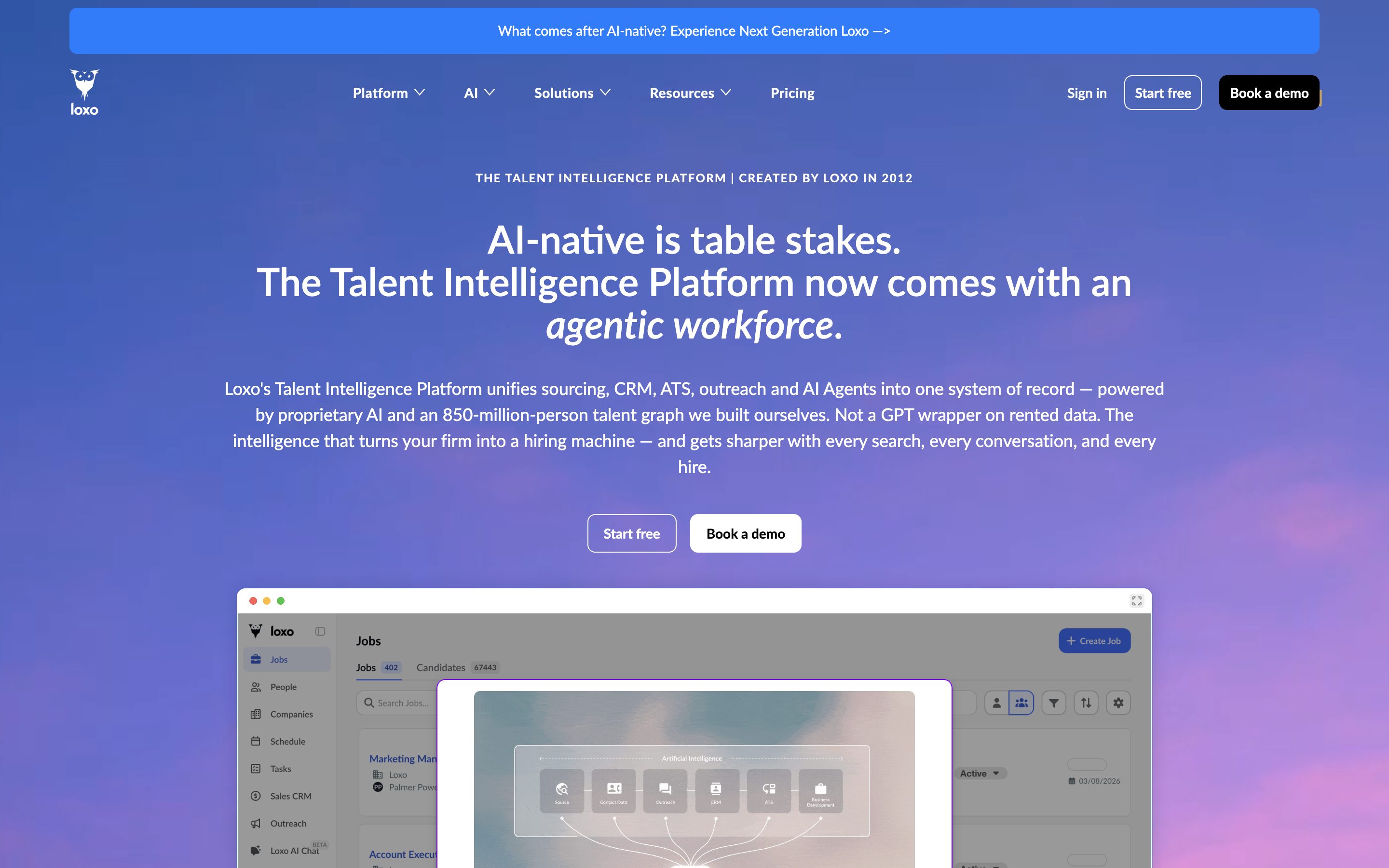
Loxo, in detail
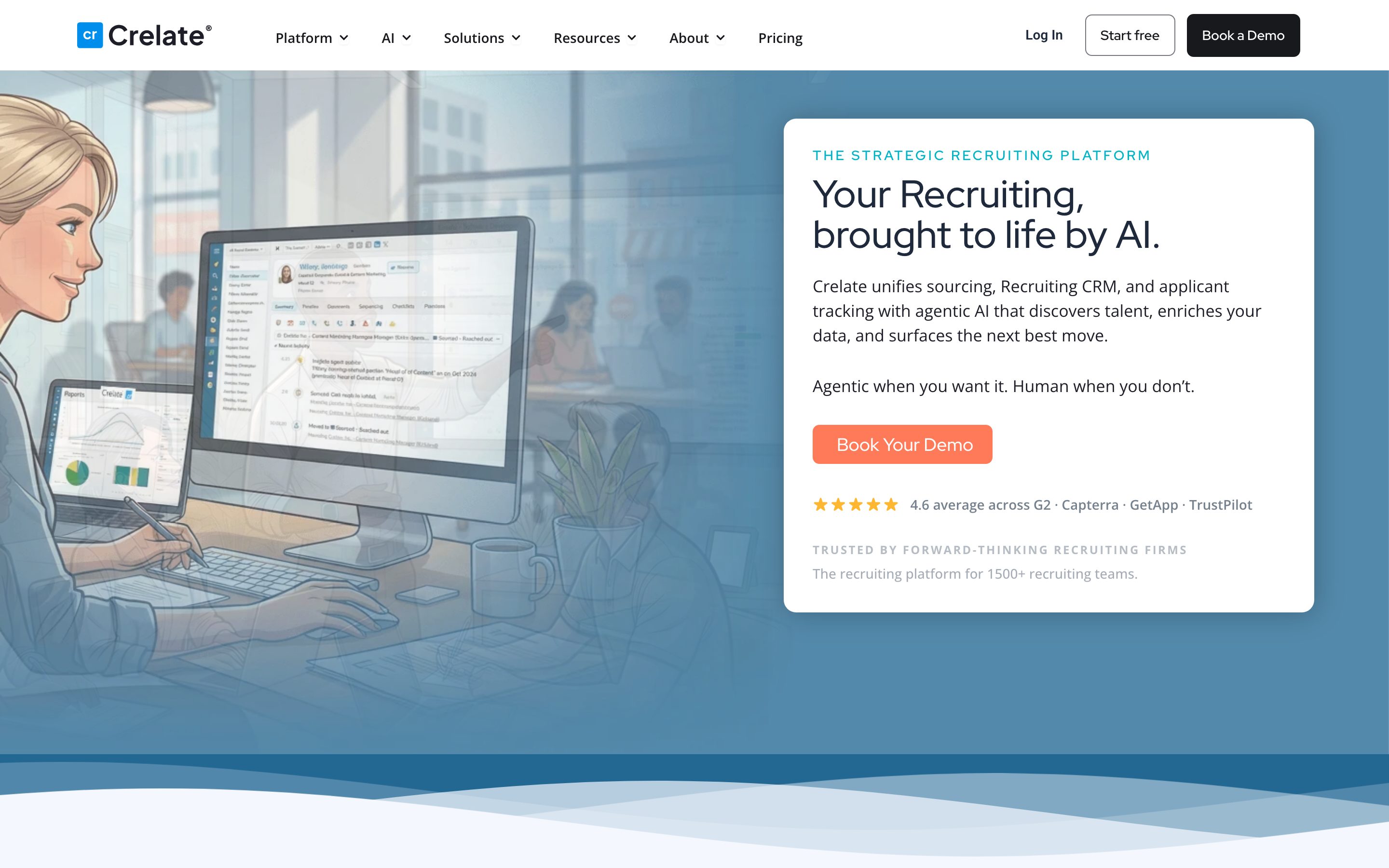
Crelate, in detail
A licensed database vs. AI baked into every seat
Loxo's pitch is access to candidates you don't already know — Crelate has no equivalent, relying on its LinkedIn integration to bring in new profiles. Crelate's pitch is different: instead of gating AI behind a premium tier the way Loxo does with Professional, Crelate includes its AI Assistant on every plan, which G2 reviewers cite as a real differentiator ("AI on every plan, not AI as an upsell"). If your bottleneck is finding people you don't know, that favors Loxo.
If it's making sense of and customizing a pipeline you already run, Crelate's flexibility does more.
The 2-user cap that changes the math
Crelate's Essentials tier looks cheap at $85/month until you notice it's capped at 2 users — impractical for most agencies past a founder and one recruiter. The realistic starting price for a small team is Business at $119/month per seat, which puts Crelate closer to Loxo's Core pricing than the headline number suggests.
Neither has outreach automation or DACH support
Crelate has no built-in email sequencing at all for cold outreach — a gap Loxo at least attempts to fill, even with documented reliability problems. Neither tool offers a German interface or voice/video candidate screening, and both are English-only products built primarily for US and UK agencies.
How the two stack up on reviews
| Platform | Loxo | Crelate |
|---|---|---|
| G2 | 4.6/5 (168 reviews), 90%+ satisfaction implied | 4.4/5 (210 reviews), 90% satisfaction rating |
| Capterra | 4.6/5 (126-134 reviews) | Not separately confirmed — G2 dominant source |
Loxo edges ahead on raw score, but the complaint patterns tell a more useful story than the averages. Crelate's reviewers flag inconsistent support response times and the Essentials plan's 2-user cap as "practically unusable" for growing teams — an onboarding and scaling friction, not a core-feature failure. Loxo's reviewers flag pricing relative to features and outright reliability issues in email sequencing and mobile.
If a growing team is the concern, Crelate's flexible, unlimited-user Business tier resolves its main complaint by simply choosing the right plan; Loxo's complaints aren't solved by picking a different tier.
Getting started with either
Both Loxo and Crelate offer a way to start before Recruiterflow-style seat minimums apply: Crelate publishes a free trial on both Essentials and Business, while Loxo requires a demo or quote with no published trial length. Sprad's 200 free credits monthly, with no credit card, sits closer to Crelate's low-friction entry than to Loxo's sales-led one.
The third option: Sprad
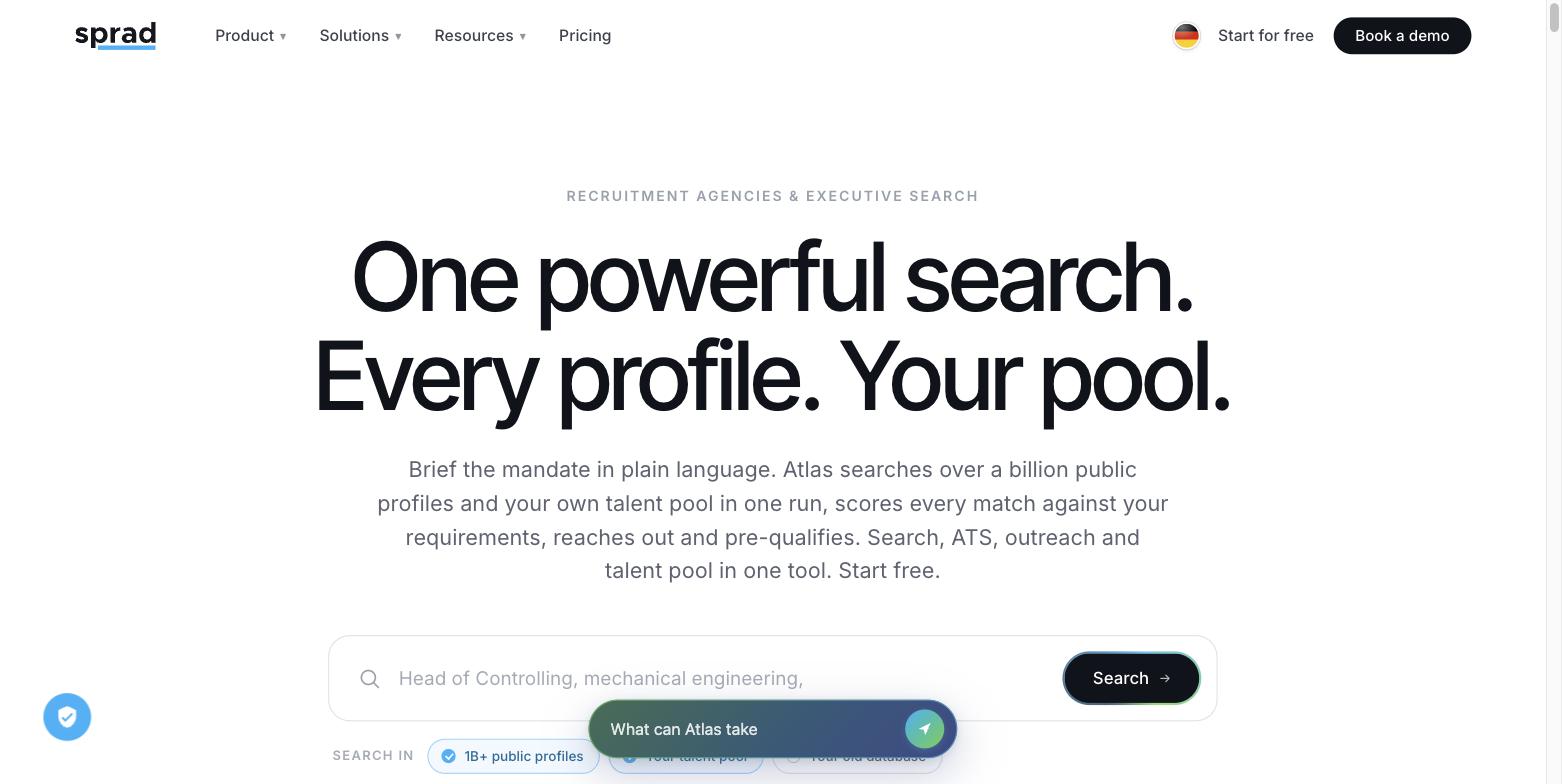
Sprad sits between the two in a different way: it matches Loxo's external search reach (1B+ profiles via requirement search) while matching Crelate's idea of AI included by default rather than gated behind a premium tier — every Sprad plan includes requirement-based scoring against full candidate profiles. On top, Sprad adds voice and video interview screening in 12 languages, which neither Loxo nor Crelate offers. Pricing is 59 €/recruiter/month for the ATS and talent pool, then credits only for searches, outreach and interviews as they happen, with 200 free credits every month and no credit card.
Full numbers: our Loxo pricing guide and Loxo vs. Recruiterflow for a third comparison point.
Which one fits your agency
- Need a bundled external database to find new candidates: Loxo's Loxo Source directly solves a discovery problem Crelate leaves to LinkedIn imports alone.
- Want AI included on every plan and highly customizable pipelines, don't need external sourcing: Crelate's AI Assistant and flexible attributes suit a team that already has enough candidates and needs better organization, not more reach.
- Want database-level search reach plus voice/video screening plus an owned talent pool: Sprad covers a combination neither Loxo nor Crelate offers on its own.
- Small boutique team of 2: Crelate's Essentials tier fits exactly at $85/month, but check whether you'll outgrow the 2-user cap within the first year — the jump to Business at $119 is a real price increase once you do.
A useful test either way: list the last ten hires your agency made. If most candidates came from your existing network, Crelate's organizational strength matters more than Loxo's database. If most came from cold outreach into unfamiliar candidate pools, the database matters more than the CRM polish.
For the full field of alternatives beyond these two, see our roundup of Loxo alternatives.
FAQ
Does Crelate have a candidate database like Loxo's?
No. Crelate relies on its LinkedIn integration for sourcing rather than a licensed, bundled external database.
Is Crelate's AI Assistant as capable as Loxo's Talent Graph?
They do different jobs. Crelate's AI Assistant is a general workflow and CRM helper included on every plan; Loxo's Talent Graph is specifically a semantic matching tool over its 1.2B-profile database, available only on Professional and above.
Which is cheaper, Loxo or Crelate?
Crelate's Essentials tier is nominally cheaper ($85 vs. $149) but capped at 2 users. For most agencies, the realistic comparison is Crelate Business ($119) against Loxo Core ($149) — Crelate wins on price, Loxo wins on database access.
Does either tool support German or DACH agencies?
No — both Loxo and Crelate are English-only. Sprad's go-to-market and content are DACH-focused with EU hosting.
Can I combine Loxo or Crelate with Sprad?
Some agencies test Sprad's free credits alongside an existing tool before deciding whether to consolidate, since Sprad requires no credit card to start.
Which has better reviews, Loxo or Crelate?
Loxo scores slightly higher on G2 (4.6 vs. 4.4), both with review counts in a similar, credible range (168 vs. 210). The complaint patterns differ more than the averages: Crelate's issues center on support consistency and its 2-user plan cap, while Loxo's center on price-to-feature ratio and sequencing reliability.
The bottom line
Loxo sells access to a database; Crelate sells a flexible, AI-native CRM without one. Neither gives your agency an owned talent pool with voice or video screening built in. Sprad pairs external search reach with a pool your agency keeps and screening in 12 languages, billed by actual use.
See what that looks like for your team: sprad.io/industry/recruitment-agencies.
Jürgen Ulbrich
Jürgen Ulbrich has more than a decade of experience in developing and leading high-performing teams and companies. As an expert in employee referral programs as well as feedback and performance processes, Jürgen has helped over 100 organizations optimize their talent acquisition and development strategies.