Loxo and Recruiterflow solve two different problems that both get marketed as "all-in-one recruiting software": Loxo's core asset is a bundled 1.2B-profile candidate database, while Recruiterflow's is email/SMS sequencing plus workflow automation on top of a standard ATS/CRM. Neither has a native talent pool the agency truly owns outside the tool, which is where a third option, Sprad, does something different. Loxo starts at $149/seat/month (annual only); Recruiterflow starts at $99/seat/month with a three-seat minimum.
Loxo vs. Recruiterflow vs. Sprad
| Dimension | Loxo | Recruiterflow | Sprad |
|---|---|---|---|
| Price | $149-199/seat/month (annual only) | $99-159/seat/month (3-seat min., annual) | 59 €/seat/month + credits |
| Search outside own database | Yes — Loxo Source, 1.2B profiles | No — LinkedIn Chrome extension only | Yes — 1B+ profiles, per-search credits |
| Talent pool | Licensed database records | Hotlists inside the CRM | Agency-owned, candidate consent-based |
| AI matching | Talent Graph, Professional+ only | AIRA, Enterprise tier only | Requirement scoring, every plan |
| Outreach | Email sequences (reliability issues reported) | Email + SMS sequences, Pro tier+ | LinkedIn contact agent |
| CRM depth | Standard ATS/CRM | ATS/CRM + "recipe" automations | ATS + client-context profile (beta CRM) |
| DACH/German | English-only, US-focused | English-only | EU-hosted, DACH go-to-market |
| Migration effort | Not documented | Not documented | Free import of legacy contacts (Xing, Bullhorn, Excel) |
The differences that actually matter
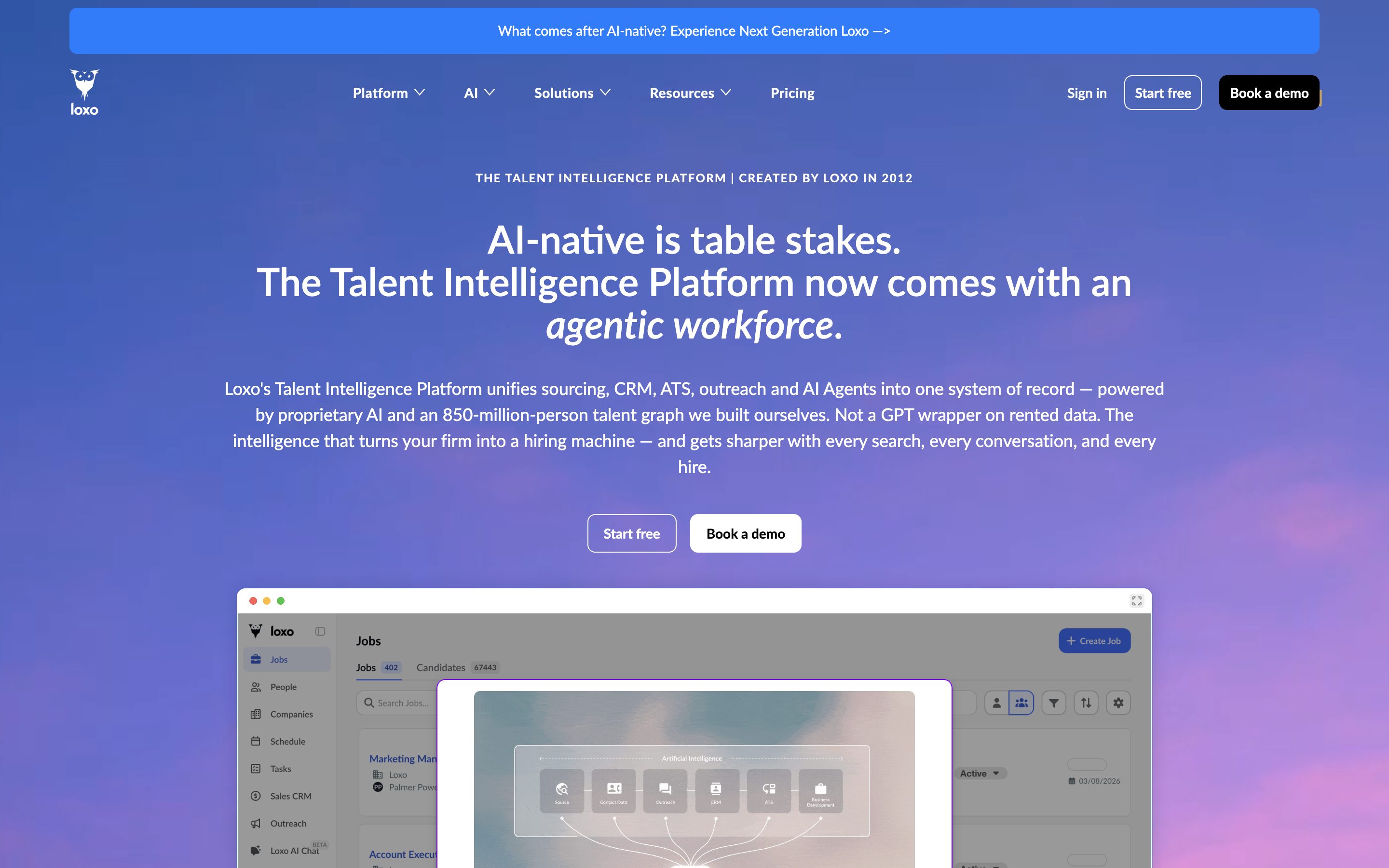
Loxo, in detail
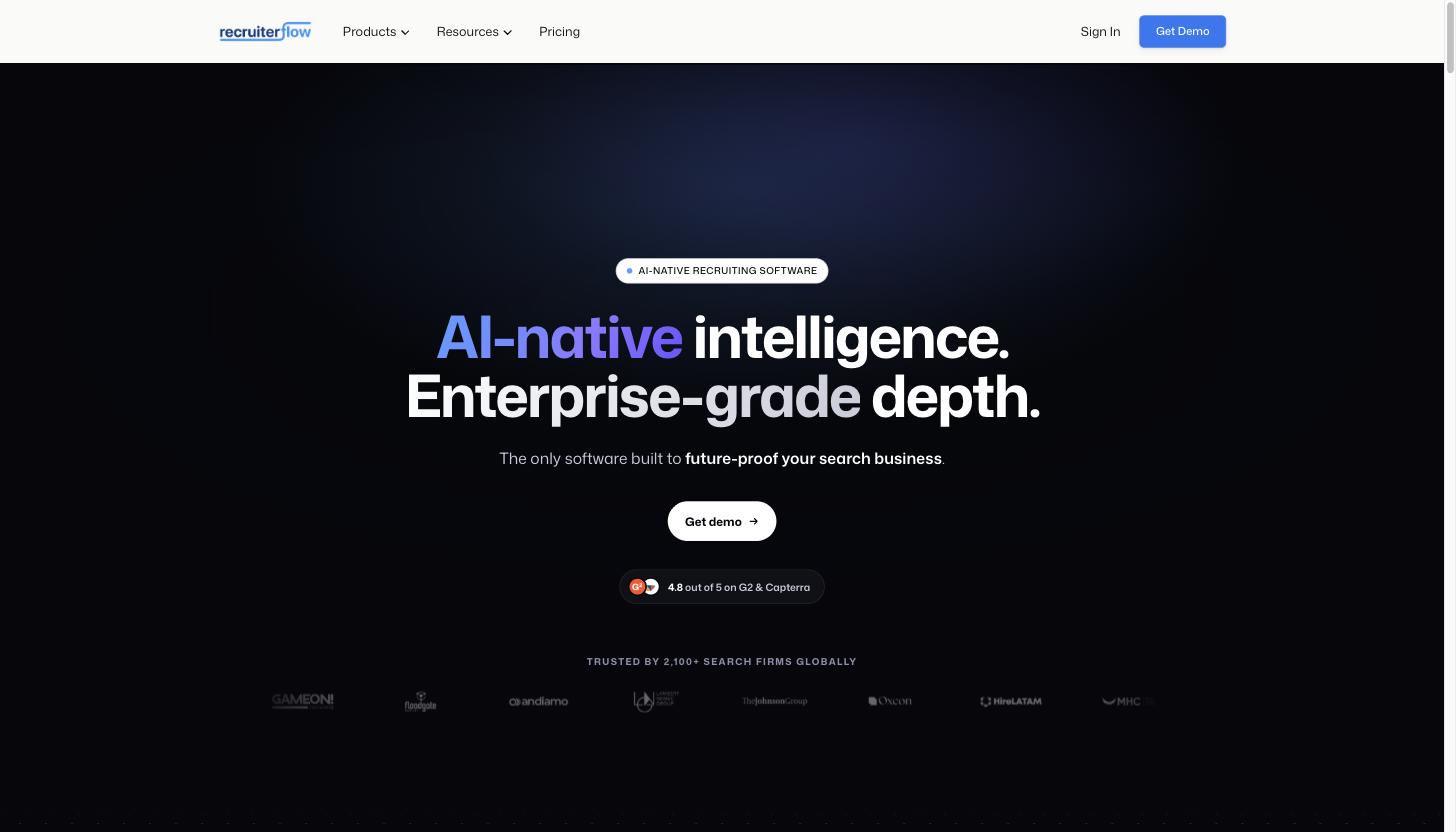
Recruiterflow, in detail
Database vs. automation: pick your priority
If your agency's bottleneck is finding candidates you don't already have a relationship with, Loxo's bundled database directly addresses that — Recruiterflow has no equivalent and relies entirely on LinkedIn imports via its Chrome extension. If your bottleneck is instead managing follow-up across a large existing pipeline, Recruiterflow's Recipes (when→then automation) and multi-channel sequences do more out of the box; Loxo's sequencing exists but reviewers specifically flag reliability issues with it.
Price scales differently
Recruiterflow's $99 entry price looks cheaper until you factor in the three-seat minimum — a solo recruiter can't buy in below $297/month. Loxo has no seat minimum documented but no monthly-billing option either, so a smaller team pays the full annual commitment regardless. Neither publishes a free trial length.
Where both fall short
Neither Loxo nor Recruiterflow offers voice or video candidate screening, and neither has a German-language interface or DACH-specific pricing. Both are English-only tools built primarily for the US and UK markets, which matters if your agency works a DACH candidate pool that expects local-language interaction.
How the two stack up on reviews
| Platform | Loxo | Recruiterflow |
|---|---|---|
| G2 | 4.6/5 (168 reviews) | 4.6/5 (194 reviews) |
| Capterra | 4.6/5 (126-134 reviews) | 4.7/5 (332 reviews) |
The scores are close, but the underlying complaints differ in a telling way. Loxo's reviewers cite cost-to-feature ratio, email deliverability and a "terrible" mobile app. Recruiterflow's reviewers cite awkward reporting setup and cumbersome bulk imports — friction inside the workflow rather than reliability failures in a core feature.
If your priority is a tool that "just works" for day-to-day pipeline management, Recruiterflow's complaints are arguably the less risky category; if your priority is dependable outbound sequencing, neither tool's review pattern is fully reassuring.
Onboarding and switching costs
Neither Loxo nor Recruiterflow publishes a self-serve trial length — both require a demo or quote before you can test with real data, and both lock you into annual billing from day one. Sprad's 200 free credits a month with no credit card is the only one of the three that lets you run a real search or screening call before committing to any plan.
The third option: Sprad
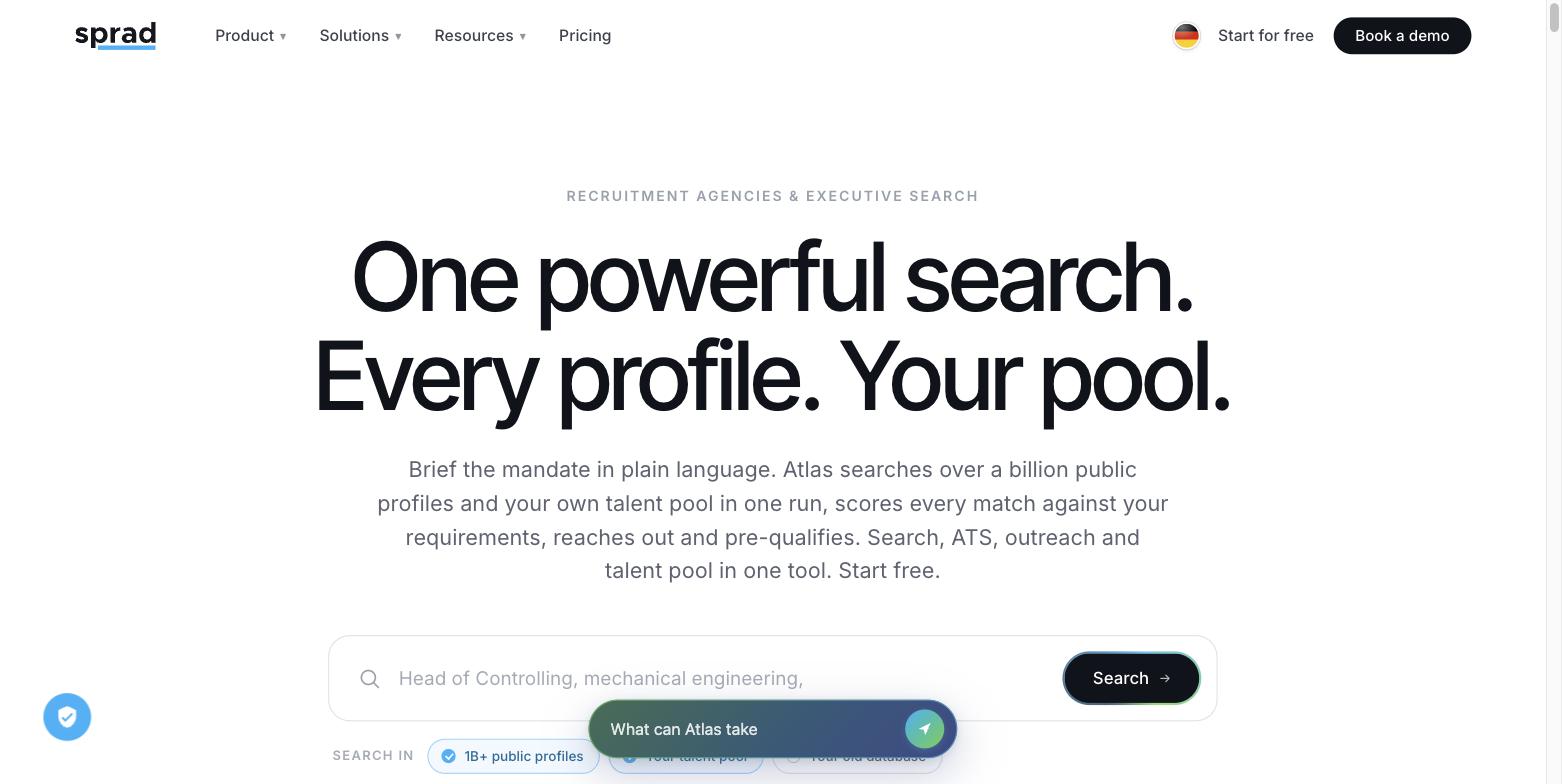
Sprad doesn't try to out-database Loxo or out-automate Recruiterflow — it combines a requirement search across 1B+ external profiles (comparable reach to Loxo's own claim) with a talent pool your agency actually keeps after cancellation, plus voice and video interview screening in 12 languages that neither Loxo nor Recruiterflow offers. Pricing runs 59 €/recruiter/month for the ATS and pool, then credits only for searches, outreach and interviews that happen — with 200 free credits every month, no credit card.
For agencies unsure whether they need Loxo's database depth or Recruiterflow's automation depth, Sprad is worth testing free before committing to either annual plan; see the full numbers in our Loxo pricing guide and the direct Sprad vs. Loxo comparison.
Which one fits your agency
- Need a bundled external database, US-heavy sourcing: Loxo's Talent Graph and 1.2B-profile Loxo Source directly address a sourcing bottleneck that Recruiterflow simply doesn't try to solve.
- Need multi-channel sequencing and automation across an existing pipeline, 3+ seats: Recruiterflow's Recipes and email/SMS sequences are built specifically for agencies whose bottleneck is follow-through, not discovery.
- Want database reach plus screening plus a pool you keep, without a flat per-seat fee regardless of use: Sprad combines the two priorities differently, billing only for what a team actually does.
- Solo or two-person agency: Recruiterflow's 3-seat minimum rules it out entirely — a solo recruiter would pay for seats nobody uses. Compare Loxo's per-seat cost against Sprad's lower base plus credits instead.
For a broader field beyond these two, including Crelate, Recruit CRM, Bullhorn and Manatal, see our full roundup of Loxo alternatives.
The honest answer for many agencies isn't either/or. A team running both a large existing pipeline and regular fresh sourcing sometimes needs the strengths of both categories — the question is which gap costs more to leave open: missed candidates, or missed follow-ups.
FAQ
Is Loxo or Recruiterflow better for sourcing new candidates?
Loxo, because of its bundled 1.2B-profile database. Recruiterflow's sourcing is limited to LinkedIn imports, not an independent search engine.
Which is cheaper, Loxo or Recruiterflow?
Recruiterflow's entry price is lower per seat ($99 vs. $149), but its three-seat minimum means a small team's total bill can exceed Loxo's for the same headcount, depending on team size.
Does either tool have a German interface?
No — both Loxo and Recruiterflow are English-only. Sprad's go-to-market and content are DACH-focused with EU hosting, though the core interface is primarily English as well.
Can I try Sprad before committing to Loxo or Recruiterflow's annual plans?
Yes. Sprad gives 200 free credits every month with no credit card required, which is enough to test the requirement search and screening before deciding.
Does Recruiterflow have an external candidate database like Loxo's?
No. Recruiterflow's sourcing depends on LinkedIn imports through its Chrome extension rather than a licensed, bundled database.
Which has better reviews, Loxo or Recruiterflow?
Both score 4.6/5 on G2. On Capterra, Recruiterflow edges ahead at 4.7/5 versus Loxo's 4.6/5, with a considerably larger review sample (332 vs. roughly 130).
Does Sprad replace both Loxo and Recruiterflow at once?
Not feature-for-feature — Sprad doesn't run email/SMS sequences the way Recruiterflow does. But for the combination most agencies actually need (finding new candidates plus screening them quickly), Sprad's requirement search and voice/video interviews cover more of that specific workflow than either Loxo or Recruiterflow alone.
The bottom line
Loxo and Recruiterflow both charge a flat per-seat fee for a specific strength — a database in Loxo's case, automation in Recruiterflow's — and neither gives your agency a talent pool it keeps independent of the subscription. Sprad's model pairs external search reach with voice/video screening and an agency-owned pool, billed by actual use rather than a fixed seat price. See what that looks like for your team: sprad.io/industry/recruitment-agencies.
Jürgen Ulbrich
Jürgen Ulbrich has more than a decade of experience in developing and leading high-performing teams and companies. As an expert in employee referral programs as well as feedback and performance processes, Jürgen has helped over 100 organizations optimize their talent acquisition and development strategies.