Lusha is a B2B contact-data tool: it unlocks emails and phone numbers for people you have already found, and it is not built to find the right candidates. If you recruit, the best alternatives depend on the gap. Sprad closes the biggest one, because it searches by your requirements (every profile checked individually), unlocks the email for 1 credit and sends the outreach from one inbox; ContactOut and SignalHire are the closest like-for-like contact finders; LinkedIn Recruiter and Juicebox cover search. Stay with Lusha if you only need the occasional phone number for people you already shortlisted.
Why recruiters look for a Lusha alternative
Lusha is good at what it was built for: reveal a business email or direct dial from a profile, with a free tier of 40 credits a month and a Chrome extension that also runs on LinkedIn Recruiter (access there needs approval from Lusha support, according to its documentation). Our experience from seven years of recruiting software is that teams hit five limits.
- It unlocks, it does not search by fit. You still need LinkedIn Recruiter, Boolean strings or another tool to decide who to contact. Contact data does not tell you whether a person matches the role.
- Credits run out first on the data you need most. According to Lusha’s pricing page, Pro includes 600 credits a month and Premium 3,400; phone numbers cost more credits than emails, so a team that sources 200 candidates a month can empty a Pro plan quickly.
- Sales data, not candidate data. Reviewers on public software portals describe emails that are missing or inconsistent for candidates, and CRM syncs that do not match the LinkedIn profile.
- No pipeline and no outreach. There is no record per candidate, no shared notes and no warning when a colleague already wrote to the same person; the message itself is sent elsewhere.
- GDPR sits with you. Lusha relies on legitimate interest and states SOC 2 Type II and ISO 27001; opt-outs are handled in its Trust Center, but its documentation says customers are responsible for honouring them in their own outreach. See the legal section below.
Lusha alternatives for recruiters compared
The table puts Lusha in the second row for reference. Prices are the vendors’ published figures or third-party lists as of October 2026; the vendors change them often.
| Tool | What it does | How you find people | Price (as of Oct 2026) | Outreach | EU hosting |
|---|---|---|---|---|---|
| Sprad | Search, contact data, outreach, pipeline and own talent network | Requirements instead of keywords, every profile checked; LinkedIn, XING, GitHub, own pool, employee networks (1B+ profiles) | Free start (100 credits/month); email 1 credit, phone 10; Recruiter Lite 79 €/seat/month; Atlas Recruiter 299 €/seat/month | LinkedIn, email and InMail in one inbox, with follow-ups | Yes |
| Lusha (reference) | B2B contact data via extension and database | Filters and the extension on profiles you already opened | Free 40 credits; Pro 69.90 $/month (600 credits); Premium 399.90 $/month; yearly about 25 % lower | Not its job (CRM sync, API) | Not stated |
| ContactOut | Contact data for recruiters and sales | Chrome extension on LinkedIn, search by filters | About 25–99 $/month; Recruiter about 199 $ (third-party lists) | Email sequences in higher plans | Not stated |
| SignalHire | Contact finder for recruiters | Extension plus search by filters | About 69 $/month for 1,000 email credits (changed several times in 2026) | Basic email campaigns | Not stated |
| Apollo.io | Sales prospecting | B2B filters (240M contacts per Apollo) | Free; paid per user, billed annually | Email sequences, LinkedIn steps as tasks | Not stated |
| LinkedIn Recruiter | Recruiting on LinkedIn | Filters and Boolean (900M+ profiles) | Lite about 140 $/seat/month, annual | InMail (30/month in Lite), LinkedIn only | n/a (US vendor) |
| Juicebox | Recruiting search | Plain-language search (800M+ profiles claimed) | Starter 99 $/month annual; agents 199 $ each | Via partner tools | Not stated |
Sources: vendor websites and documentation, public price lists and our own fact sheets, as of October 2026. Profile counts are vendor claims; the databases overlap heavily.
1. Sprad: the pick when finding the right people matters as much as the email
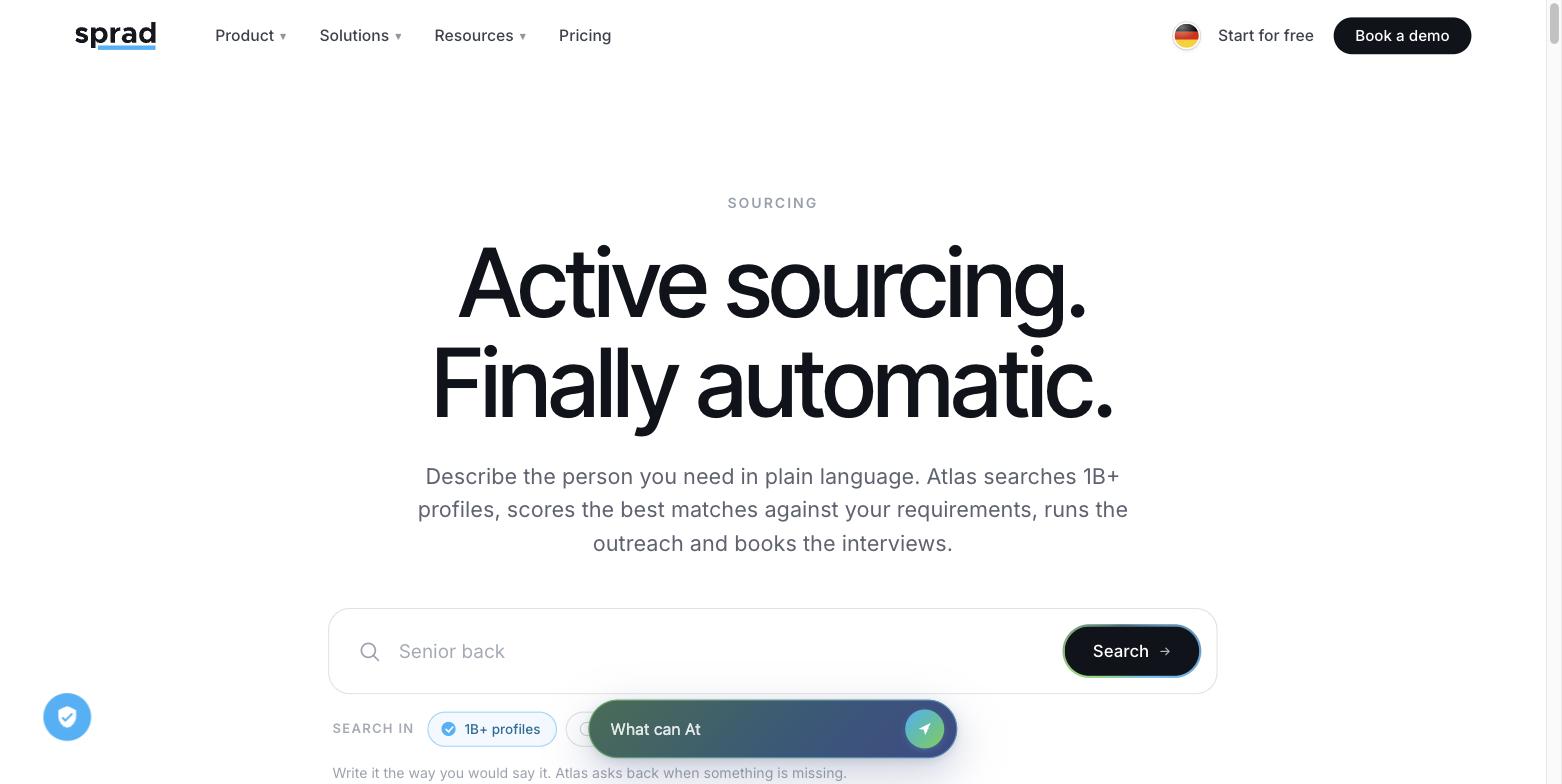
Sprad takes a requirement instead of a filter. Atlas, the sourcing product, checks every profile individually against your requirements and gives a reason per requirement, so it also finds people with a thin or differently worded profile. Rule of thumb: when results appear instantly, it is almost always a semantic keyword search; a real check takes minutes.
- One search across sources: LinkedIn, GitHub, your own talent pool and employee networks, one of the largest profile databases (1B+ profiles worldwide). You can upload your own LinkedIn network and search it. Deep Context first finds companies, then people who worked there in a given period, for example a CFO who led an acquisition.
- Contact data on demand: a verified business email costs 1 credit, a phone number 10, and you only pay for what is found.
- LinkedIn and email in one inbox: automated outreach with follow-ups, InMails from inside Sprad, trainable AI templates and a pitch format. The combination of email and LinkedIn is, in our experience, what lifts reply rates. The system warns you when someone was already contacted, also for another role or by a colleague.
- Your data stays yours: the talent network stays free after cancellation, with a full raw-data export.
Honest limits: no AI notetaker, no placement reporting and no SMS channel (WhatsApp for candidate communication instead); the deep search takes a few minutes. Plans: sprad.io/pricing. More: Active Sourcing.
2. ContactOut
ContactOut is the closest match to Lusha for recruiters: a browser extension that reveals personal and work emails while you browse LinkedIn. It has the same structural limit, you decide who to contact first, and its monthly caps are lower than the word “unlimited” suggests.
3. SignalHire
SignalHire suits small teams that want a cheap way to unlock emails and phone numbers. Prices moved several times in 2026, so read the live page and the credit terms before you commit.
4. LinkedIn Recruiter
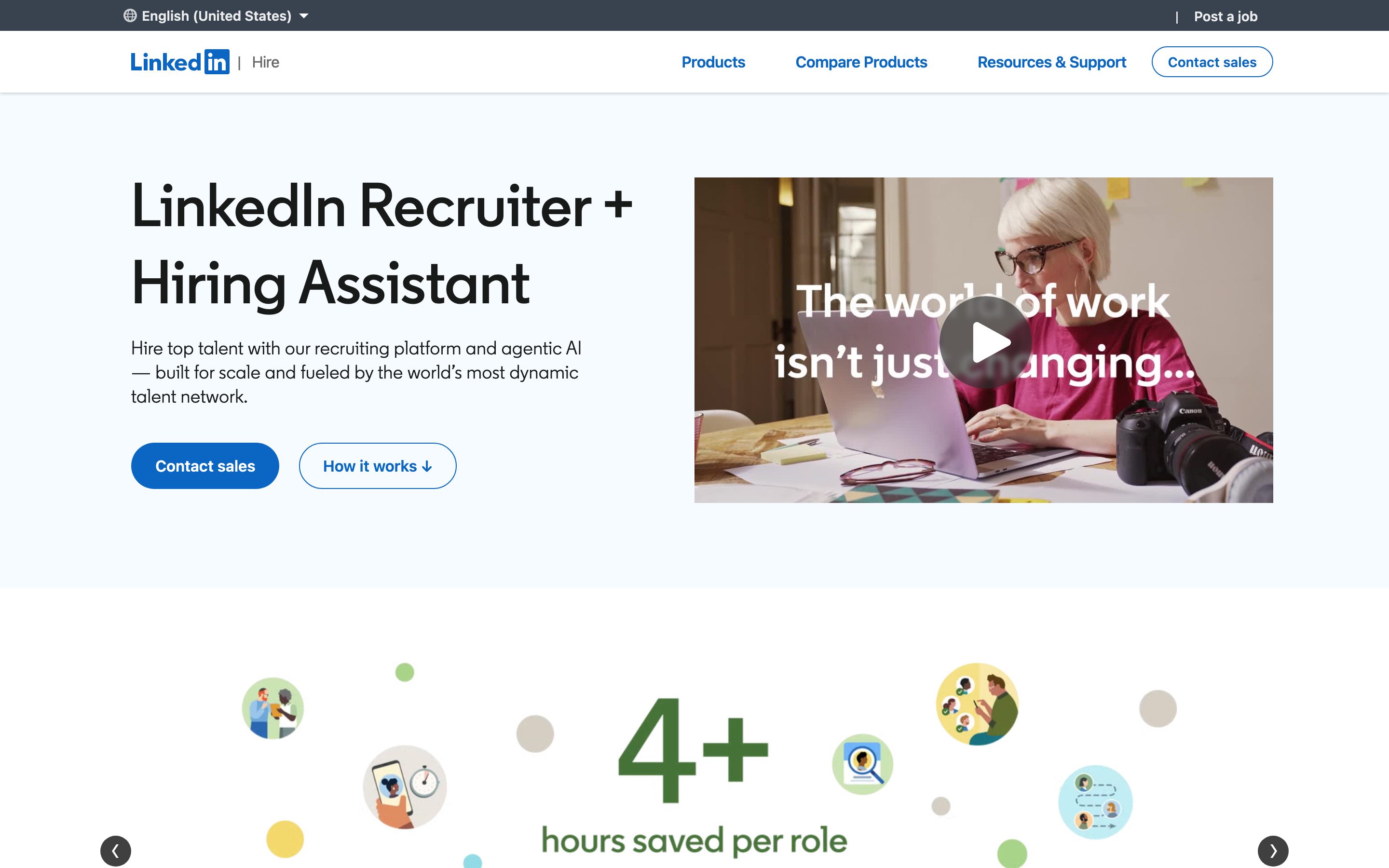
If most of your candidates live on LinkedIn and you value native InMail, nothing replaces it, and many teams run it together with a contact finder. The price is the barrier. Options are in our LinkedIn Recruiter alternatives.
5. Juicebox
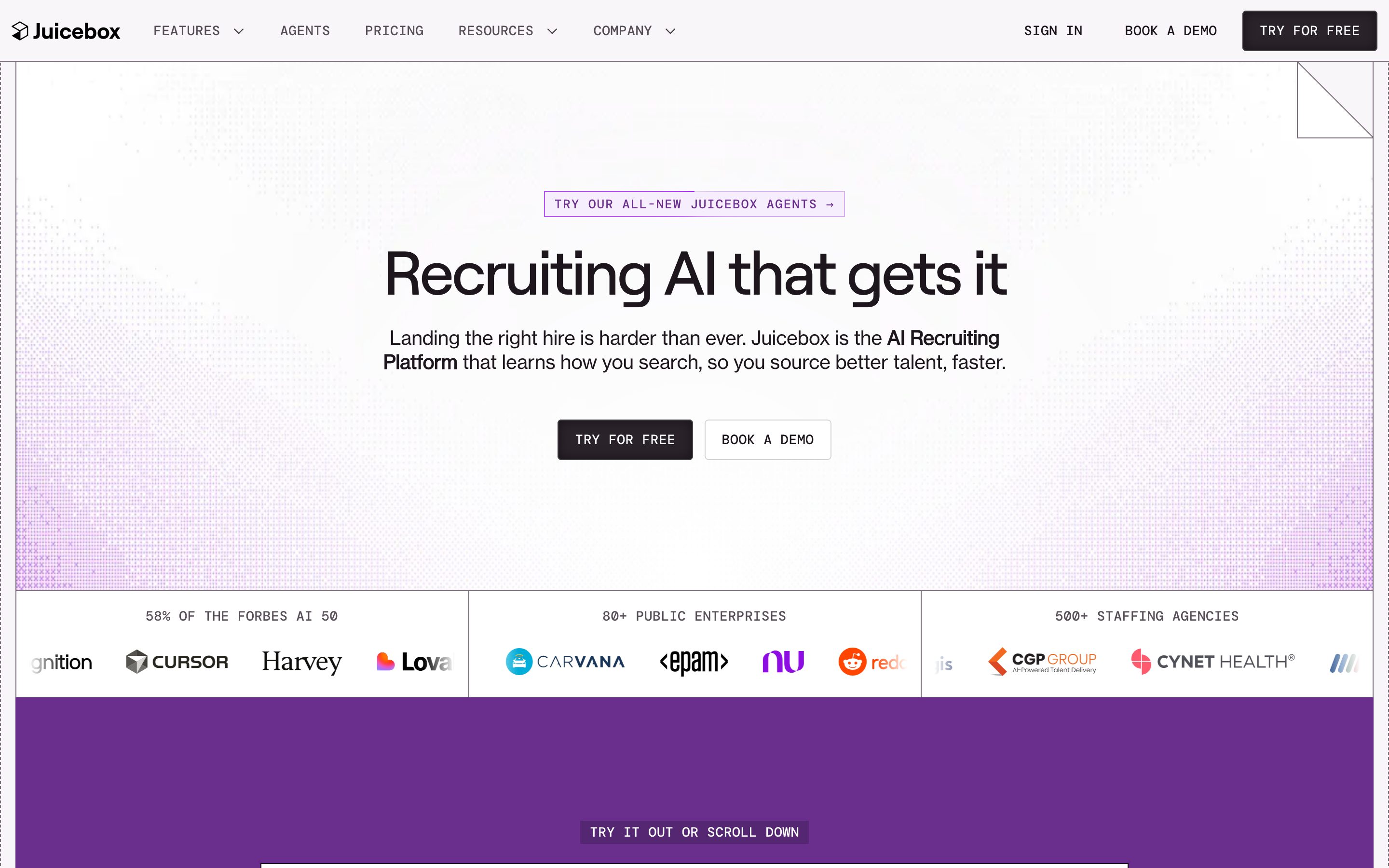
Juicebox scored 65.7 in the recruiting area of the public PeopleSearchBench, a solid result. Details: Juicebox alternatives.
6. Apollo.io
Apollo was built for sales prospecting; for company data (finding hiring managers, building client lists) it is a fair companion to a recruiting tool, for candidates less so.
What does Lusha cost, and what do the alternatives cost?
According to Lusha’s pricing page (read end of October 2026; third-party captures differ): Free 40 credits a month, Starter 49.90 $ for 400 credits, Pro 69.90 $ for 600, Premium 399.90 $ for 3,400 on monthly billing, and about 25 % less on yearly billing (Pro 52.45 $, Premium 299.95 $ per month). Scale is on quote. Here is a worked example with our assumptions.
| Example: 3 recruiters, 600 candidate emails a month | Assumption | Per year |
|---|---|---|
| LinkedIn Recruiter Lite + Lusha Pro | 3 × 140 $ per month (annual) for the search; Lusha Pro 52.45 $ per month on yearly billing; assumes one credit per email, no phone numbers | about 5,670 $ |
| Sprad Recruiter Lite | 3 × 79 € per month, annual; search included (500 profiles per seat); 600 emails × 1 credit = 600 credits = 60 € per month at 0.10 € per credit | about 3,564 € |
| Sprad Atlas Recruiter | 3 × 299 € per month, annual; unlimited search (fair use), first outreach account per seat included; emails by credits | about 10,764 € plus credits |
The two stacks do different jobs: the first still needs you to decide whom to contact, the second finds and checks the candidates. Credits add up differently in Sprad: a web search costs 2 credits per displayed profile, an email 1 credit. Fifteen profiles with email take 15 × 2 + 15 = 45 credits, about 4.50 € at the list price of 0.10 € (0.09 € with Atlas Base). The free plan includes 100 credits a month. Sprad also states 30–80 % lower cost than separate LinkedIn and XING recruiter licences, depending on what you have today. All prices net, annual billing.
Which alternative finds more matching candidates?
The only independent yardstick is the open PeopleSearchBench (recruiting area). Published recruiting values: Lessie 68.2, Juicebox 65.7, Exa 64.7, Claude Code 50.5. Atlas is not in that table; our own re-measurement, converted to the published scale, gives 73.5, and in it Atlas returned almost always 15 matching profiles per recruiting search (14.2 on average).1 Sprad is the vendor of Atlas itself. Lusha, ContactOut, SignalHire, Apollo and LinkedIn Recruiter were not part of the benchmark, and contact finders do not search by fit at all, so we make no claim about them from it. Details: benchmark page.
1 PeopleSearchBench (Recruiting), published by Lessie, October 2026. Other systems' scores as published in the benchmark; Atlas is our own re-measurement with the benchmark's open test procedure, converted to the published scale; not an official entry.
GDPR, EU AI Act and US rules: what changes when you unlock contact data
Contact-data tools are where regulators look first. In December 2024 the French authority fined the data vendor Kaspr 240,000 € for collecting contact details of LinkedIn users who had hidden them and for keeping data for five years after each update (CNIL decision). That concerns another vendor, not Lusha, but it shows the question to ask any provider: where does the data come from, and does it respect what a person made private?
For you as the user three rules apply. You need a legal basis and must inform people you contact without an application within a reasonable time (Regulation (EU) 2016/679, Articles 6 and 14), and you must honour an objection to direct marketing (Article 21). AI that ranks candidates can count as high-risk under the EU AI Act (Annex III, employment), so a human must decide. In New York City, employers using automated employment decision tools face bias-audit and notice duties (NYC Department of Consumer and Worker Protection). Ask every vendor where data is hosted, whether your data trains models and whether a processing agreement is included. Sprad is hosted in the EU and built for enterprise, public-sector and insurance requirements, in Europe and the US.
Who should switch from Lusha and who should stay?
- Switch to Sprad if you recruit full-time, need to find people by fit rather than unlock contacts one by one, want outreach and a record per candidate in one place, or work under GDPR with candidates in the EU.
- Switch to ContactOut or SignalHire if you want the same kind of tool at a different price or with different phone coverage.
- Stay with Lusha if you mostly sell, recruit only a few roles, and need the odd direct dial for people you already shortlisted.
- Combine a search tool with a contact finder if you cannot move yet; many agencies do. Common mistake: paying for the contact finder, then finding that the people you unlocked never answered, because the message went out from a different tool without follow-ups.
For a broader market view see our comparison of active sourcing tools.
FAQ
What are the best alternatives to Lusha?
For recruiting: Sprad (search by requirements plus contact data and outreach), ContactOut and SignalHire as contact finders, LinkedIn Recruiter and Juicebox for search, and Apollo.io for company data.
What does Lusha cost?
There is a free plan with 40 credits a month. Paid plans start at 49.90 $ a month (Starter, 400 credits); Pro is 69.90 $ and Premium 399.90 $ on monthly billing, about 25 % less yearly. Check the live page.
Is Lusha GDPR compliant?
Lusha states GDPR compliance on a legitimate-interest basis and lists SOC 2 Type II and ISO 27001. You remain responsible for your own legal basis, for informing candidates and for honouring opt-outs.
Is Lusha good for recruiting?
For unlocking contact data, yes; there is an extension for LinkedIn Recruiter. It does not find candidates by fit and has no pipeline or outreach.
Which alternative finds more matching candidates?
In the recruiting area of the open PeopleSearchBench, our own re-measurement puts Atlas at 73.5 of 100, converted to the published scale (Juicebox 65.7 as published). The contact finders were not measured.
Which one should I pick?
Sprad, if you want the most matching candidates (every profile checked individually), an email for 1 credit, LinkedIn and email outreach in one inbox and EU hosting. Start free at sprad.io/pricing.
Jürgen Ulbrich
Jürgen Ulbrich has more than a decade of experience in developing and leading high-performing teams and companies. As an expert in employee referral programs as well as feedback and performance processes, Jürgen has helped over 100 organizations optimize their talent acquisition and development strategies.