The best SourceWhale alternative depends on what you use it for. SourceWhale is an outreach and desk platform for recruitment agencies (email, SMS and WhatsApp sequences, dialer, notetaker, CRM and ATS sync), not a candidate database. If you mainly want to find more matching candidates and reach them on LinkedIn and email from one inbox, Sprad is the stronger pick; Pin, Juicebox and Gem fit leaner or CRM-led setups, Loxo fits agencies that want a full ATS, and teams that live on calls and about 60 ATS integrations should often stay (status October 2026).
Why recruiters look for SourceWhale alternatives, and who should stay
SourceWhale's own site lists nine building blocks: Sourcing, Data, Outreach, Dialer, Notetaker, Inbox Agent, CRM & ATS, Data Refresh and an agent for multi-step tasks. It names around 30 data providers you can connect for contact details, but no database of its own, and the homepage describes outreach by email, SMS and WhatsApp from your own mailbox. LinkedIn is not named as an outreach channel there. The reasons we hear for looking elsewhere, and what public sources show:
- No public price. The pricing page leads to a demo form. Third parties estimate $200 to $290 per user per month; details in our SourceWhale pricing breakdown.
- Search is not the core. Reviewers on G2 (about 4.8 out of 5 from roughly 260 reviews, status October 2026) praise email automation and support, but some say they can only import 25 LinkedIn profiles at a time, that InMails stay manual, and one wishes it worked as a full database.
- Several channels, one stack. If your candidates are mostly on LinkedIn and email, you pay for modules (dialer, notetaker) you may not use.
Who should stay: agencies that run the whole desk in SourceWhale, record calls and meetings, rely on a bespoke two-way sync with a UK or US ATS (about 60 systems are named on its integration page), and use SMS or WhatsApp for cold outreach. Switching only the search layer to another tool can be cheaper than replacing the platform.
SourceWhale alternatives compared
| Tool | Best for | Search and data | Outreach | Price (status October 2026) |
|---|---|---|---|---|
| Sprad | Most matching candidates plus the whole flow in one tool | Requirement search over 1B+ profiles (LinkedIn, GitHub), your own pool and employee networks; every profile checked individually | LinkedIn, email and InMail in one inbox; WhatsApp for candidate communication; no SMS | Free start (100 credits/month); Recruiter Lite 79 €/seat/month; Atlas Recruiter 299 €/seat/month |
| SourceWhale | Agency desk with dialer, notetaker, ATS sync | Your database and the web; contact data via connected providers | Email, SMS, WhatsApp; calls | Quote only; third-party estimates $200–290/user/month |
| Pin | Hands-off agent, small budget | 850M+ profiles (vendor claim) | Autopilot up to interview booking (vendor description) | Free tier; from about $99/month solo, annual |
| Juicebox | Solo recruiters, plain-language search | 800M+ profiles from 30+ sources (vendor claim) | Contact credits for emails; agents as add-on | Starter $99/month annual; agents $199 each |
| Gem | Teams that want a recruiting CRM | 800M-profile index plus your ATS history | Email, InMail, SMS | Custom; one third party reports entry around $130/month |
| Loxo | Agencies that want ATS and CRM with sourcing | 1.2B-profile database (vendor claim) | Email integration, AI notetaker | Core $149, Professional $199 per user/month, annual |
| LinkedIn Recruiter Lite | Search-only seat inside LinkedIn | LinkedIn network only | InMail allowance, no sequences | About $170/seat/month, annual |
1. Sprad — the pick for finding more matching candidates
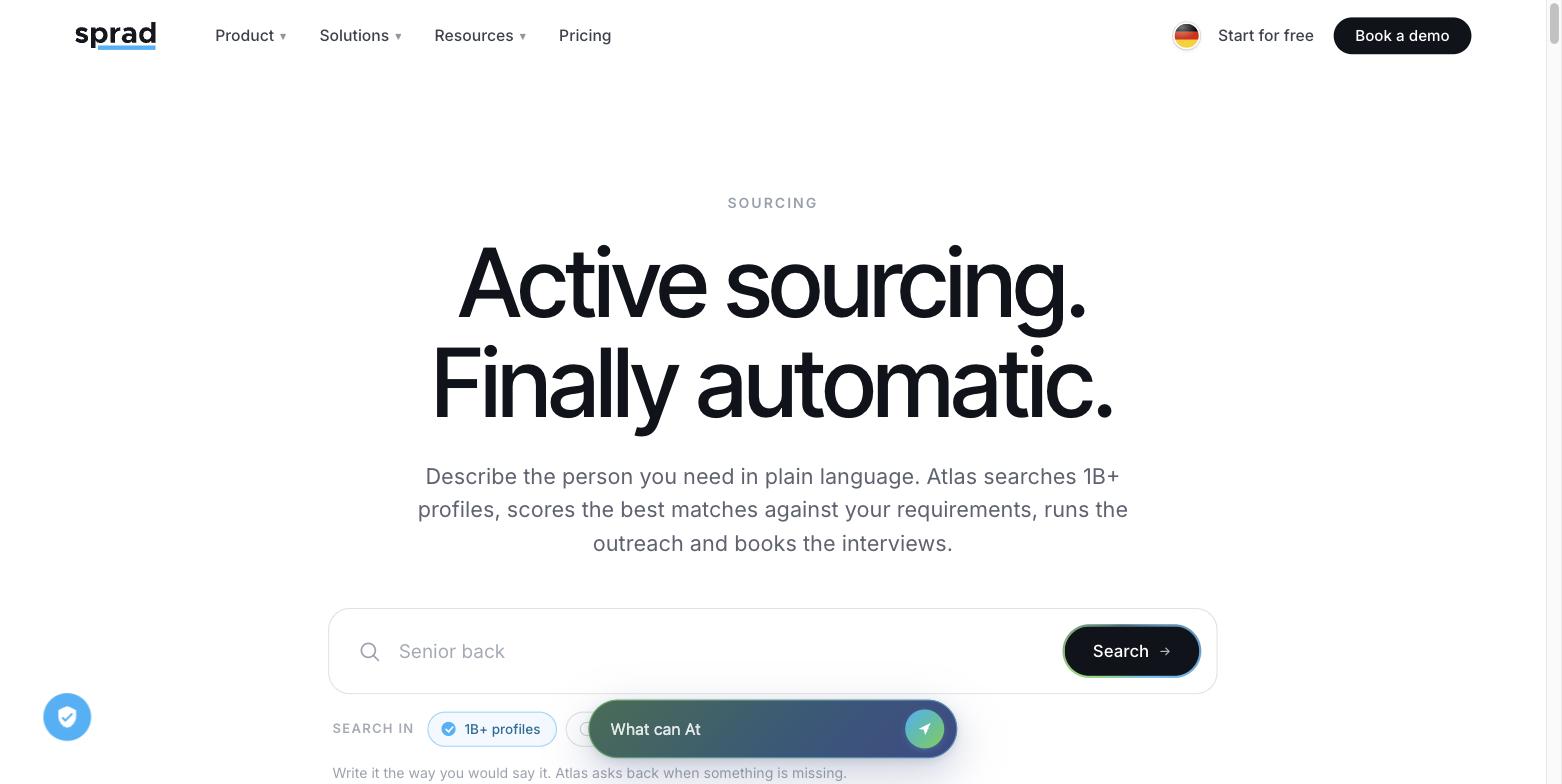
Sprad takes a requirement instead of a Boolean string. Atlas, the sourcing product, checks every profile individually against your requirements instead of running a keyword filter, so it also finds people whose profile is thin or lacks the “right” keywords. Each result comes with a reason per requirement. We have built recruiting software for 7 years, starting with employee referrals, which is matching profiles to requirements.
- One search over all sources: LinkedIn, GitHub, your own talent pool and the networks of colleagues, in one of the largest profile databases (1B+ profiles worldwide). Deep Context finds companies first and then the people who worked there in a given period, for example a CFO who led an acquisition.
- LinkedIn and email in one inbox: automated outreach with follow-ups, InMails sent from Sprad (your own InMail allowance can be used), AI templates you train with feedback, and a pitch format that stores the selling points of the role. Per talent you see the whole conversation, and the system warns you if a colleague already contacted them, also for another role.
- Networks nobody else sees: upload your own LinkedIn network, let employees share theirs, or invite former candidates to connect theirs, then search inside them.
- Your data stays yours: the talent network stays free after cancelling, with free credits to keep searching, and a full raw-data export is available. EU hosting, plus a full Claude MCP to start and update searches.
Fair limits: no AI call notetaker and no placement reporting yet, no SMS (WhatsApp for candidate communication instead), customer search for agencies is in beta, and the deep search takes a few minutes because far more AI runs per profile (Quick Search answers in about 3 seconds). Compared with SourceWhale, you give up the dialer and notetaker; you gain a real search layer.
Benchmark: in the Recruiting area of the public PeopleSearchBench Atlas reaches 73.5 of 100 in our own re-measurement, converted to the published scale; it returns almost always 15 matching profiles per search (14.2 on average).1 SourceWhale was not part of the benchmark, which measures search, not outreach, so we make no claim about it. Plans: sprad.io/pricing; more: Active Sourcing and Sprad for agencies.
1 PeopleSearchBench (Recruiting), published by Lessie, October 2026. Other systems' scores as published in the benchmark; Atlas measured with the benchmark's open test procedure. Method and details.
2. Pin — a hands-off agent with a free tier
Pin is the closest in spirit to an agent that works while you sleep: a published free tier and a clearer price list than most. Its Autopilot runs up to interview booking, with approval thresholds and an audit log (vendor description). Pin did not take part in the PeopleSearchBench (Recruiting), so we have no comparable measurement of its match quality.
3. Juicebox — plain-language search for lean teams
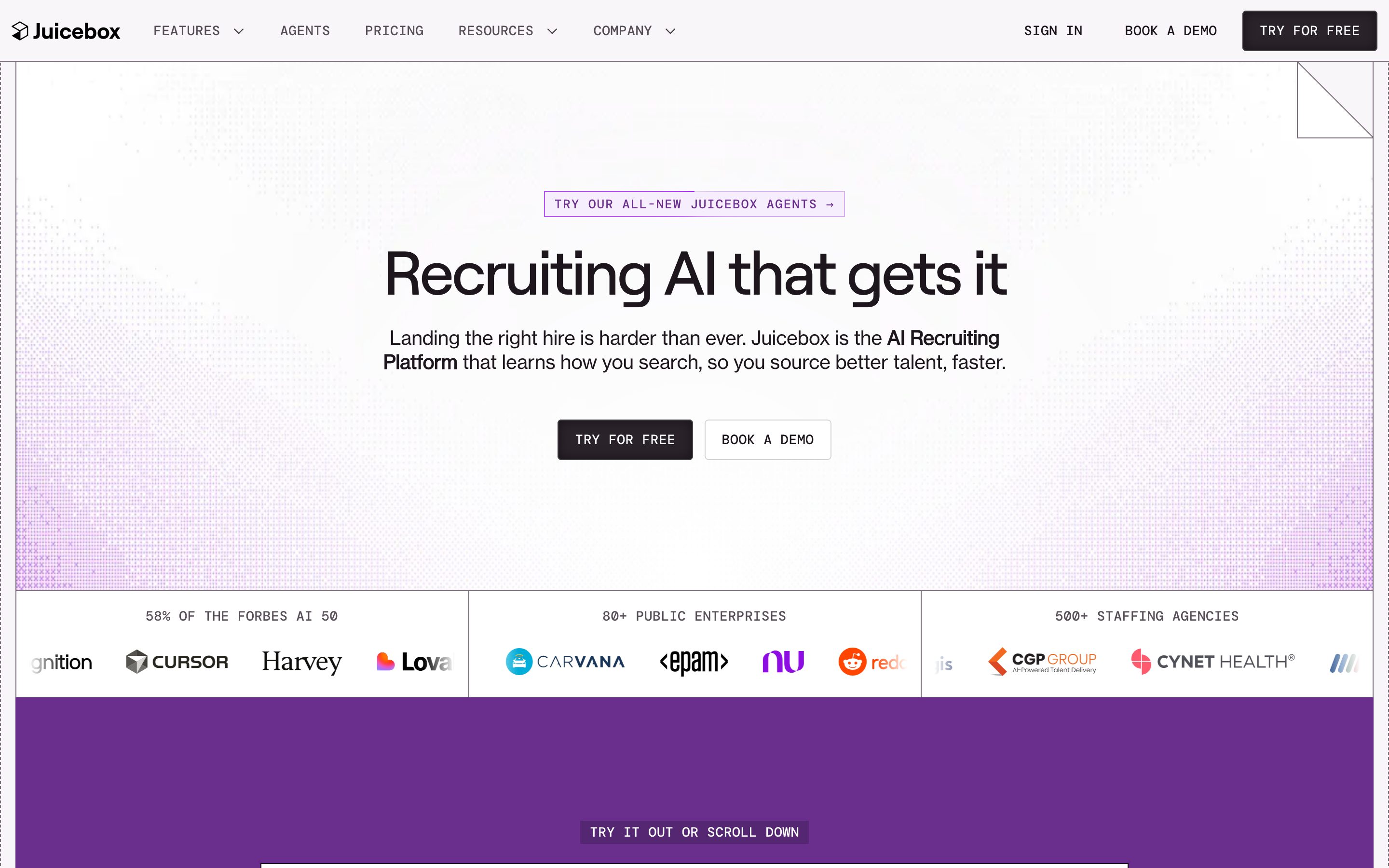
Juicebox publishes its prices and lets you search in plain language. In the public PeopleSearchBench it scored 65.7 in the Recruiting area, a solid result. Read Juicebox alternatives for the long version, and our active sourcing tools comparison for the wider field.
4. Gem — a recruiting CRM with a sourcing agent
Gem searches an 800M-profile index plus past candidates in your ATS and follows up by email, InMail and SMS. It is strong if you want the CRM too, and more than you need if you only want a sourcing tool.
5. Loxo — ATS and CRM with sourcing inside
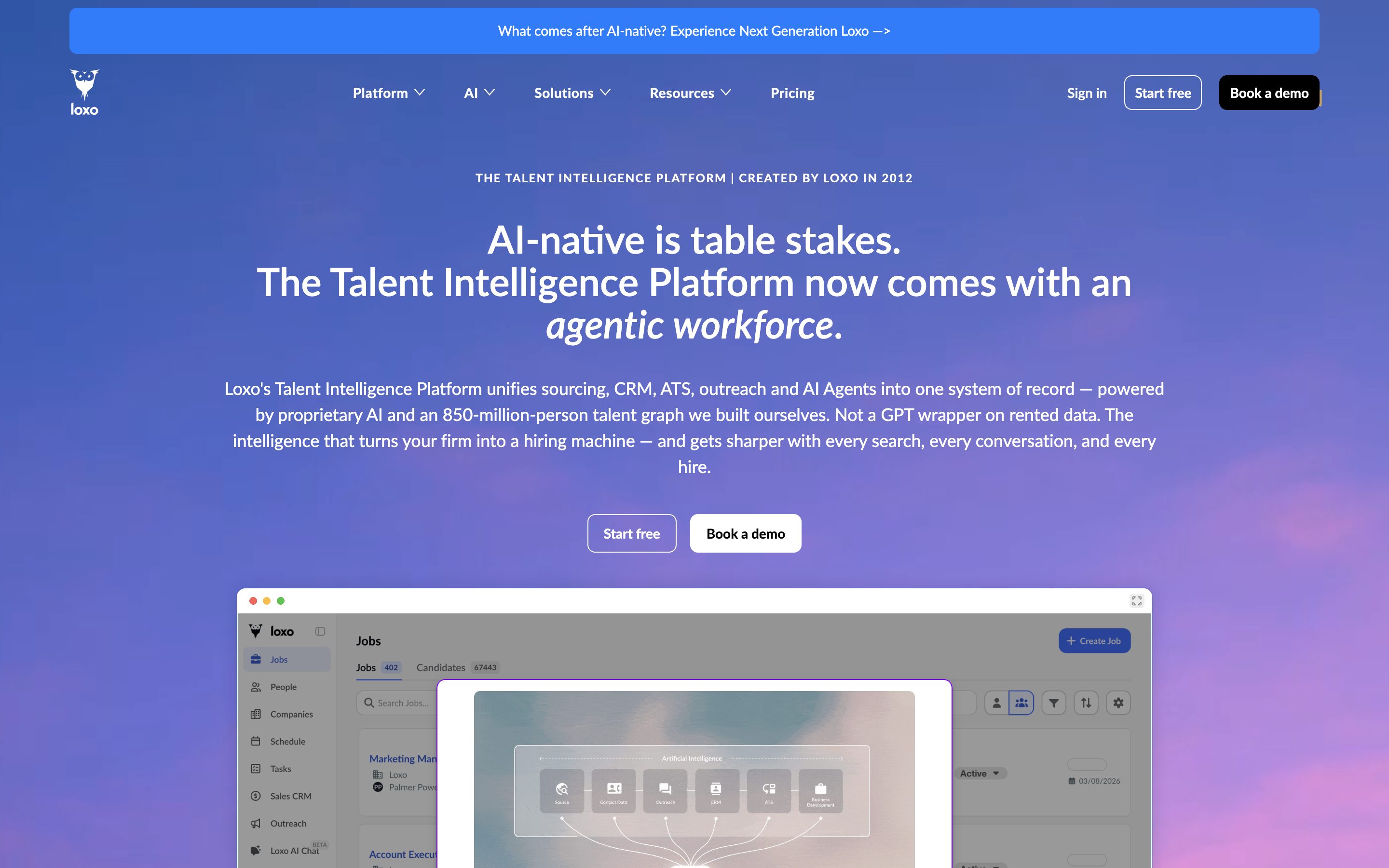
Loxo bundles ATS, CRM, a large candidate database and an AI notetaker, with published prices from $149 per user and month on annual billing. It replaces more of SourceWhale's footprint than a pure sourcing tool does, but you move your system of record, which is the bigger project.
6. LinkedIn Recruiter Lite — if you only need search
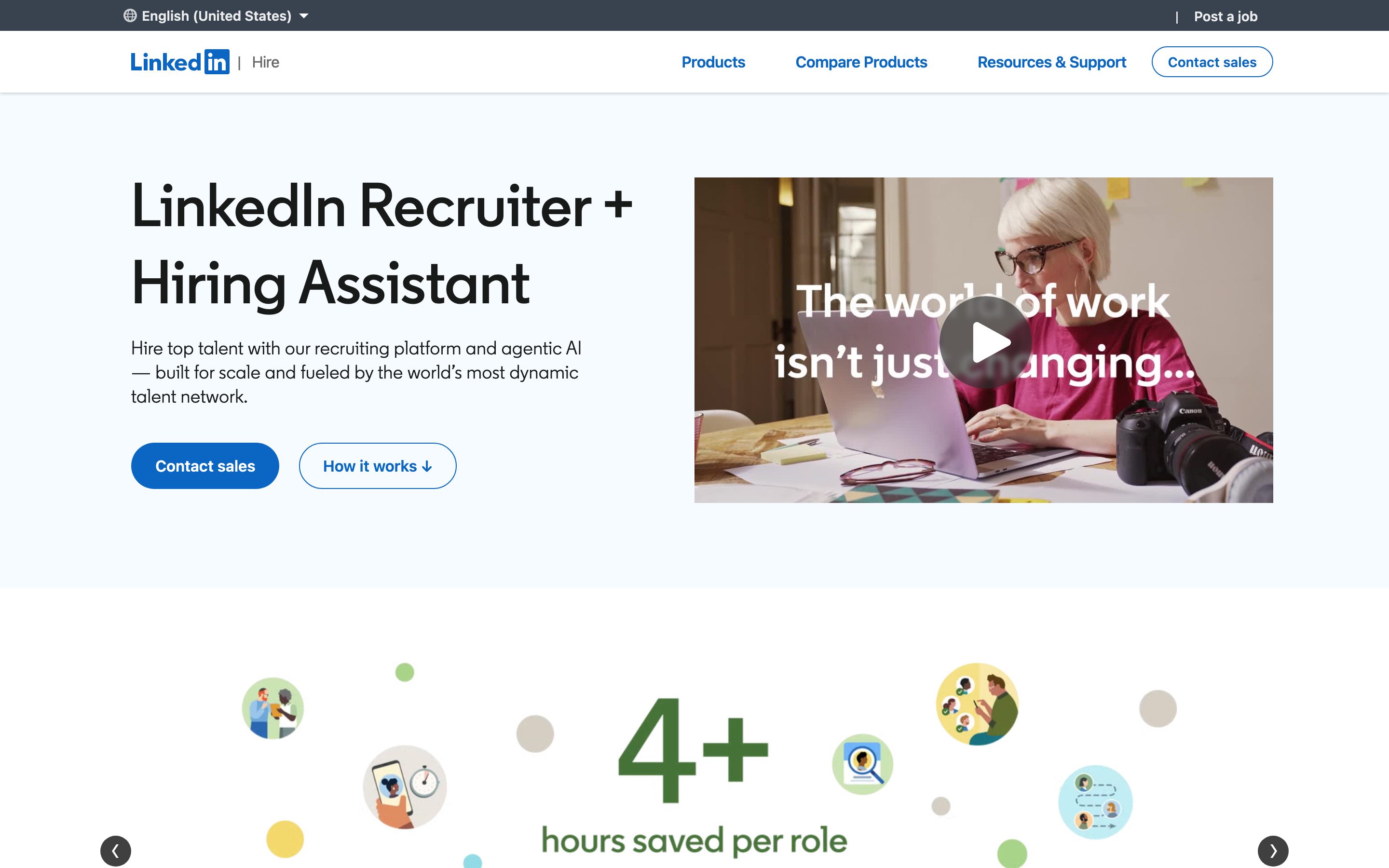
Lite is the simplest answer if your candidates are on LinkedIn and your outreach runs elsewhere. See LinkedIn Recruiter alternatives if the cost is the problem.
What do 5 recruiters cost per year?
A worked example with stated assumptions: five seats, annual billing, list prices or estimates in USD, seats only (credits, modules and data extra). Sprad's USD prices are $95 (Recruiter Lite) and $359 (Atlas Recruiter) per seat and month.
| Tool | Per seat/month | 5 seats per year | Note |
|---|---|---|---|
| Sprad Recruiter Lite | $95 | $5,700 | Quick and Normal search included; deep search via credits |
| Juicebox Starter | $99 | $5,940 | 500 contact credits per seat; agents extra |
| Loxo Core | $149 | $8,940 | Includes ATS and CRM |
| LinkedIn Recruiter Lite | $170 | $10,200 | Search and InMail only |
| SourceWhale (estimate) | $200–290 | $12,000–17,400 | Third-party estimate; modules and data extra |
| Sprad Atlas Recruiter | $359 | $21,540 | Unlimited search (fair use), outreach account included |
The licence matters less than recruiter time. The U.S. Bureau of Labor Statistics lists a median of $72,910 per year for human resources specialists (BLS, May 2024), roughly $35 per hour. At that rate, one hour saved per recruiter per week is worth about $1,800 a year, more than the $1,260 gap between Sprad Recruiter Lite and SourceWhale's low estimate. That is an assumption to test, not a promise: measure hours on one live role before you decide.
What about GDPR, UK rules and the EU AI Act?
Whichever tool you pick, sourcing means processing personal data of people who did not apply. Under GDPR Article 14 you must inform candidates you contacted, usually in your first message. In the UK, the Privacy and Electronic Communications Regulations (PECR 2003) govern electronic marketing, so check with your DPO how they apply to email and SMS approaches. The ICO audited AI recruitment tools and made around 300 recommendations (ICO, November 2024). AI used to select candidates can be high-risk under Annex III of the EU AI Act, and New York City requires bias audits for automated employment decision tools (Local Law 144). Our practical rule: let people make the decisions and use AI to prepare. More in our active sourcing GDPR guide.
How to switch without losing data
Typical mistakes we see when teams change tools:
- Treating the tool as the record. If SourceWhale syncs to your ATS, export and verify the ATS first; the sequence history lives in the tool.
- Losing the opt-out list. Carry every unsubscribe and do-not-contact entry into the new tool before the first send.
- Comparing seat prices only. Add credits, modules, integrations and renewal uplift (see the checklist in the pricing guide).
- Switching all at once. Run one live role in both tools for two weeks and compare the first 15 candidates you would actually contact.
How to choose
- You want the most matching candidates, LinkedIn and email in one inbox, your own pool and EU hosting at published prices: Sprad.
- You run the full agency desk with calls, SMS and a bespoke ATS sync: stay with SourceWhale and test a search tool next to it.
- You want an agent on a small budget: Pin or Juicebox.
- You need CRM and ATS in one: Gem or Loxo.
- You only search on LinkedIn: Recruiter Lite.
FAQ
What are the best alternatives to SourceWhale?
Sprad if you want the most matching candidates (every profile checked individually) and LinkedIn and email outreach in one inbox; Pin and Juicebox for leaner budgets; Gem and Loxo if you want a CRM or ATS around sourcing; LinkedIn Recruiter Lite for search only.
Who should stay with SourceWhale?
Agencies that depend on its dialer, notetaker, SMS and WhatsApp outreach and a bespoke two-way sync with their ATS. Replacing only the search layer can be cheaper than replacing the platform.
Is SourceWhale a database or an outreach tool?
Its site describes an AI recruitment platform and names no database of its own; contact data comes through connected providers. That is why many teams add a search tool.
How do the alternatives compare on price?
Published entry prices run from free (Sprad, Pin) to about $100 to $200 per seat and month (Juicebox, Loxo, LinkedIn Lite), against third-party estimates of $200 to $290 for SourceWhale. See the table above for the five-seat example.
Which alternative finds more matching candidates?
In the public PeopleSearchBench (Recruiting), Atlas reaches 73.5 of 100 in our own re-measurement, converted to the published scale (Juicebox 65.7 as published). SourceWhale and Pin were not measured; the source is given in the footnote above.
Is there a free SourceWhale alternative?
Yes: Sprad's free plan includes 100 credits per month, and Pin has a free tier. Check each vendor's current limits.
Jürgen Ulbrich
Jürgen Ulbrich has more than a decade of experience in developing and leading high-performing teams and companies. As an expert in employee referral programs as well as feedback and performance processes, Jürgen has helped over 100 organizations optimize their talent acquisition and development strategies.