Frontline hiring works when you treat it as a fast, mobile funnel instead of a posting: reach people with a feed ad that names pay and shift, let them apply by text or WhatsApp in under a minute, pre-screen the same day and keep everyone in your own talent pool. Frontline workers are the people who serve customers, move goods, care for patients or run a site and cannot work from a desk. This guide is for employers. It covers the funnel, the channel mix, three kinds of tools, a pre-screening checklist and a budget example.
Why frontline hiring is different
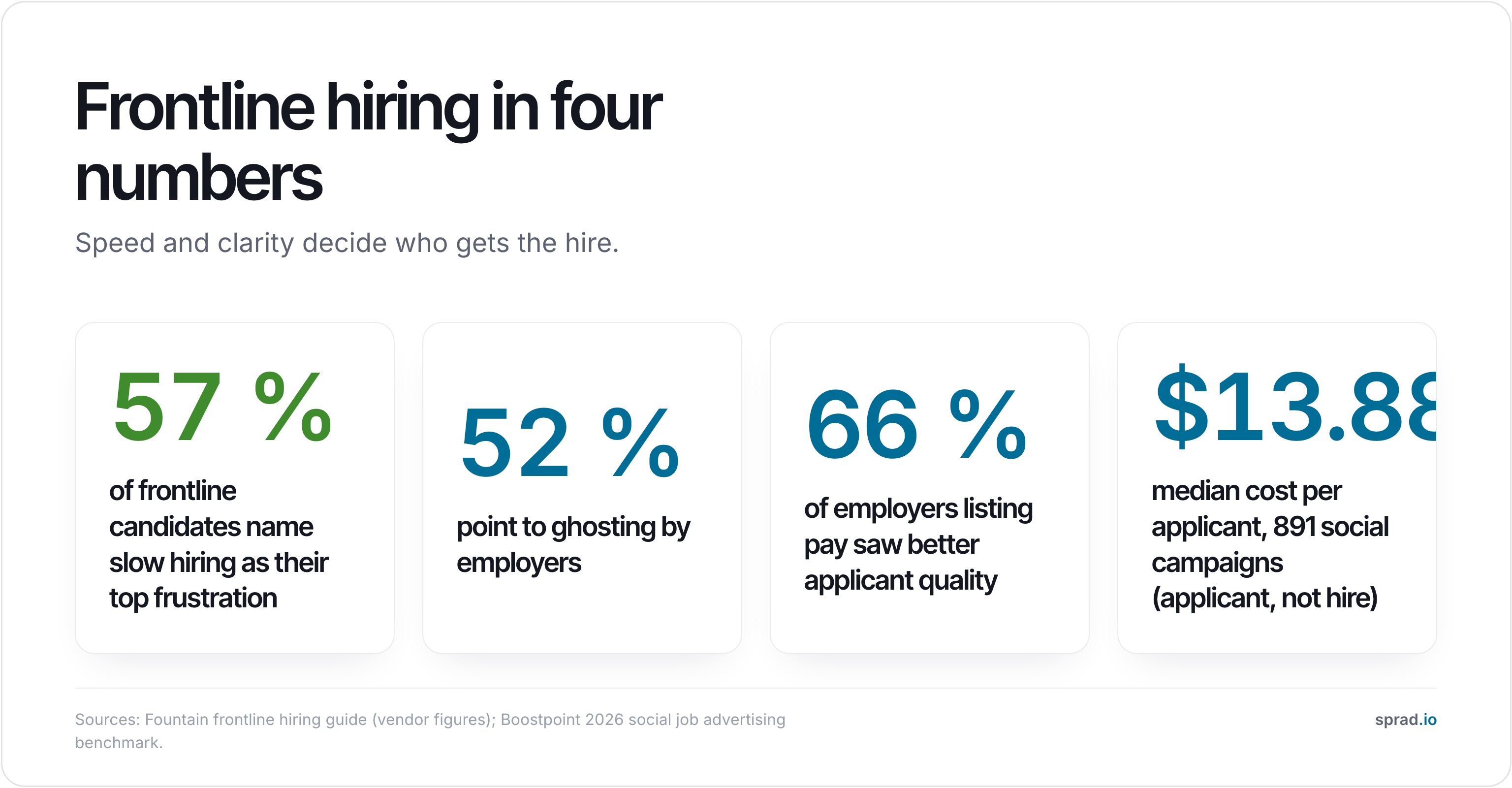
A desk job applicant researches a company for a week. A frontline applicant looks at a job between two shifts, on a phone, and takes the first employer who answers. Vendor surveys reported by Fountain say 57 % of frontline candidates name slow hiring as their top frustration and 52 % point to ghosting, and about two thirds of employers that listed pay saw better applicant quality. These are vendor figures, not independent research, but they match what recruiters of hourly staff describe: whoever replies first usually wins the hire.
The second difference is volume and turnover. Many frontline roles are refilled all year, so a one-off campaign is the wrong unit. You need a funnel that runs continuously and a pool of people you can reach again. That is why this guide ends with the talent pool, not with the job ad.
The funnel in five steps
Every working frontline process has the same five steps. The tools and channels only differ in how well they cover each one.
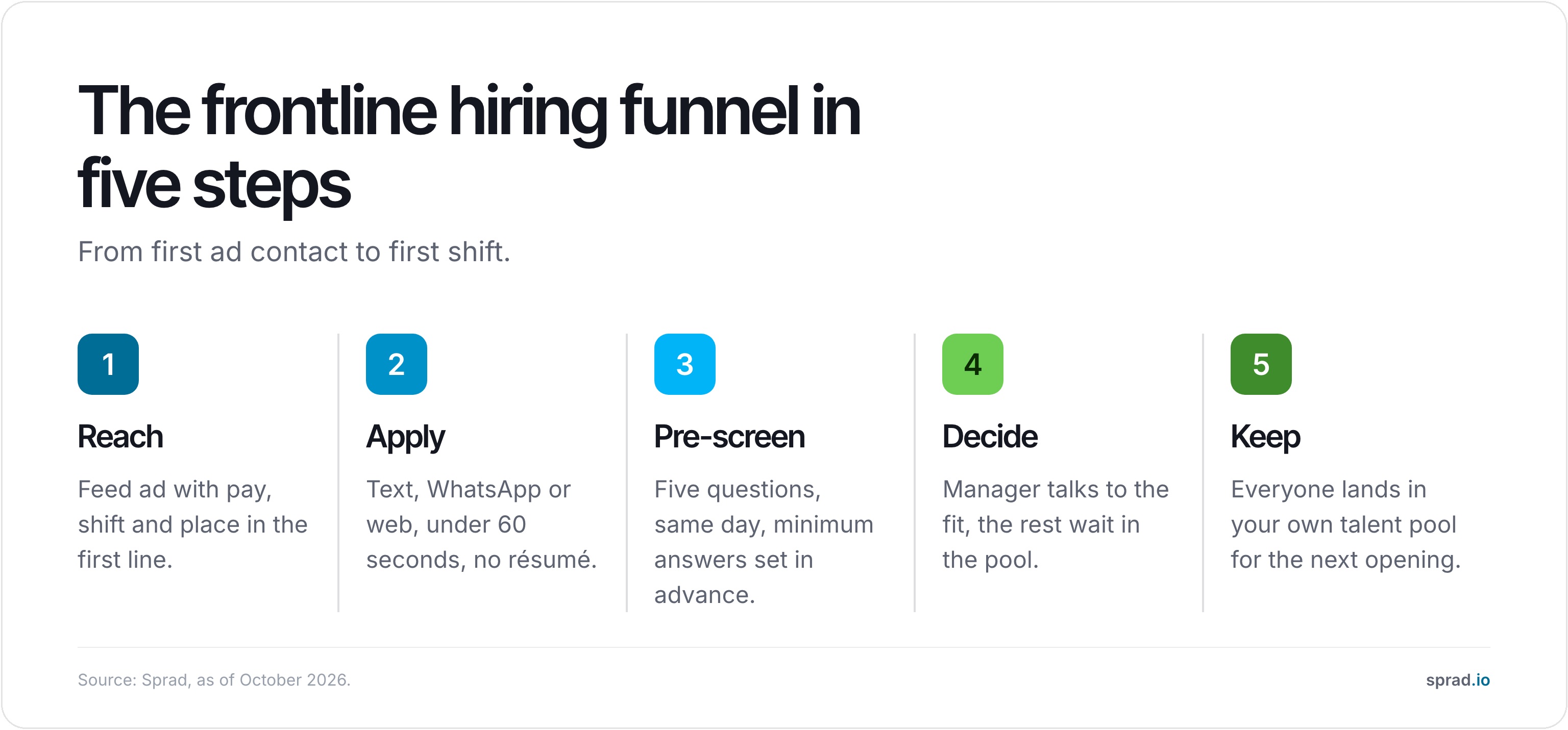
- Reach. Put pay, shift and place in the first line. Hourly workers filter on the number.
- Apply. Text, WhatsApp or a short web form. No résumé, no account, no 20 fields.
- Pre-screen. Five questions on hours, distance, experience, requirements and start date, with minimum answers written down before the campaign.
- Decide. The manager talks to the people who fit. Everyone else gets a polite answer.
- Keep. Everyone who applied stays in a pool you own, so the next opening starts with a warm list.
Channels: a small, deliberate mix
More channels do not mean more hires. A small mix covers different people:
- Job aggregators and boards reach people who are actively searching today. They are the baseline and often the most expensive per applicant.
- Feed ads on Instagram and Facebook reach people who are not searching. Meta treats job ads as a special ad category called employment, with restricted audience options in the US and the EU, so check the current rules in Meta's business help center before you plan targeting.
- Referrals from your own team remain the most trusted source. Add a bonus and a shareable message.
- Your own careers page that works on a phone and that Google can read as a job posting.
- Rehires and past applicants. The cheapest candidate is one who already applied. This only works if you kept them.
For orientation, the Boostpoint 2026 social job advertising benchmark covers 891 campaigns and reports a median of $13.88 per applicant. The spread by role is wide:
| Role category | Median cost per applicant |
|---|---|
| Customer service / admin | $2.71 |
| Caregiver / home care | $3.76 |
| CNA / nursing assistant | $7.72 |
| Warehouse / production | $9.83 |
| Skilled trades | $14.14 |
| CDL truck driver | $26.86 |
Source: Boostpoint, 2026 social job advertising benchmark (12 August 2026), selected categories. These describe applications, not hires, and come from a vendor's own campaigns.
Tools: three types, three jobs
Tools for frontline hiring fall into three groups. Pick by the step you lose people at, not by feature lists.
| Type | Solves | Examples |
|---|---|---|
| Hiring platform with AI agents | Apply, pre-screen and schedule at volume | Fountain, Paradox |
| HR suite with a hiring module | Onboarding, scheduling and payroll next to hiring | Workstream |
| Social ads plus pre-screening plus your own pool | Reaching people who are not searching and keeping them | Sprad Social Recruiting |
Fountain

Fountain focuses on high-volume hourly hiring, with SMS and voice interviews. It fits employers with many locations, mostly in the US.
Paradox
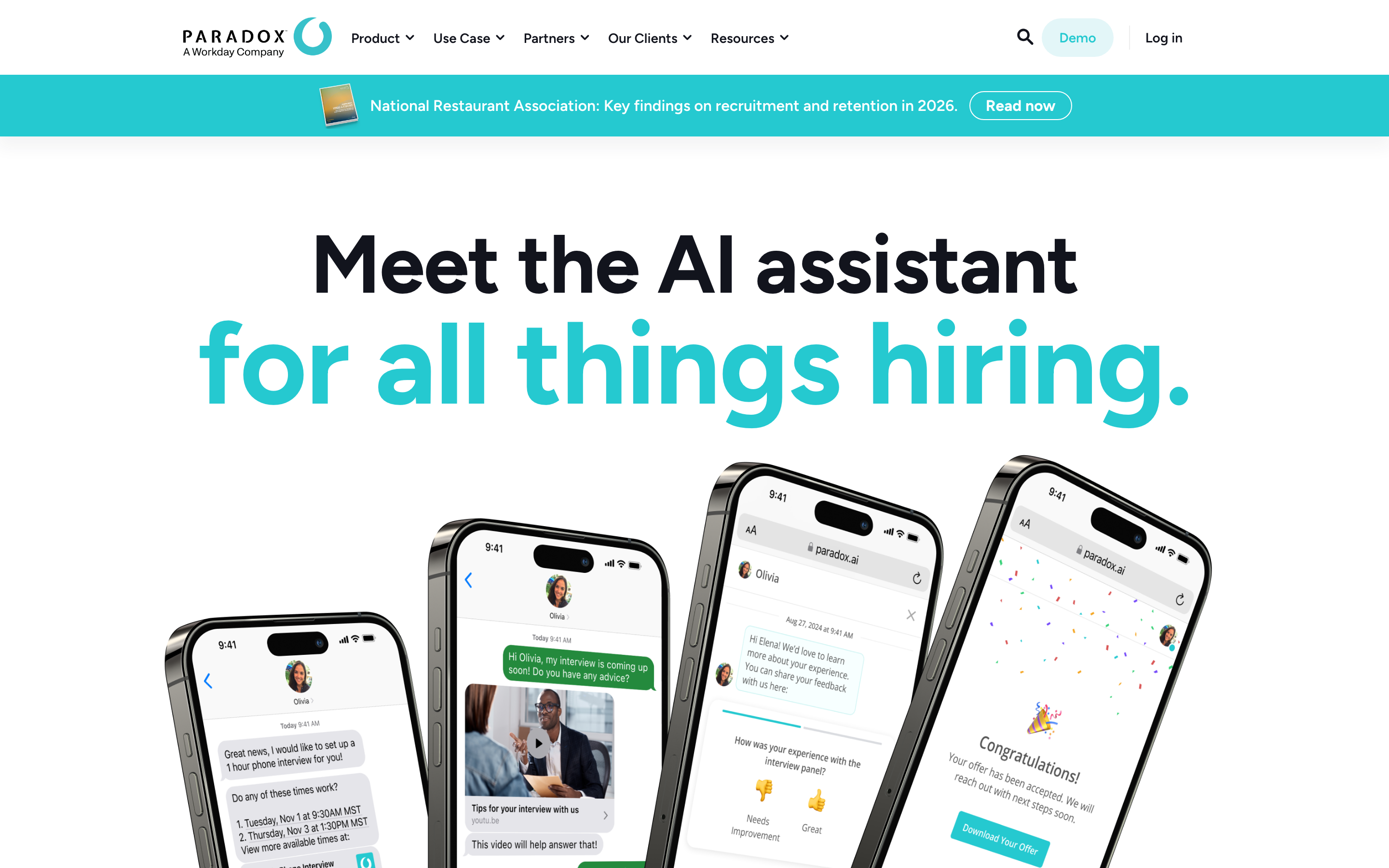
Paradox is a chat-led assistant for screening and scheduling. It is typically a fit for larger employers with many applicants per role.
Workstream
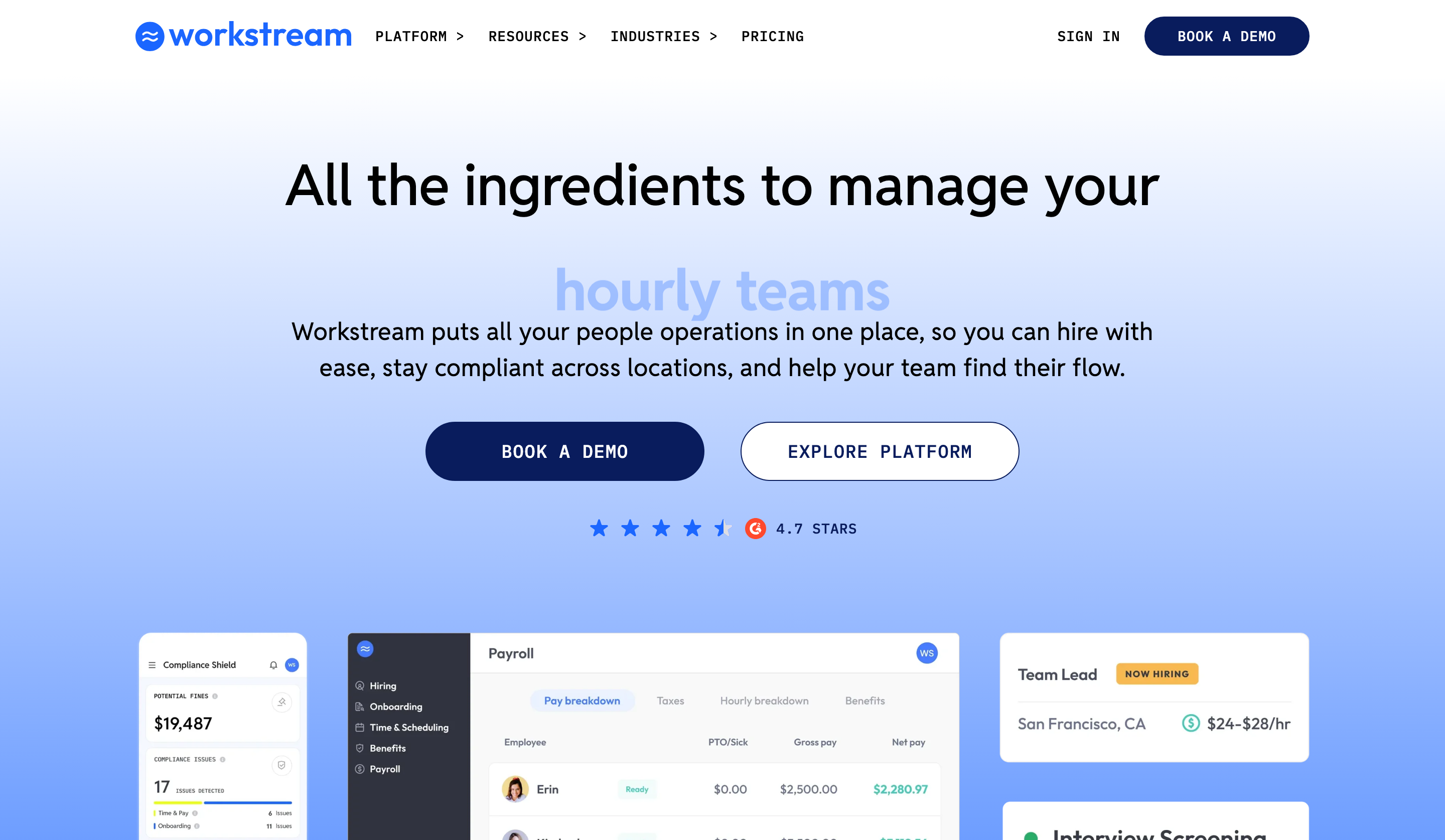
Workstream combines hiring with onboarding, time and scheduling, benefits and payroll. It makes sense when you want one system for hourly teams in the US.
Sprad Social Recruiting
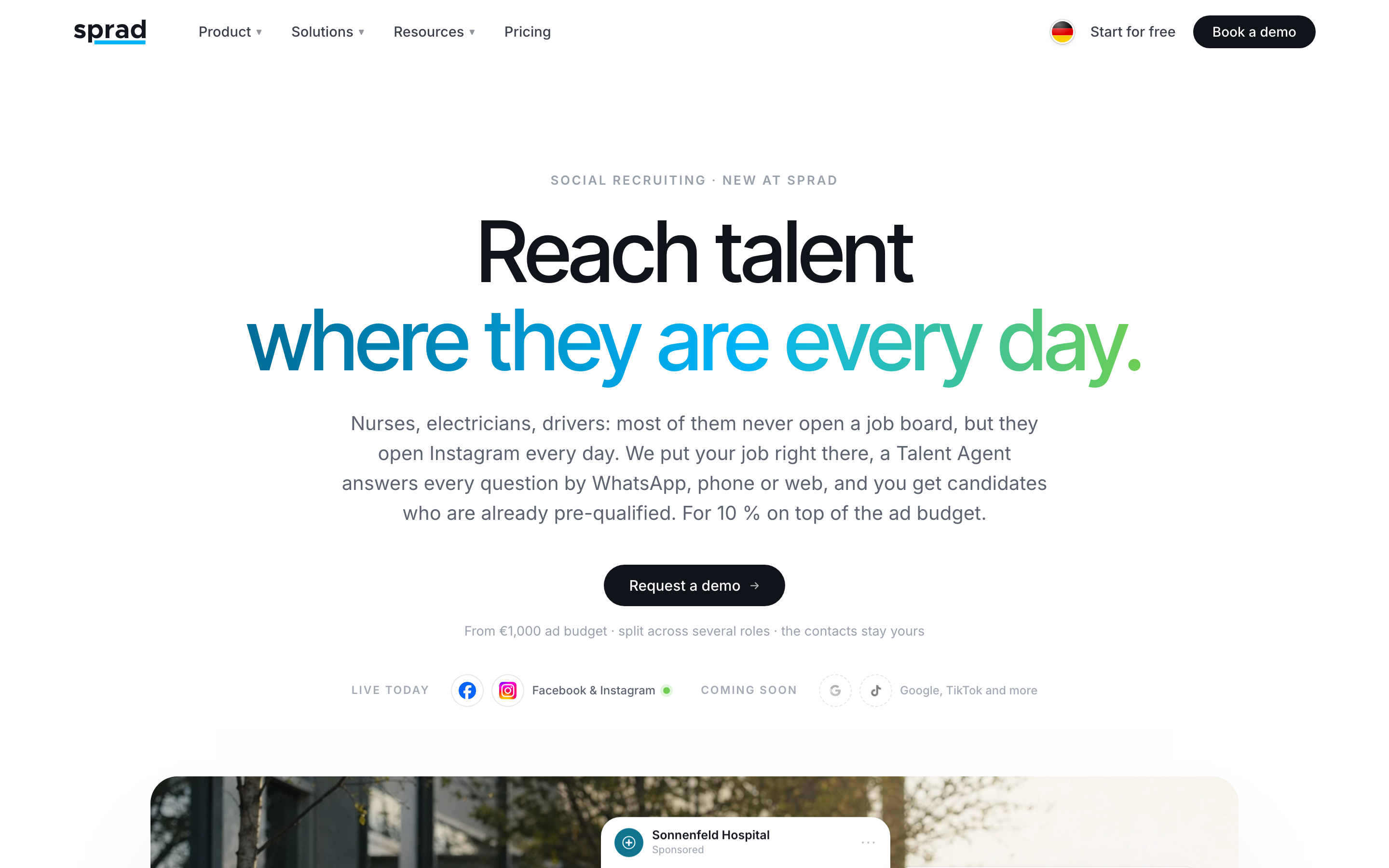
Sprad Social Recruiting runs job ads on Instagram and Facebook, where nurses, tradespeople, drivers and other frontline workers spend time every day. The AI Talent Agent pre-screens every applicant via WhatsApp, phone or web, and every applicant lands in your own talent pool. This is the one that covers the first and last step of the funnel: reaching people who are not searching, and keeping them afterwards. You can pair it with the ATS or HR suite you already use. See the logistics, manufacturing and retail pages for your sector.
Pre-screening checklist for any frontline role
Whatever tool you use, write these down before the first ad goes live:
- Hours: which shifts, full or part time, weekends?
- Distance: home area, own car or transit, how far?
- Experience and requirements: certificates, license, language, physical demands.
- Legal basics: work eligibility and any background check, which depend on country and state.
- Start: from when, with what notice?
Set a minimum answer for each. The first reply then tells you who goes to the manager today. Read more in why blue-collar screening differs from white-collar screening and frontline recruiting by phone and WhatsApp, not email.
Budget example
Sprad charges ad budget plus 10 %, from a €1,000 budget that you can split across roles, with three months recommended. The figures are plain arithmetic, not a promise of applicants:
| Example | Ad budget (3 months) | 10 % fee | Total |
|---|---|---|---|
| One site, one role | €1,000 | €100 | €1,100 |
| Three sites or roles | €3,000 | €300 | €3,300 |
| Five sites, five roles | €6,000 | €600 | €6,600 |
To estimate applicants, divide budget by your cost per applicant and multiply by the share who pass pre-screening. As an illustration only: at the benchmark median of $13.88, $1,000 of ad spend buys about 72 applications, and if one in four passes your questions that is 18 conversations. Your real cost depends on role, region and ad. The budget planner on the product page gives a guide value, never a guarantee.
Common mistakes
- Replying after two days. The applicant who wrote on Tuesday has often accepted another offer by Thursday.
- Leaving pay out of the ad.
- Treating every campaign as one-off and losing the applicants who were not ready.
- Buying a suite when the real gap is reach or speed.
FAQ
What is frontline hiring?
Frontline hiring means recruiting workers who cannot work from a desk: retail staff, warehouse and production workers, drivers, care and hospitality staff. It is high volume, mobile and fast.
What is the best channel for frontline hiring?
There is no single one. A small mix of an aggregator, feed ads, referrals, a mobile careers page and your own pool covers active and passive candidates.
What tools do I need for frontline hiring?
One tool for each gap: a hiring platform for volume, an HR suite if you want onboarding and payroll with it, and social ads with pre-screening and a talent pool for reach and retention.
How much does frontline hiring cost?
The Boostpoint 2026 median is $13.88 per applicant across 891 campaigns, from $2.71 to $26.86 by role in the categories above. Sprad charges ad budget plus 10 %, from €1,000.
Can I message applicants on WhatsApp?
Someone who contacts you after your ad made the connection themselves. Outreach to people who did not contact you has tighter rules that differ by country and state, so ask your counsel. This is not legal advice.
Sprad Social Recruiting in short
Sprad Social Recruiting runs job ads on Instagram and Facebook, where nurses, tradespeople, drivers and other frontline workers spend time every day. An AI talent agent pre-screens every applicant via WhatsApp, phone or web. Every applicant lands in the employer's own talent pool, so the relationships stay with the employer instead of a platform. Pricing is ad spend plus 10 %, from a €1,000 budget that can be split across roles. See how Sprad Social Recruiting works.
Jürgen Ulbrich
Jürgen Ulbrich has more than a decade of experience in developing and leading high-performing teams and companies. As an expert in employee referral programs as well as feedback and performance processes, Jürgen has helped over 100 organizations optimize their talent acquisition and development strategies.