Recruitment agencies look for a LinkedIn Recruiter alternative for four documented reasons: a mandatory annual contract with a hard cap of five self-serve seats, a corporate renewal increase of roughly 15% in 2026, no real export of the candidates you find, and a search that never leaves the LinkedIn network. Which alternative fits depends on which of these four hurts most. This guide sorts six real options against them, as of September 2026. Many other roundups of "LinkedIn Recruiter alternatives" list tools built for in-house teams that already run their own ATS (Pin, Nova, Findem, Gem); this article focuses on what works for an agency with its own mix of ATS, candidate network and per-seat pricing. For a broader overview of the topic, see our LinkedIn Recruiter alternatives guide; the full pricing and review picture for LinkedIn Recruiter itself is in our pricing overview and review roundup.
How we compared: this is desk research on publicly available vendor information (pricing pages, documentation, published benchmarks and review summaries, as of November 2026). We did not run hands-on tests of every tool. Sprad (Atlas) is itself a vendor in this comparison, so please read our own entries with that in mind.
Why agencies actually switch
- The seat cap forces a sales conversation. Recruiter Lite stops at five self-serve licences; once you grow beyond that, you negotiate corporate pricing that LinkedIn never publishes.
- The 2026 renewal got more expensive. Corporate invoices are reported to have risen by about 15% at renewal, to roughly $10,000 to $12,960 per seat per year, according to Leonar's 2026 pricing analysis.
- Candidates don't come with you. Project folders and notes stay tied to the individual LinkedIn login; there is no CSV export of the people you actually found.
- The search ends at the edge of LinkedIn. Even at the highest tier, LinkedIn Recruiter only searches its own 900+ million profiles, nothing beyond them, and there is no way to search the agency's own historical candidate base in the same pass.
Six alternatives compared
| Tool | Price per seat | Search beyond its own network | Own talent pool | Fit for DACH |
|---|---|---|---|---|
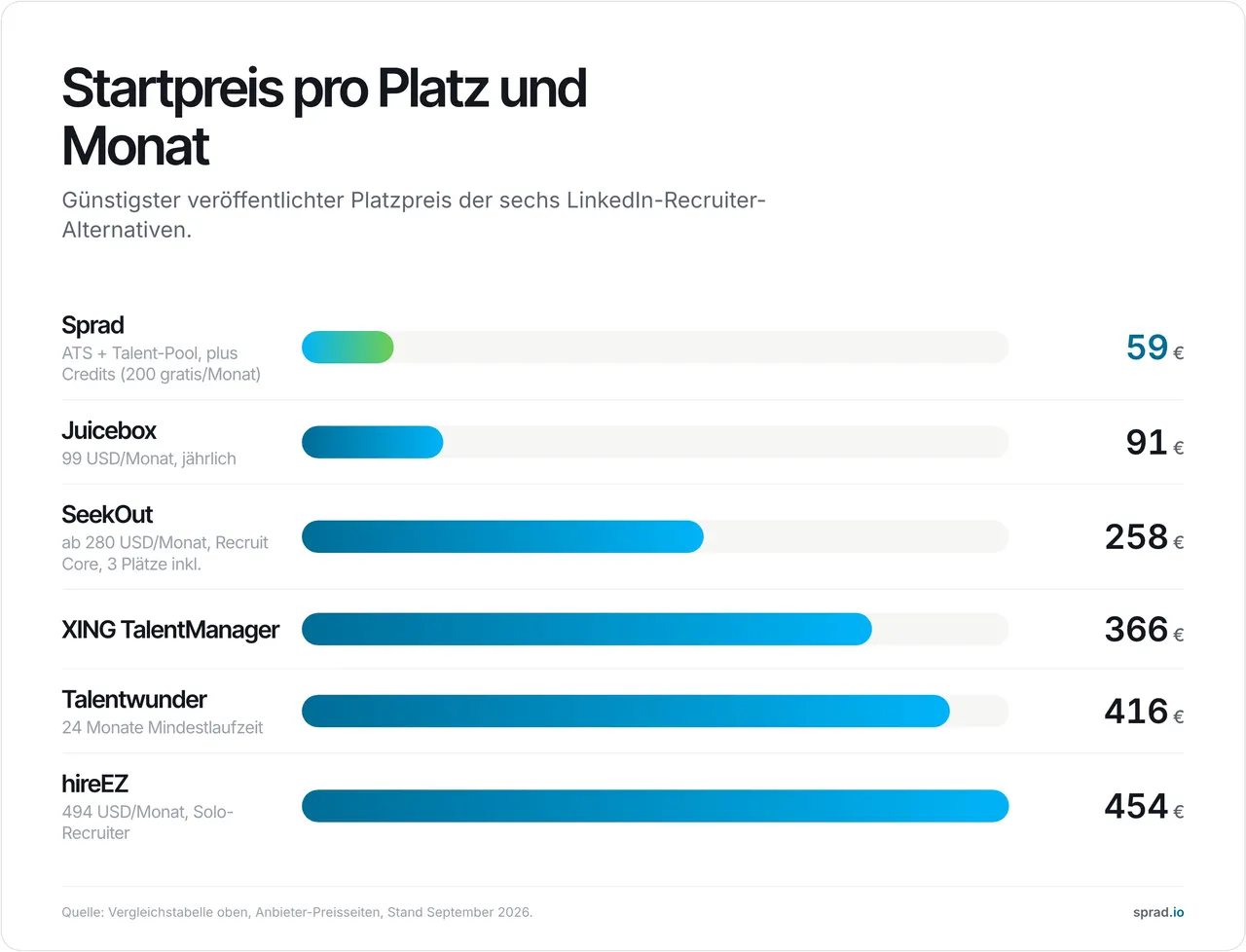
| 1. Sprad | €59/month (ATS + pool) + usage credits | Yes, 1bn+ profiles | Yes, stays with the agency | Yes, EU-hosted, German interface |
| 2. Juicebox (PeopleGPT) | $99/month, billed annually | Yes, natural-language search | Partly, CSV export with emails | No DACH-specific pricing |
| 3. hireEZ | $494/month (Solo, list price) | Yes, 30+ sources incl. GitHub | Own database + ATS sync | No DACH focus |
| 4. SeekOut | ~$280–420/month per seat (Recruit Core, 3 seats included) | Yes, incl. patent and clearance data | Own database + ATS sync | No DACH focus |
| 5. XING TalentManager | €366/month | Yes, XING network | Controlled by XING | Yes, DACH-native |
| 6. Talentwunder | €416/month (24-month term) | Yes, plus 900+ job boards | Yes | Yes, DACH-native |
Order: by how many of the four reasons above a tool addresses according to its published terms (seat cap, minimum term, export, search beyond its own network). Sprad is listed first on that criterion, backed by its public price page and our own benchmark measurement (see below). It is not first everywhere: XING TalentManager and Talentwunder are ahead on DACH network depth, Juicebox on the lowest pure seat price. Sprad is itself a vendor here. Prices are the lowest published seat price, as of September 2026. SeekOut and hireEZ do not publish prices for more than one seat, so anything above that is a custom quote, and Talentwunder's public figure is the only source for that number, as no self-serve price is listed there either.
1. Sprad: for agencies that want to own their pool
Sprad answers the two complaints that hurt most: the seat cap and the data lock-in. The search itself is not confined to one network. Atlas reads whole profiles against a free-form requirement, across more than a billion public profiles plus the agency's own pool in a single run. In a published benchmark across three real roles, it found 38% of all matching candidates across all tools tested, against 9% for the best other tool (Sprad's own measurement, as of November 2026; method on sprad.io/sourcing-benchmark). A full feature-by-feature comparison is in Sprad vs. LinkedIn Recruiter.
Price: €59 per recruiter per month for the ATS and the agency's own talent pool, with no minimum term and no seat cap. Search, outreach and interviews run on credits from €0.095 each, 200 per month free, and a candidate you screen out costs nothing.
Best for: agencies that want to own their candidate network instead of renting access to someone else's, and that don't want to pay for idle seats between two searches.
Limits: Sprad is younger on the market than LinkedIn, hireEZ or SeekOut, so its body of reviews is still growing, and outreach to new candidates currently runs only through LinkedIn, not email.
2. Juicebox (PeopleGPT): lowest seat price, natural-language search
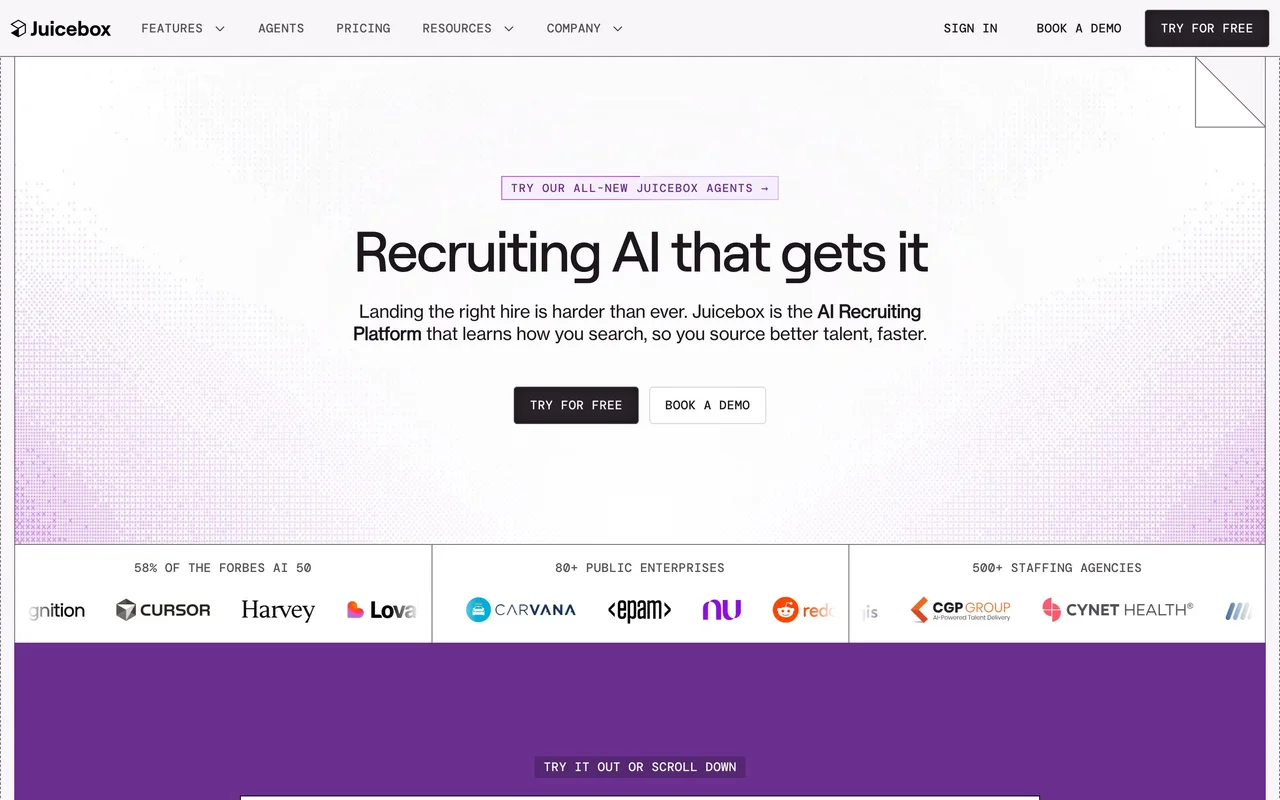
Juicebox lets you describe a role in your own words instead of building Boolean strings. Ratings are close to 5/5, but on a still small base (under 50). It exports candidate CSVs with verified emails, which is more data portability than LinkedIn offers.
Price: $99 per month billed annually ($119 monthly), the lowest seat price in this comparison.
Best for: solo recruiters or small teams who find Boolean search too cumbersome and want a fast, inexpensive way in.
Limits: no lasting, agency-owned talent pool like Sprad or Talentwunder, and no DACH-specific pricing or German interface.
3. hireEZ: strongest for tech-focused sourcing
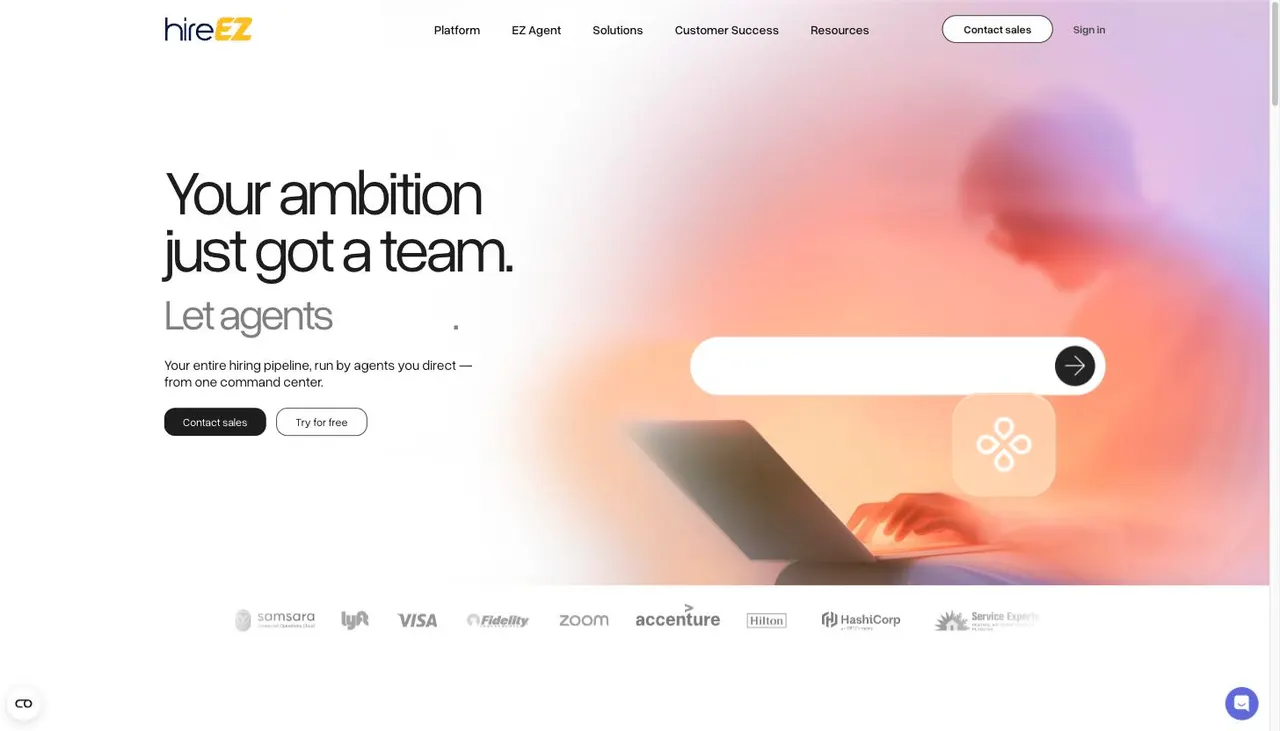
hireEZ's GitHub integration is a real differentiator for technical searches, and G2 ratings sit at 4.6/5. The same users report, however, that prices can triple at renewal without warning. Full comparison: LinkedIn Recruiter vs. hireEZ.
Price: $494 per month for a single recruiter, the only published seat price from hireEZ. Anything above that is a custom quote, with a median annual contract of around $13,000 according to Vendr transaction data.
Best for: tech-focused recruiting teams that source heavily from GitHub and can budget for rising renewal prices.
Limits: noticeably weaker outside technical roles, and the documented price jumps at renewal make budgeting harder.
4. SeekOut: diversity and specialist sourcing at scale
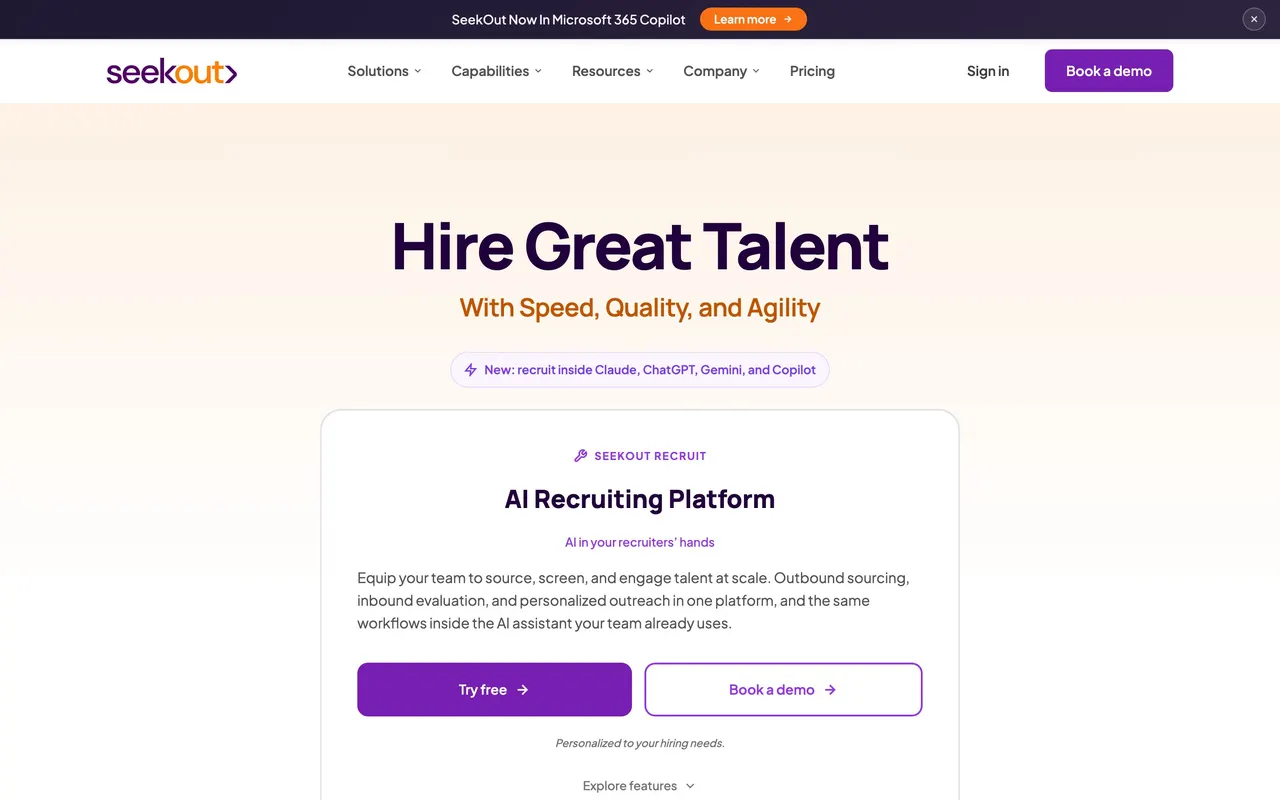
SeekOut's strength lies in patent, clearance and diversity-focused search that goes beyond what LinkedIn or hireEZ offer, rated 4.7/5 on Capterra. Full comparison: LinkedIn Recruiter vs. SeekOut.
Price: SeekOut publishes no self-serve price. The Recruit Core plan runs at roughly $10,000 to $15,000 per year including three seats, and Vendr buyer data puts a 10-seat package at $45,000 to $90,000 per year.
Best for: mid-market and enterprise teams with diversity targets or specialist needs: clearance holders, patent authors, academia.
Limits: tailored to teams well beyond a two- or three-person agency, and users describe the interface as dated compared with newer tools.
5. XING TalentManager: the DACH-native option
XING TalentManager comes closest to a "LinkedIn for the German-speaking region", with a candidate base concentrated in DACH. The review picture is thin (3.5/5 from a single OMR review), and its AI features are minimal compared with the US tools. But for an agency that sources almost exclusively in Germany, Austria or Switzerland, network depth in the right region can matter more than AI polish.
Price: €366 per month per seat, with a volume discount from ten seats.
Best for: agencies that source almost exclusively within DACH and value local network depth over AI features.
Limits: weak coverage outside DACH, XING-internal messaging only with no cross-channel outreach, and reviews mention a shrinking active user base as candidates move to LinkedIn.
6. Talentwunder: job publishing plus sourcing, DACH-focused
Talentwunder combines candidate sourcing with distribution to over 900 job boards. Public review data is practically absent (zero reviews on Capterra as of September 2026), which makes it the hardest tool on this list to verify independently.
Price: €416 per month, tied to a 24-month minimum term, the longest commitment on this list apart from LinkedIn's own corporate tier.
Best for: DACH agencies that want to bundle sourcing and job ad distribution in one contract and are fine with a two-year commitment.
Limits: the 24-month term is a real lock-in risk for a tool you haven't tested yet, and its AI features are minimal compared with the rest of this list.
What growth really costs
The seat price alone hides what happens once an agency actually adds recruiters. Recruiter Lite stops at five self-serve seats; a sixth recruiter forces a move to corporate pricing, which LinkedIn negotiates individually and never publishes. Take an agency growing from three to eight recruiters: three Lite seats cost about $5,040 a year ($140 × 12 × 3). Once you pass five seats, every third-party price check applies. Leonar's 2026 analysis puts corporate at $10,000 to $12,960 per seat per year, which pushes eight seats to $80,000 to $103,680 a year, before any InMail add-on. Sprad's flat €59 per recruiter per month has no seat cap and no sales conversation that triggers it: eight recruiters cost €5,664 a year (roughly $6,150) for ATS and talent pool, while search, outreach and interviews are billed separately via credits instead of being baked into the seat price.
Which alternative fits which agency
- Boutique agency, 1–5 recruiters, tight budget: Sprad's flat €59 per seat plus pay-per-use avoids paying for idle capacity; Juicebox is the cheapest pure seat option if usage-based pricing isn't a priority.
- Tech-focused agency: hireEZ's GitHub signal is hard to beat, as long as you budget for the renewal price risk up front.
- Mid-market or enterprise, diversity targets: SeekOut's specialist filters justify the price at that scale.
- Agency approaching the five-recruiter cap: this is exactly where LinkedIn's own pricing model penalises growth. The seat calculation above is worth a look before you sign the next renewal.
- Pure DACH agency: XING TalentManager or Talentwunder for network depth, or Sprad if a German-language, EU-hosted tool with external search and a lasting talent pool matters more than local network size.
Frequently asked questions
What is the best overall alternative to LinkedIn Recruiter?
It depends on which of the four reasons hurts most. If it is the seat cap, the annual contract and the missing export, Sprad is the option that, by its published terms, addresses all three without giving up search beyond one network (our own assessment; Sprad is a vendor here). If DACH network depth matters most, XING TalentManager or Talentwunder fit better; for the lowest pure seat price, Juicebox.
What is the cheapest alternative to LinkedIn Recruiter?
Juicebox has the lowest published seat price at $99 a month; Sprad's €59 base plus pure usage credits is usually cheaper in practice once you factor in unused LinkedIn Recruiter capacity.
Is there a German or DACH-focused alternative?
XING TalentManager and Talentwunder are both DACH-native. Sprad is EU-hosted with a German interface and searches worldwide, including DACH.
With which alternative do candidates stay with the agency after cancelling?
Sprad and Talentwunder both build a lasting talent pool that stays with the agency; Juicebox exports CSVs with verified emails, which offers more portability than LinkedIn but is not an owned, searchable pool.
Do these alternatives search outside their own database, like LinkedIn does?
Sprad, Juicebox, hireEZ and SeekOut all search beyond a single closed network; XING TalentManager and Talentwunder mostly search within their own DACH-focused ecosystem.
What does LinkedIn Recruiter really cost once an agency grows beyond five seats?
Self-serve Lite stays under $1,000 a month in total up to five seats. A sixth recruiter forces a move to corporate pricing, which published third-party sources put at $10,000 to $12,960 per seat per year. An eight-recruiter team can end up at $80,000 to $103,680 a year, before add-ons. This is the point where most agencies start comparing alternatives.
The bigger picture
Every tool on this list solves at least one of the four common complaints about LinkedIn Recruiter, but of the six, Sprad is the only one whose published terms combine no seat cap, no minimum term and a talent pool that stays with the agency, while still searching beyond one network (based on the public price pages as of November 2026; Talentwunder also offers a pool, but ties it to a 24-month term). Sprad is itself a vendor in this comparison. Start free with 200 credits a month, no credit card, at sprad.io/industry/recruitment-agencies.
Jürgen Ulbrich
Jürgen Ulbrich has more than a decade of experience in developing and leading high-performing teams and companies. As an expert in employee referral programs as well as feedback and performance processes, Jürgen has helped over 100 organizations optimize their talent acquisition and development strategies.

